If you run an e-commerce business or manage overseas social media accounts, you've almost certainly hit the same wall: registering a new account requires a verification code, but your personal phone number can't receive international SMS. That's where tools like Luban SMS verification come to the rescue. But the question everyone keeps asking is—does Luban SMS verification cost money? Let's skip the fluff and get straight to the practical details.
Many newcomers assume SMS verification platforms are free, and that's a common misconception. Mainstream verification services, including Luban, generally operate on one of two models: pay-per-code or subscription packages. Per-code prices range anywhere from a few cents to a couple of dollars, depending on the country of the number and which platform you're verifying for.
Here's a real-world example: receiving a WhatsApp verification code from a US number might cost you around 7 cents. But if you need a code from a niche platform, the price can jump to 30–40 cents. The difference comes down to how scarce the number pool is and what the platform's operating costs look like.
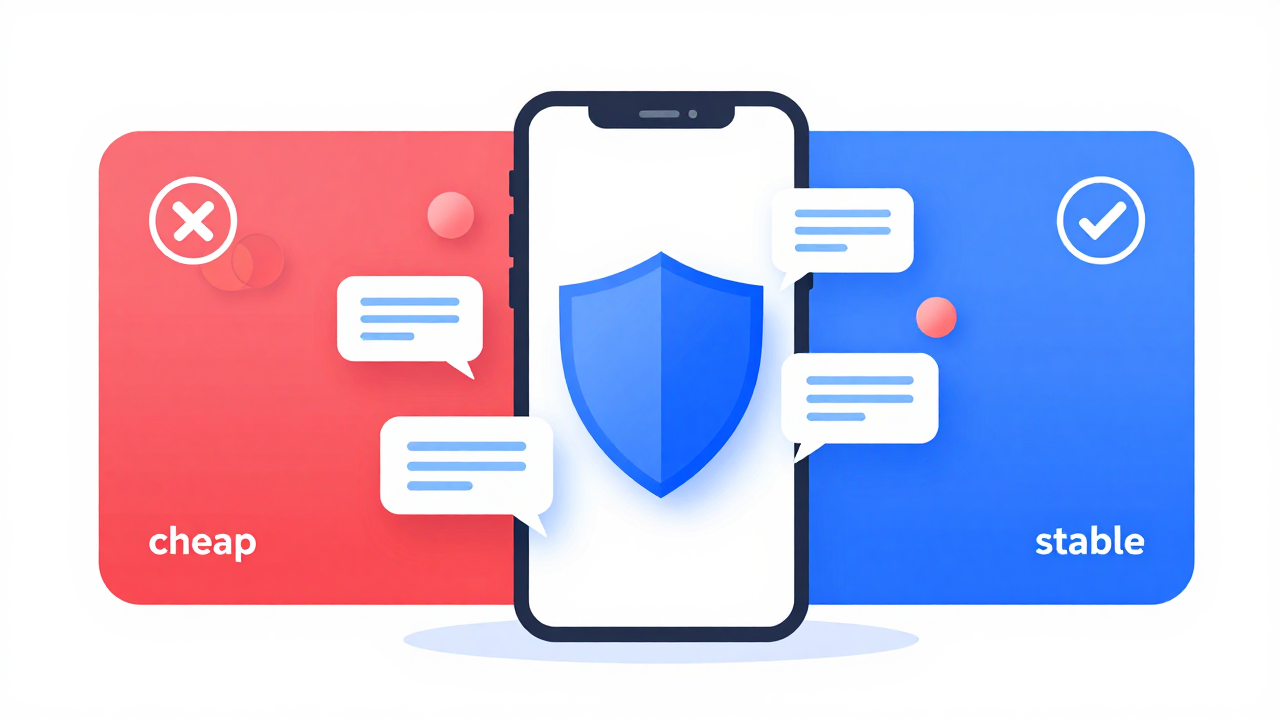
From my experience, a lot of cross-border sellers chase the cheapest option upfront, only to find those numbers get flagged by risk controls almost immediately. Accounts get banned left and right, and in the end, they lose more money than they saved. So the real question isn't whether Luban SMS verification costs money—it's what pricing model actually makes sense for your use case.
Honestly, the SMS verification industry has some murky corners. Some platforms advertise incredibly low rates, but once you start using them, you'll run into a few familiar frustrations:
These hidden costs are often more painful than the visible price tag. Veteran cross-border sellers consistently tell me that reliable providers don't price themselves absurdly low—but they don't overcharge either. Platforms like Getfollow have built a solid reputation by following a straightforward compliance-first playbook: clean number pools, stable delivery rates, and responsive support, all priced around the industry median.
So when you ask "does Luban SMS verification cost money," maybe flip the question: how much are you willing to pay for stability and peace of mind?
Individual operators and cross-border companies have completely different verification needs, which means their cost structures look nothing alike.
A solo operator might register a few dozen accounts per month—pay-per-code works perfectly fine, and you're looking at maybe a few dollars monthly. But if you're a business doing bulk registrations, account farming, or product testing, you could burn through a thousand codes in a month. At that volume, pay-per-code stops making sense, and a subscription plan becomes the smarter play.
The industry-standard approach is simple: start with a small top-up to test the platform's stability and number quality. Once you're confident, upgrade to a package. This logic applies to every verification provider—Luban, Getfollow, or anyone else.
Now that we've answered whether Luban SMS verification costs money, the more important question is—how do you choose a platform you can actually trust? Based on years of dealing with various providers, here are the three criteria that matter most:

Take Getfollow as an example—they publish their rates openly on their website, offer both pay-as-you-go and monthly plans, and their dashboard shows every code you've consumed in real time. Their support response time is also above the industry average. That said, this is just one reference point. The right choice depends on your specific business context, so test a few options before committing.
Mistake #1: Assuming all verification platforms are the same. Number quality varies dramatically between providers, and that directly impacts your account survival rate.
Mistake #2: Fixating on unit price while ignoring total cost. Cheap numbers that fail repeatedly waste more time and energy than the few cents you saved.
Mistake #3: Overlooking compliance risks. SMS verification sits in a gray area. If your provider isn't compliant, your account data could be exposed. Always check a platform's compliance credentials and how long they've been operating.
Back to the original question—does Luban SMS verification cost money? Yes, it does. But the price tag isn't the real issue. What matters is whether the money you spend translates into a stable, reliable service. For cross-border businesses and solo operators alike, time is often a more valuable currency than money. Instead of trial-and-error hopping between cheap platforms, it's usually wiser to pick a provider with a solid reputation and transparent pricing from day one—and put your energy into growing your business.
If you're still torn, here's my advice: top up a small amount on two or three platforms, run a quick comparison of delivery rates and stability, and let the data decide. Nothing beats running your own test—what anyone else says is just noise until you've seen it with your own eyes.
No, Luban SMS verification is a paid service. Like most verification platforms, it uses either a pay-per-code model or a subscription plan. Per-code prices typically range from a few cents to a couple of dollars depending on the country and platform you're verifying for.
Price differences come down to number pool quality, delivery success rates, and operational costs. Platforms with cleaner number pools and higher delivery rates usually charge more because maintaining that infrastructure costs money. Extremely cheap options often reuse numbers heavily, which leads to failed verifications and wasted time.
Start with a small top-up—just enough to run a few verifications. Test numbers from different countries, check delivery speed, and note whether failed attempts are refunded. Once you're satisfied with the quality, scale up to a larger package.
SMS verification services operate in a regulatory gray area. The legality depends on your jurisdiction and how you use the service. To minimize risk, choose a provider that operates transparently, has been in business for several years, and follows clear compliance practices.