SMS Verification Cracked Versions in 2026: Cross-Border Business Pitfalls and Compliant Alternatives

SMS Verification Cracked Versions in 2026: Cross-Border Business Pitfalls and Compliant Alternatives

Still using cracked SMS verification tools for cross-border business in 2026? This guide breaks down the real risks, account survival rates, and compliant alternatives to help sellers and freelancers make smarter decisions.

Let me paint you a real scenario. Last month, a friend running a TikTok Shop in Southeast Asia vented to me about a costly mistake. To batch-register buyer accounts for product reviews, he grabbed a cracked SMS verification tool to save a few bucks. The next day, every single account got flagged by risk control—and worse, his main store's payment channel got restricted for two weeks. This isn't an isolated story. Platform risk-control systems in 2026 have moved far beyond the old IP-and-device checks.

Across the industry, sellers are reporting that cracked SMS verification tools have almost no breathing room left in 2026. On the surface, you save on verification costs. But when you factor in account survival rates, the uphill battle of warming up new accounts, and the nightmare scenario of linked account bans, those "savings" quickly turn into losses. In this article, I'll give you an honest, no-hype look at how these tools actually operate today—and what you should do instead if you genuinely need bulk SMS verification.

Are Cracked SMS Verification Tools in 2026 a Money-Saver or a Landmine?

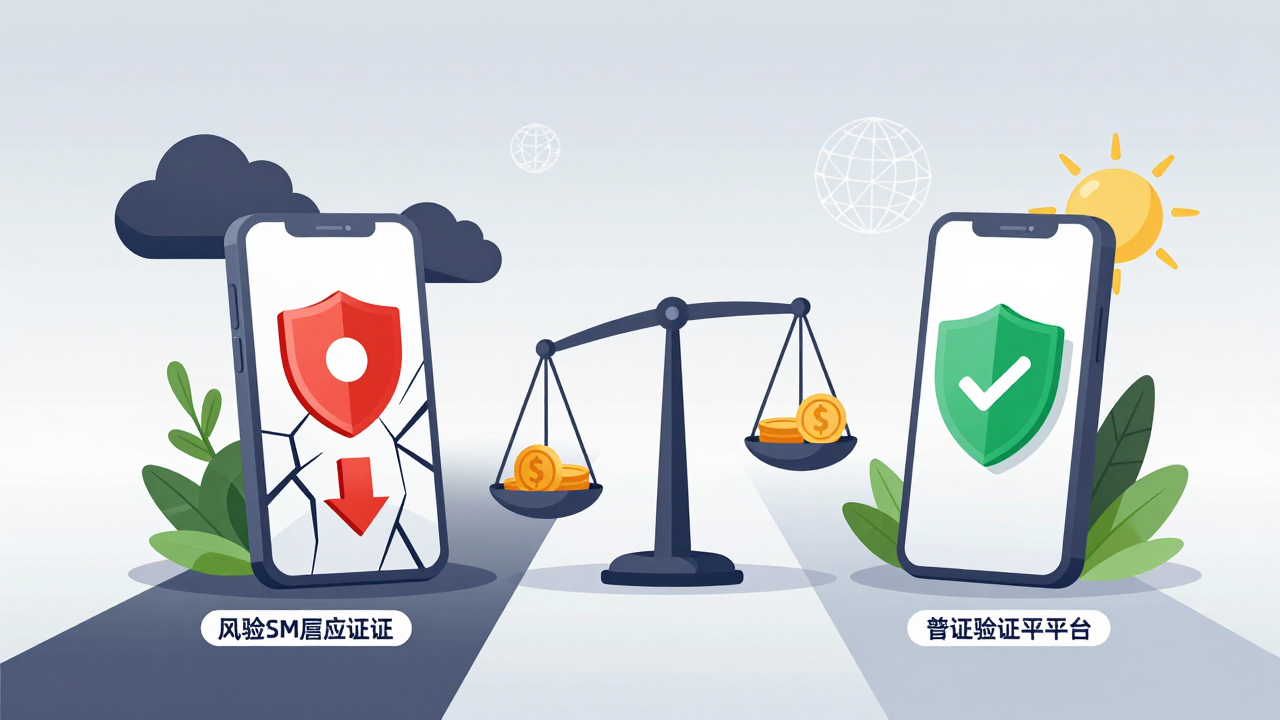
Here's the bottom line: If you're building a long-term cross-border business, cracked SMS verification tools are almost certainly a false economy. This isn't moral posturing—the math simply doesn't add up.

From my experience, mainstream platforms in 2026—including Amazon, TikTok, and Facebook—have widely adopted "behavioral fingerprinting" and "device credit scoring." Accounts registered through cracked verification tools are often tagged with a "low trust" label right at the registration stage. Even if these accounts can log in initially, the odds of triggering secondary verification are dramatically higher than for accounts registered through normal channels.

Industry consensus puts the first-week survival rate of accounts registered via cracked tools at under 30%. In contrast, accounts registered through legitimate verification platforms or physical SIM cards maintain a survival rate above 70%. That gap directly determines your operational costs—warming-up time, proxy IP expenses, content creation budgets—all of it goes down the drain when accounts die.

Three Hidden Costs of Cracked Verification Tools

First, the linked-account risk from number reuse. Cracked tools typically draw from a small pool of numbers. The same number can be assigned to multiple users registering on the same platform within a short window. Platform risk-control systems easily spot this "one number, many accounts" anomaly and flag the entire batch. In 2026, numerous cross-border studios have reported mass account bans traced directly back to this issue.

Second, delayed delivery and high failure rates. To keep costs down, cracked service providers rely on virtual number ranges or numbers already flagged by carriers. These numbers can take minutes to receive a verification code—or never receive one at all. In time-sensitive registration workflows, that kind of unpredictability is a dealbreaker.

Third, zero after-sales support. You pay your money, and when codes don't arrive or accounts get banned, the cracked service provider simply disappears. Many practitioners report that customer service response times are measured in days—by the time you hear back, your accounts are long gone.

How to Handle Bulk SMS Verification the Right Way in 2026

If you genuinely need bulk verification, the smarter industry approach is to work with compliant verification platforms. These providers maintain legitimate partnerships with carriers, offer large and stable number pools, and provide API access for automation.

One platform that consistently earns solid reviews in the industry is Getfollow, which operates on exactly this compliant model. They offer a real number pool, support registration verification across multiple platforms, and have transparent pricing with proper after-sales support. To be clear, I'm not telling you to go place an order—I'm suggesting you use the criteria below to evaluate any provider you're considering.

When vetting a verification service in 2026, here are the key dimensions to check:

  • Number pool size and refresh frequency: Reputable platforms regularly clean and recycle numbers to prevent excessive reuse. Ask their support team about daily number refresh volume. If they can't give you a straight answer, walk away.
  • API integration support: For studios and teams, manually copying and pasting verification codes is a huge time sink. Platforms with API support let you automate the entire registration flow and save serious man-hours.
  • Pricing transparency: Per-code pricing or package deals are both fine, but you need absolute clarity on hidden fees. Some platforms advertise rock-bottom prices but impose high minimum top-up thresholds—the real cost ends up being anything but cheap.
  • After-sales response speed: In 2026, a reliable verification platform should respond in minutes, not hours. Start with a small deposit and test their support speed before committing.

A Side-by-Side Comparison Worth Reviewing

To make this more concrete, here's a simple comparison framework (not endorsing any specific brand):

SMS Verification Cracked Versions in 2026: Cross-Border Business Pitfalls and Compliant Alternatives
DimensionCracked Verification ToolsCompliant Platforms (e.g., Getfollow)
Number pool qualityHigh reuse rate, heavy virtual number usageReal numbers, regularly refreshed
First-week account survivalTypically below 30%Typically 60%–75%
API supportRarely availableMostly supported
After-sales supportEssentially nonexistentClear response mechanisms
Long-term total costLooks cheap, but account losses cost moreSlightly higher unit price, lower total cost

This table isn't meant to push you toward one option—it's a reminder that you need to calculate total cost, not just the price per code. In 2026, cross-border business runs on stability and efficiency, not on pinching pennies at the tool level.

Risk Warnings and Practical Advice: Test Small Before Committing Long-Term

Whichever path you choose, there are a few risks you need to understand upfront.

First, the risk of linked account bans. If your main account and verification-registered secondary accounts log in from the same device or network, a ban on the secondary accounts can drag down your main account. The hard lesson from many cross-border sellers in 2026: always isolate devices and IPs when registering secondary accounts.

Second, the retention problem. Even with a compliant verification platform, freshly registered accounts need time to "warm up." Industry retention rates in 2026 hover between 50% and 70%. That means if you register 100 accounts, only 50 to 70 will survive past the first week. When planning bulk registrations, prepare about 1.5 times the number of accounts you actually need.

Finally, cost control strategy. Whether you're testing a cracked tool or a compliant platform, always start with a small deposit. For example, top up a minimal amount, register 10 accounts, and observe survival rates and code delivery speed over a week. If the numbers don't look good, switch providers immediately—don't sink more money into a losing bet.

To sum it up, cracked SMS verification tools are no longer a gamble worth taking in 2026. Cross-border business rewards long-term thinking. Instead of saving pennies on tools and losing dollars on account bans, start with a compliant path and put your energy into content and operations. If you're currently evaluating verification providers, use platforms like Getfollow as a benchmark and run them through the criteria above. Choose what fits your business rhythm.

Remember, tools are just enablers. What actually determines how high your cross-border business climbs is your product and your operational game. Test small, scale with confidence, and play the long game—that's the winning formula for 2026.

Frequently Asked Questions

Are cracked SMS verification tools still working in 2026?

Technically, some still function, but their effectiveness has dropped dramatically. Platform risk-control systems now use behavioral fingerprinting and device credit scoring, which means accounts registered through cracked tools are flagged almost immediately. First-week survival rates are typically below 30%, making them a poor choice for any serious cross-border operation.

What's the difference between cracked and compliant SMS verification platforms?

Cracked tools rely on small, heavily reused number pools with virtual numbers and zero after-sales support. Compliant platforms like Getfollow maintain real number pools with regular refreshes, offer API integration, and provide proper customer support. The total cost of ownership is usually lower with compliant platforms because your accounts actually survive.

How do I choose a reliable SMS verification provider?

Evaluate four things: number pool size and refresh frequency, API support for automation, pricing transparency with no hidden fees, and after-sales response speed measured in minutes, not hours. Always start with a small deposit and test the service before scaling up.

What's the realistic account survival rate for bulk-registered accounts in 2026?

With compliant verification platforms, first-week survival rates typically range from 60% to 75%. With cracked tools, that number drops below 30%. To account for natural attrition, plan on registering roughly 1.5 times the number of accounts you actually need.

Related articles

  1. How SMS Verification Code Reception Works: The Complete Guide for Cross-Border Businesses
  2. SMS Verification Platform Pricing: 2026 Rate Guide and Smart Buying Tips
  3. Why Your SMS Verification Platform Stops Receiving Texts in 2026: 5 Truths Cross-Border Sellers Must Know
  4. Buy Phone Number SMS Verification: The Account Security Choice Cross-Border Sellers Can't Ignore in 2026
  5. SMS Verification Alternatives for User Acquisition
  6. 5 Angles to Compare Feiq SMS & Other Overseas Code Platforms