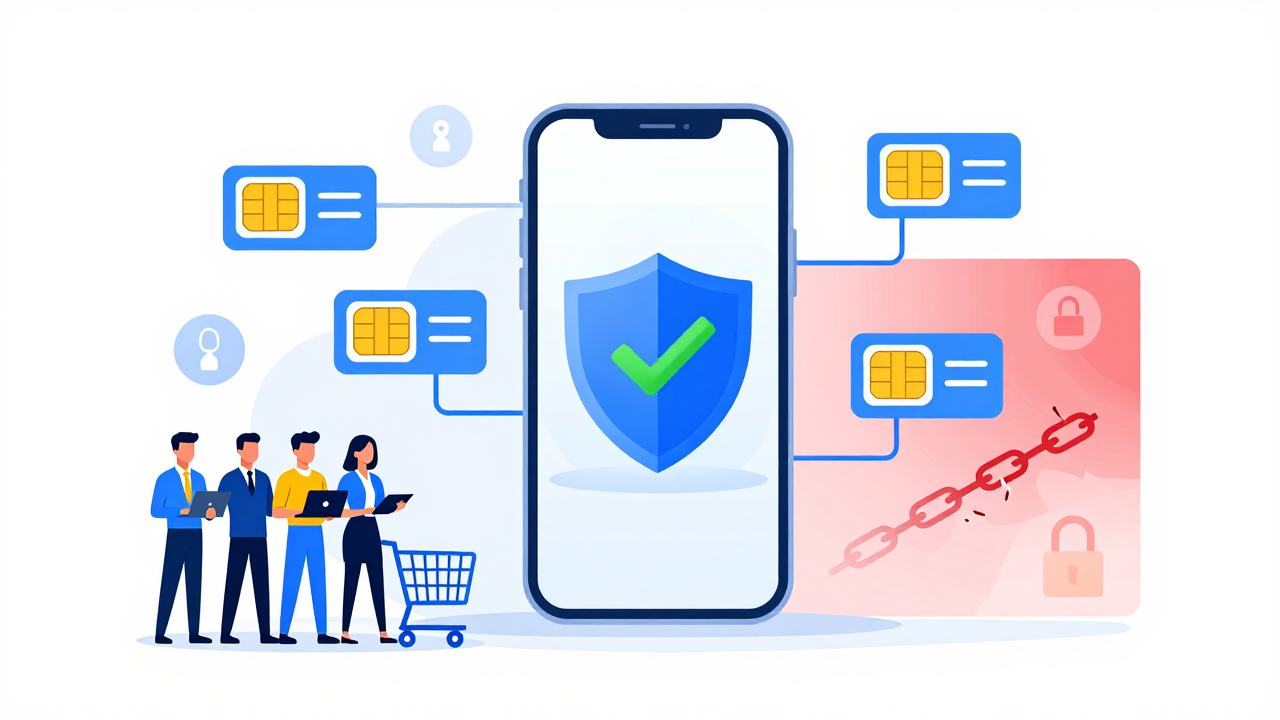
If you run an e-commerce operation or manage social media accounts for overseas markets, you've probably hit the term "SMS verification service" the moment you needed to register accounts in bulk. Simply put, these services provide temporary or long-term phone numbers to receive verification codes. They aggregate number resources from carriers and virtual operators, letting you complete platform sign-ups without ever touching a physical SIM card.
But if you think it's just "receiving a code," you're underestimating how layered this industry really is. I've talked to plenty of agencies running TikTok, Amazon, and WhatsApp campaigns, and the consensus is clear: the quality of your SMS verification provider directly determines account survival rates and your long-term operating costs. This is not a step you want to wing.
The market currently offers three broad categories of SMS verification services. Understanding the difference is the only way to know exactly what you're buying.
A pattern I see across the industry: the first two options frequently trigger "This number has already been used" or "Unable to verify" errors on platforms with strict risk controls like Google or Facebook. That's not bad luck—it's a purity issue in the number pool.
Here's something industry insiders agree on: platform risk systems evaluate a phone number far beyond whether it can simply receive a code. They look at the carrier, number range, historical usage, and whether it appears in blacklist databases. A crowdsourced number that's been used by thousands of people might get you through registration, but it dramatically raises your chances of a ban later.
I tested this myself once. An agency used budget crowdsourced codes to register 20 Instagram accounts. The next day, 17 were banned, and the remaining 3 had restrictions on following and direct messaging. We re-did the same process with physical SIM pool numbers—same setup, same actions—and the survival rate jumped to over 80%. That's the difference number quality makes.
Don't buy a big package right away. Spend a small amount and run three checks. First, test with a niche platform—say, a local European e-commerce site—to see if the number receives codes reliably. Second, register on a mainstream platform like Telegram and monitor for 24 hours to see if any features get restricted. Third, try linking the number to a payment tool and watch for extra verification triggers. These three steps will tell you exactly where this provider's number quality stands.
In my experience, platforms like Getfollow have built a solid reputation by following this exact compliance-first logic. They don't compete on the lowest per-code price; they focus on maintaining and refreshing their number pools. They're one solid example among others, not the only good option out there.
The SMS verification industry has deep waters. New sellers get lured in by ads promising "1,000 codes for $15," only to find the numbers either don't receive codes or get banned instantly after registration. Worse, some shady providers use numbers registered with stolen identities—if legal issues arise, you could get caught in the crossfire.
Since 2025, regulators have tightened controls on IoT cards and virtual number ranges. Many small pool operators have already shut down. The ones still standing are either properly licensed companies or those pivoting to enterprise-grade API services. The industry consensus is clear: verification services are moving toward compliance and service quality, while the race-to-the-bottom pricing model is dying out.
For cross-border businesses and independent agencies, here's my advice: don't put all your accounts on a single verification provider. Even if you find one that's rock-solid, always have a backup. If your provider goes down, your entire account matrix is at risk.

Given how critical this decision is, here's a practical framework I've built from my own experience and conversations with peers in the industry.
Here's a cautionary story from someone I know: he went with a provider advertising "unlimited verification codes" at a bargain price. Turned out they were using a shared number pool. All 5 of his Amazon stores got flagged for关联 risk and shut down. He lost not just the accounts, but the product research and ad spend that went into them. Every dollar you save on verification can turn into an expensive lesson later.
If you want a more systematic approach, look at how platforms like Getfollow structure their services—they categorize numbers by use case (social media registration, e-commerce verification, payment binding) and let you view a number's historical usage. That kind of transparency genuinely helps users avoid a lot of risk.
At its core, an SMS verification service solves the basic need for bulk registration and account management. But a tool doesn't create value on its own—how you use it does. Many agencies treat verification as a shortcut to unlimited registrations, then neglect account warming, content operations, and compliance. They end up facing bans anyway.
My recommendation: test small before you scale. Whichever provider you choose, keep your first order under $10. Use real business scenarios to validate number quality, and only increase your investment once things are stable. At the same time, keep your account practices compliant—don't use verification services to dodge platform rules. Any tool is just an amplifier. If your business logic is sound, it amplifies your gains. If not, it amplifies your losses.
An SMS verification service provides phone numbers—either temporary or long-term—that receive verification codes on your behalf. Providers maintain pools of physical SIM cards or virtual numbers, and route the codes to you through their platform, so you can complete account registration without a physical phone or SIM.
Yes, when used for legitimate purposes like account registration and two-factor authentication. However, using them to create fake accounts or bypass platform rules may violate a platform's terms of service. Always check both local regulations and the terms of the platforms you're registering on.
Most likely because the number has been used by many people before you, or it comes from a virtual number range that platforms flag as high-risk. Platforms track number reputation, and shared or low-quality numbers trigger automatic risk controls.
Pricing varies widely. Crowdsourced platforms can charge as little as a few cents per code, while physical SIM pool services may charge $0.50 to $2 or more per code depending on the country and number quality. Enterprise API access typically costs more but comes with better reliability.
Technically yes, but it's a bad idea. Most platforms track number-to-account ratios, and reusing one number across multiple accounts is a classic trigger for关联 detection and bans. Use a fresh number for each account whenever possible.