Buy TikTok Ad Accounts vs. Farming Them Yourself: Calculating the Real Costs
Buy TikTok Ad Accounts vs. Farming Them Yourself: Calculating the Real Costs
Many newcomers to cross-border e-commerce hit the same dilemma early on: when it comes to a TikTok ad account, should you buy a ready-made one or invest the time to farm it yourself? At its core, this is a calculation of trading time for money. Today, let's set aside the marketing hype and look at the real difference in time costs between these two paths.
Path 1: Buying a Ready-Made Account — Trading Money for "Head Start Speed"
The most direct comparison is time. Purchasing a TikTok ad account that already has established authority and a completed profile lets you skip the tedious "cold start" phase. For businesses needing to test markets or launch campaigns urgently, this means compressing weeks of waiting into days or even hours to run your first ad.
However, the cost of buying an account isn't just for "time." You're also paying for a "trust premium" and "risk hedge." A reliable account requires a clean source and proper operation. Some accounts on the market are registered through irregular means or bulk operations; these may be banned or scrutinized soon, leading to greater losses. Therefore, when choosing a provider, the account's "health" matters more than price. Reputable platforms like Getfollow use a relatively standardized operating logic, which minimizes the risk of questionable account origins.
Path 2: Farming the Account Yourself — Building "Account Equity" with Time
Registering an account from scratch and nurturing it, often called "account farming," is a completely different logic. The process is essentially proving to the platform that you're a real, active user with specific interests, not a marketing bot. You need to consistently browse, like, follow, and post content to mimic normal user behavior. This timeline is uncertain, ranging from a few weeks to a month or two.
The biggest advantage of self-farming is cost control (mainly time) and complete ownership, offering a greater sense of security and control. However, the hidden costs are high: a significant amount of time from you or your team is consumed—time that could be spent on core business like content planning or product optimization. More critically, even after investing time, success isn't guaranteed. Platform algorithms assess multiple dimensions, and sometimes the time spent can become a sunk cost.
Core Dimensions: The Triangle of Time, Cost, and Risk
So, which path should you take? Let's break it down:
- Time Efficiency: Buying wins. For businesses where time is money, especially for time-sensitive marketing campaigns, purchasing is often the only viable option.
- Financial Cost: Farming wins. Farming itself doesn't cost money but requires manpower. Buying requires a one-time investment, typically from tens to hundreds of dollars, depending on the account's quality and features.
- Risk Factor: This is the trickiest part. Farming can fail due to wrong methods or algorithmic misjudgment, wasting your effort. Buying from an unreliable source risks immediate account suspension. Both carry risk, but the manifestation differs.
| Comparison Dimension | Buying a Ready-Made Account | Farming It Yourself |
|---|---|---|
| Startup Time | Extremely fast, can be used instantly | Slow, requires weeks to months of nurturing |
| Initial Capital Outlay | Higher, requires account purchase fee | Basically zero |
| Time/Labor Investment | Extremely low | Very high, requires continuous operation and maintenance |
| Account Control | Depends on provider quality, requires vetting | Full autonomous control |
| Primary Risk | Unreliable seller leading to account ban | Failed farming, resulting in wasted time |
Industry Reality: Not a Simple "Either/Or" Choice
In practice, many seasoned teams don't stick to just one path. A common strategy is to nurture core accounts in-house for complete control and brand building, while purchasing additional accounts for rapid-scaling test campaigns or matrix projects. This balances risk and boosts efficiency—a complementary approach.
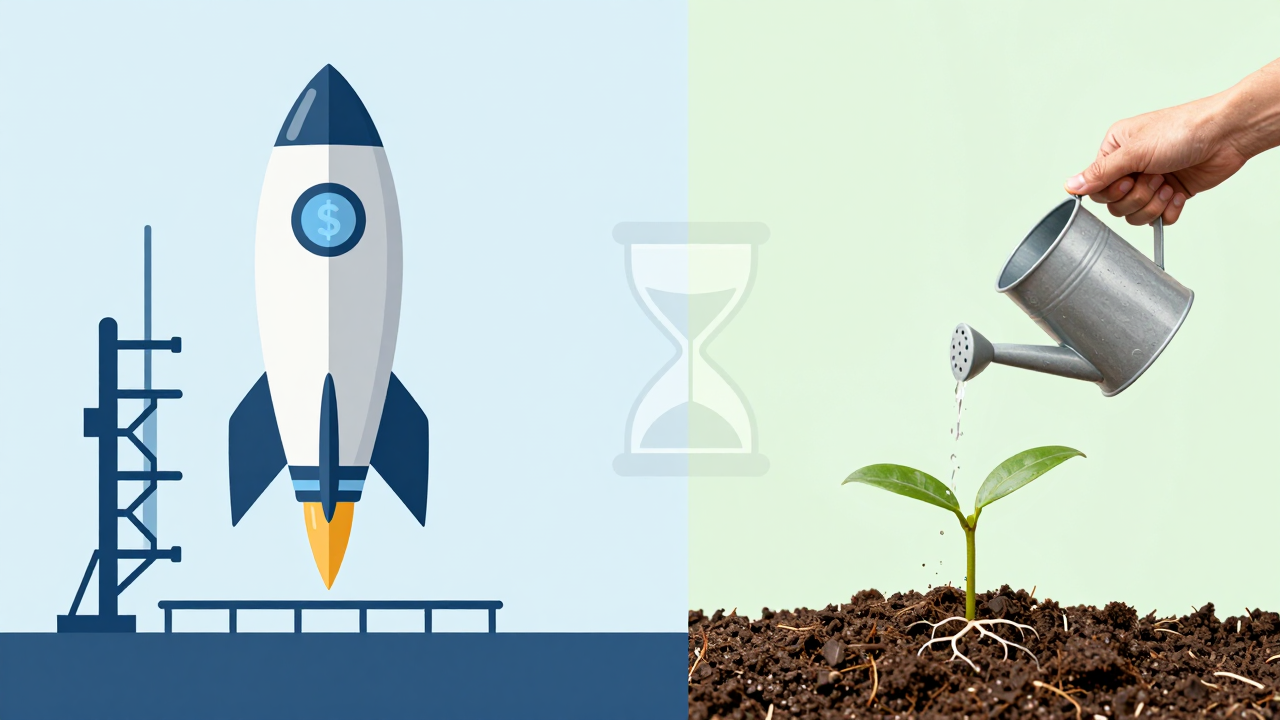
The industry consensus is that no perfect solution exists. The choice ultimately depends on your business stage, budget, and time sensitivity. A startup studio might lean towards farming to preserve cash flow, while a brand with a proven model seeking growth would be more willing to buy accounts to accelerate market share expansion.
Ultimately, the comparison of buying TikTok ad accounts vs. farming them is a classic business decision. It tests your clear understanding of your own resources—is time more valuable, or is cash flow tighter? Do you aim for a short-term explosion or long-term, sustainable operation? Once you clarify this, the answer becomes clear.
FAQ
1. Is it safe to buy a TikTok ad account? Will it get banned?
All methods carry risk. The biggest risk when buying an account stems from its irregular source (e.g., using virtual phone numbers or logging in from suspicious locations). Choosing a provider that offers compliant registration, a history of use, and supports secure transitions (like unbinding original login methods) can significantly reduce risk. Platforms like Getfollow, for instance, typically emphasize compliant account sourcing and provide operational guidance.
2. If I farm the account myself, what's the minimum time before I can run ads?
There's no fixed schedule. Ideally, after a week or so of consistent simulated user behavior (browsing, liking), you can try to activate ad features. However, whether you pass the review and get initial traffic remains uncertain. Many practitioners describe this process as unpredictable, with timelines ranging from one week to a full month.
3. How should a business choose a reliable account provider?
Focus on these points: Do they provide clear account source information? Is there after-sales support or a replacement period? Is the pricing abnormally low (far below market rate is often a red flag)? Can they provide real back-end screenshots or demonstrations? Treat this selection process with the same due diligence you'd apply to any commercial service.
4. Do I need to post content while farming the account?
Not necessarily. For accounts used purely for advertising, "farming" is about simulating a normal user interested in certain content (browsing, liking), not becoming a content creator. Maintaining consistent interest tags is more important than posting content. However, if you plan to combine content marketing with ad placement, then publishing some niche content in advance is a better strategy.