Best Country for TikTok Shop: Forget the Traffic Hype, Follow the Profit Map
Best Country for TikTok Shop: Forget the Traffic Hype, Follow the Profit Map
Every week, a fellow cross-border seller asks me the same question: "What's the best country for TikTok Shop?" They almost always follow it up with, "The US has the biggest traffic, right?" That's the wrong approach. Massive traffic doesn't guarantee you can capture it, let alone monetize it. From what I've observed since late 2024, choosing your first TikTok market is a deeply personal equation—you need to plug in your product margins, your team's language skills, and even your tolerance for late-night meetings before you can solve it.
A friend who sells home accessories dove headfirst into the US market last year and burned through over $15,000 in three months. The content was solid, but the return rates and hidden compliance costs crushed him. He pivoted to a Southeast Asian country, used almost the same content framework, and flipped his profit margins into the green. This reveals a truth that's constantly ignored: choosing a country is really about matching your cost structure to the competitive density.
The US Market: Tempting Traffic, But Its Invisible Gates Are Filtering Out Small Players
There's no debate—the US is TikTok's most commercially mature ecosystem. The Shop integration, creator network, and advertising toolchain are so refined you can practically buy your way to a positive ROI. But this very sophistication means the answer to "best country for TikTok Shop" is becoming increasingly hostile to lean, asset-light teams.
Let's look at an on-the-ground operational detail: setting up a US local shop now generally requires a registered US business entity, an EIN tax number, a US bank account or an approved cross-border payment platform, and the review timelines are wildly unpredictable. You might get approved in a week, or it could take two months. Even after you get your shop, category restrictions kick in; many niches require a whitelist invitation—you can't just sell whatever you want. The IP risk controls are even trickier. One misstep triggers a second review, demanding warehouse proof and utility bills. A small team simply doesn't have the manpower to manage this chaos.
From my observations, many solo operations stumble in the US not because of poor content, but because 90% of their energy is drained by account maintenance. If you don't have a dedicated person handling compliance, or aren't ready to set aside at least a few thousand dollars in contingency funds for unexpected issues, the US is likely not your ideal first stop. It functions more like a mid-term objective than a starting line.
Southeast Asia: Huge Order Volumes, But Don't Get Busy for Broke
Markets like Indonesia, Thailand, and Vietnam are frequently recommended to beginners. The rationale is clear: cultural proximity makes it easier to create content that resonates, and orders come fast. Many newcomers link a product in their first video and watch a dozen purchases roll in—the dopamine hit is real. But when you break down the math, a different story emerges.
The low average order value (AOV) in Southeast Asia is industry consensus. In the same home goods category, a US order might deliver $30–$40 in revenue, while in Southeast Asia, you're looking at $5–$10, maybe less. Factor in platform fees, logistics costs, and return losses, and many teams end the month with razor-thin profits. The more hidden cost is the content treadmill—a low-price market demands high volume, meaning you must constantly churn out frequent content. This is a massive human resource drain. If you're a one-person studio, after three months you'll likely hit content fatigue: you're getting orders but no real profit, and you've chained yourself to the daily grind.
Therefore, choosing Southeast Asia requires consciously managing expectations. It's best suited for sellers with a clear supply-chain cost advantage or whose products are inherently low-ticket, high-frequency consumables. If your product is quality-focused with already slim margins, forcing your way into this market is a one-way ticket to a painful price war.
Why the UK Market Is a Serious Contender for Your First TikTok Shop
In discussions about the best country for TikTok Shop, the UK is often overlooked. The US is too big, Southeast Asia is too crowded—the UK represents a fascinating middle ground. The AOV is decent, but the verification process isn't as brutal as it is stateside. Plus, TikTok is aggressively pushing live shopping in the UK, and the traffic support is visibly strong.
However, UK consumers' acceptance of live selling is fundamentally different from what you'd see in the US or Southeast Asia. I've reviewed countless cases where live rooms had great viewer numbers but abysmal conversion rates. British shoppers tend to enjoy watching you explain a product, then quietly close the app to Google it before deciding to purchase. This behavioral gap means your content strategy must be built from the ground up—you can't just copy and paste what worked elsewhere.
A more tangible hurdle is the time difference. The UK is 8 hours behind China during winter and 7 during summer. If you're doing live streams, you're looking at broadcasting in the early hours of the morning. Over time, this takes a serious toll on your host's health and your team's scheduling. But if you already have warehousing in Europe or language talent on your roster, the UK is an option well worth a long-term play.
Best Country for TikTok Shop: A Real-World Comparison of Hot Markets
The table below is compiled from broad industry feedback. The numbers are ranges—getting hung up on exact figures isn't useful since everyone's situation differs. Focusing on the relative relationships between costs is far more instructive.
| Comparison Factor | US Market | Indonesia/Thailand | UK Market | Middle East (KSA/UAE) |
|---|---|---|---|---|
| Barrier to Entry | High; requires local entity | Medium; may need local partner | Medium-Low; process is relatively clear | Medium-High; significant cultural barrier |
| Typical AOV Range | $25–$45 | $5–$12 | $18–$35 | $20–$50 |
| Content Competition | Extremely High | High | Moderate | Low |
| Account Risk Control | Very Strict | Strict | Moderate | Medium |
| Ideal Team Profile | Mid-sized teams with compliance budget | Volume players with supply chain edge | Lean teams with multilingual skills | High-ticket blue ocean explorers |
A quick separate note on the Middle East: Saudi Arabia and the UAE can have AOVs that exceed even the US, with far less competition. But the challenges are equally pronounced. Your content must be fully localized in Arabic, mirroring local cultural norms. Restrictions on female on-screen presence and religious taboos require a completely new cultural understanding. It's not impossible, but I'd strongly advise finding a local partner first, or at least hiring an Arabic-speaking operator. One misstep and you'll hit a red line fast.
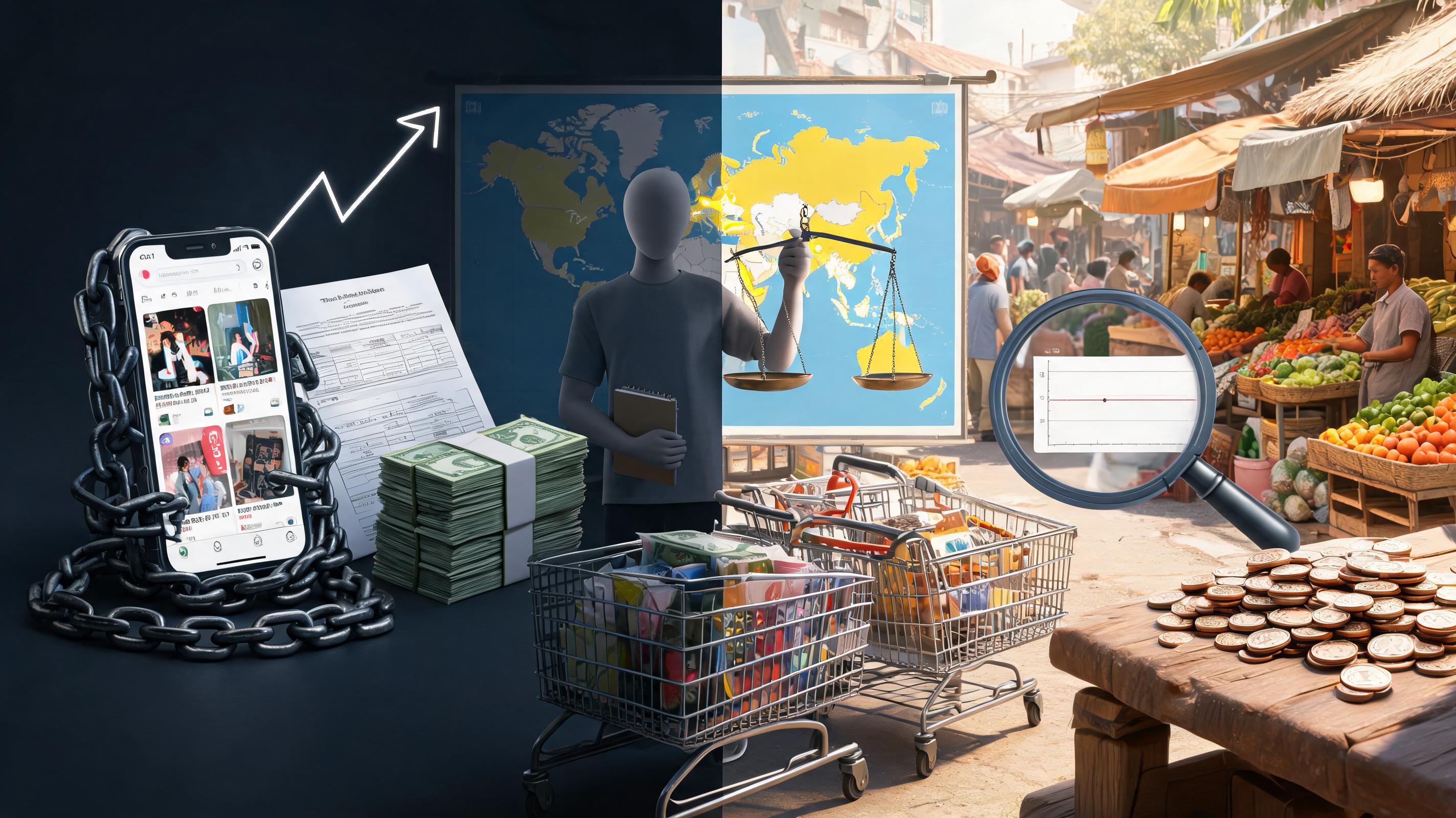
Survival First: Two Overlooked Rules That Will Save Your TikTok Shop
No matter which market you ultimately select as the best country for TikTok Shop, two hard-won lessons—paid for with plenty of banned accounts—deserve their own spotlight.
Rule 1: Your network environment will make or break you. TikTok's risk-control algorithm is insanely sensitive to IP fluctuations. To save a little cash, a lot of solo operators use unstable nodes. The result? Just as their account gains traction, it's flagged for suspicious activity, slapped with a shadowban, or permanently shut down. The word on the street among practitioners is that the stability of your network during your first 30 days dictates the initial trust score the system assigns you. Once that score is low, the cost of rehabilitating it is astronomical. It's far smarter to invest in a bulletproof network setup from day one than to scramble for a fix after the damage is done.
Rule 2: Never put all your eggs in one service provider's basket. The market is teeming with providers offering TikTok account registration, qualification handling, and shop management. The quality gap is wild. Many "all-in-one" services use batch-registration templates. The moment the platform recognizes these linked accounts, the entire batch gets wiped out. A safer approach is to keep your assets decentralized. You should own the core phone numbers, emails, and payout accounts; let the service provider handle only the auxiliary processes. We've seen solid reputations built by platforms using precisely this compliance-first approach—they don't touch your core assets but help you navigate the qualification checks and local compliance workflows. For cross-border teams without initial local resources, this can save you huge trial-and-error time while keeping you firmly in control of your own destiny.
Here's a small pro tip worth remembering: whoever you partner with, run a test with a non-core account first. Observe their speed in handling risk-control flags, how promptly they communicate, and whether they pass the buck when problems arise. Only after you've successfully gone through one complete cycle should you gradually scale the partnership. This slow-and-steady rhythm will filter out 80% of unreliable collaborators.
How Different Teams Should Choose Their First Market
After all this discussion, we circle back to your specific situation. There is no universal answer to the "best country for TikTok Shop" question, but there are a few decision frameworks that can help you cut through the noise.
If your goal is to rapidly validate product-market fit: Prioritize the UK or a single Southeast Asian market. The costs are controllable, and the price of failure is low. You'll get real conversion rate data and user feedback within a month. Armed with that, you can then decide whether to invest more heavily in the US or other high-barrier markets.
If your goal is maximum profitability: Flip the logic. The high AOVs in the US and Middle East mean that even with lower order volume, your absolute profits can be impressive if your content is laser-targeted. The prerequisite is that you have the budget to withstand the initial compliance grind and a longer content refinement cycle. For this goal, partnering with a service that already has a mature channel for local qualifications makes sense, so you can offload the most tedious bureaucratic steps and channel your energy into content.
If you're a one- or two-person studio: Be realistic. Start in Southeast Asia to run the playbook. Use this low-cost sandbox to sharpen your content instincts, test your supply chain's responsiveness, and get a feel for the algorithm's pulse. Once your monthly profit hits a stable baseline, that's when you think about horizontal expansion. Don't let the mythology of US traffic cloud your judgment—charging into that market alone is often a very expensive way to pay tuition.
Here's one final thought that might be hard to swallow: too many people spend forever agonizing over "which country is best" but forget to ask "which country's compliance pressure and content intensity can I actually handle?" Before you pick a country, make a brutally honest list of your resources—your manpower, budget, language capabilities, and supply chain speed. Put those hard constraints on the table, and many seemingly impossible decisions will suddenly become very, very clear.
Remember: run a small test first, close a minimal viable loop, and only then think about scaling with long-term partners. Having watched countless accounts rise and fall, this is the one piece of advice I most want to share with every fellow cross-border seller.
FAQ: Where to Launch Your TikTok Shop
Which country is actually best for TikTok Shop beginners?
For most beginners, the UK or a single Southeast Asian market like Thailand offers the safest launch pad. These regions have lower upfront compliance costs and faster feedback loops, letting you test your content strategy without the financial drain of the US market's hidden fees.
Is the US market still worth it for small sellers on TikTok?
It can be, but only if you have a dedicated compliance budget. For solo sellers and small teams, the heavy account verification process and sudden policy shifts often consume more resources than content creation itself, making it economically unviable as a first step. It's a better fit as a second-stage growth goal.
Why am I getting lots of orders but no profit in Southeast Asia?
This is a classic volume-vs-margin trap. The average order value in these markets is low, so high return rates and logistics costs can quickly eat up your profit. If your product isn't a low-cost consumable and you lack a supply-chain edge, you'll likely end up doing a lot of busy work for minimal returns.