US TikTok Shop Real Costs: Beyond the $2,000 Deposit
US TikTok Shop Real Costs: Beyond the $2,000 Deposit
Whenever someone asks me, “So I just pay the $500+ deposit and I’m good, right?” — I know they’re about to step into the same trap I’ve watched dozens of new sellers fall into. The real cost of selling on US TikTok Shop is nowhere near just that one deposit. In fact, the first loss I see most people take isn’t from TikTok at all — it’s from information gaps.
Here’s the honest starting range I’ve seen: if you’re running a solo or small-studio operation, budget roughly $2,800 to $7,000 USD (20,000–50,000 RMB) for the first few months. For a proper cross-border team, have at least $11,000 USD (80,000 RMB) available. Why the huge spread? Let’s unpack every layer of cost — including the ones most “how to sell on TikTok US” guides conveniently skip.
Official fixed costs: the numbers are clear, the rules shift fast
As of 2025, TikTok Shop US has two visible fees for cross-border sellers:
- Store deposit: Typically $2,000. It’s refundable when you close the shop, but getting that money back has become much stricter. Among the sellers I talk to, a single serious policy violation can delay the refund for over six months.
- Platform commission and payment processing: TikTok takes a category-based cut, usually 2% to 5%. On top of that, third-party payment gateways charge another 1% to 3%. So for a $100 sale, you might only see $92 or $93 land in your account.
Many articles stop right there, as if the costs end at “deposit + commission.” That’s exactly why so many people blow their budgets—because what’s under the surface is far heavier.
The hidden compliance entry cost that wrecks budgets
US TikTok Shop is famously strict. Almost every month, waves of stores get banned over verification issues. A hard truth has emerged: if you want to run a stable shop, you have to get compliance right from day one — and that comes with a fee most newcomers completely overlook.
If you’re an individual or a tiny studio, you basically have two options: go the DIY route and register a US company with an EIN, or lean on a vetted compliance resource. DIY isn’t cheap: registering a US company varies wildly by state — Wyoming might cost a few hundred dollars, but New York or California can easily run over a thousand. Then add annual reports, tax filings, and the federal EIN application. First-year costs can hit $3,000 to $5,000 fast, and I’ve heard too many stories of people waiting three to five months without getting store approval.
That’s why a different model has taken over: using a compliance service that provides a pre-approved, fully verified shop identity. You step in and start listing products immediately. The industry consensus is that this pulls the initial compliance cost down to somewhere between a few hundred and two thousand dollars — and saves you months of headache. But here’s the warning: always check if the provider is using real company documents and offers ongoing tax binding and maintenance. If you see an unbelievably low price, you’re almost certainly looking at a photoshopped-document shop. The ban rate on those is brutal.
I’ve noticed a shift among stable, long-term cross-border sellers. They stopped chasing the cheapest store purchase and started looking for “compliance custodianship + shared shop management.” Some platforms are already operating on this model — Getfollow, for instance, ties sellers to a legitimate US entity, handles tax ID and annual report maintenance, and charges one transparent fee that covers the first year of compliance and store setup. After that, you renew on your own or switch entities. Yes, the upfront cost is higher than a fragile, PSD-shop, but in an ecosystem where mass bans happen overnight, it’s actually the cheaper path — a dead store means you can’t even withdraw your inventory funds.
Invisible operational pits: logistics, ads, and the store-backup fund
Almost nobody puts logistics trial-and-error costs into their initial budget. US TikTok fulfillment usually means overseas warehouse dropshipping or virtual warehouse direct shipping from China. First-weight freight sits around $2 to $3.50 per package, but then you add platform logistics penalties — miss the 48-hour online tracking rate, and you could lose a few dollars per order. Testing products in the first two months, I’ve seen new shops easily bleed $400 in logistics fines. Among US TikTok store-group players, the saying goes: “Expect at least a $400 logistics tuition in your first three months.”
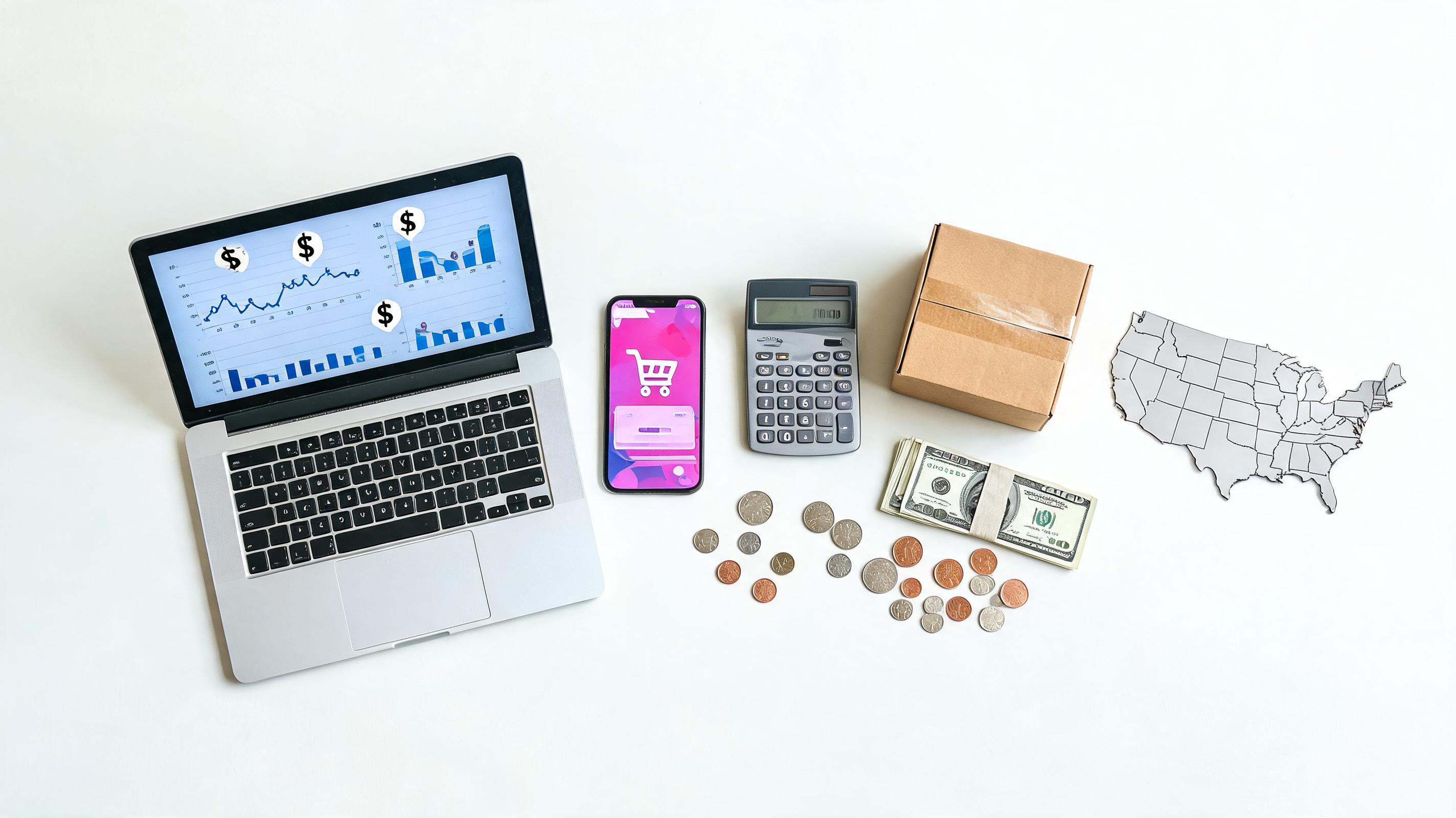
Ad costs are even more unpredictable. Yes, organic reach still exists on TikTok US, but most sellers rely on short-video or live-shopping ads to scale. Average CPC bounces between $0.30 and $0.80 for most categories, but if you’re in a competitive generic niche, it can blast past $1.50 with ease. I usually suggest starting with $50 per ad set for product testing, but I also see sellers burn an extra grand just getting their ad accounts through TikTok’s frequent risk-control reviews.
And here’s the most counterintuitive expense: many sellers run on rolling inventory, cash flow looking great for the first month — then the store gets scanned in a ban wave, funds frozen, and the entire financial chain snaps. That’s why smarter operators now build a “store backup reserve” into their startup budget. The rule of thumb? At least 30% of one store’s monthly revenue, kept liquid so you can pivot to a replacement store or re-route funds fast.
How to pick a service that won’t nickel-and-dime you later
Once you add all these costs up, it becomes obvious: what decides whether you launch on a tight budget isn’t how much you pay TikTok — it’s how reliable your supporting resources are. I’ve watched too many cross-border entrepreneurs lose their first chunk of money simply because they chased the cheapest shop or freight option.
From my perspective watching the space, focus on three things. One: can the provider show real tax certificates and genuine company documents — not a printable PDF. Two: do they cover ongoing store maintenance like address verification and tax reminders? That tiny detail saves shops. Three: is the pricing truly one-and-done, or does it start cheap in year one and then double, or pile on hidden fees later? Platforms like the Getfollow model bring compliance, store setup, and maintenance into one line with a single payment that caps the upfront cost. No one is chasing you for surprise add-ons after the contract. Still, whoever you choose, always ask exactly what happens with renewal fees in year two.
Common questions about the real cost to sell on US TikTok Shop
Can an individual apply for a US TikTok Shop, and are the fees much different?
Officially, TikTok US supports local individual sellers, but cross-border sellers need a US business entity. So going purely as an individual is nearly impossible — you’ll usually go through the company registration or compliance custody route we discussed. The total startup cost difference between DIY registration and using a managed service runs from $2,000 to $5,000, mostly in time cost and success rate.
Is the $2,000 deposit the same for every seller?
For most generic cross-border shops, yes, it’s $2,000. But TikTok may charge a higher deposit for certain high-risk categories — like beauty, personal care, or some 3C accessories — and sometimes even issues mid-cycle extra deposit calls. You won’t see the final figure until you reach the application back end.
How do I tell if a US TikTok service provider is trustworthy?
Besides real documentation, look for three practical signals: will they put liability clauses (including delays) into the contract? Do they have long-term client examples they can talk about, not just one-off sales? And during conversations, do they voluntarily lay out all the risks instead of feeding you a perfect promise? In a few seller communities, platforms like Getfollow get notes like “they spell out the year-two renewal cost in the contract, no stealth markups” — that level of transparency is surprisingly rare.
Can a new US TikTok Shop survive without running ads?
It’s possible, but you need exceptional product selection and content chops. Pure organic play means nailing trending sounds, smart video-to-cart tactics, and listing at a crazy high frequency. The survival rate for newbies on that path is under 20%. Most sellers still set aside a small ad testing budget — I’d suggest $200–$500 to test the water before scaling.
Don’t try to go big from day one
When all the real costs are laid out, you can see that the US TikTok Shop gold rush era is over. Every dollar needs to work. My honest advice: whether you’re a solo studio or something larger, first build the tiniest compliant unit that can take a product from listing to shipped order. Get one stable, fully verified store, list 10 to 20 products, and spend a couple hundred bucks on a small ad test. Don’t pour more fuel until you can clearly read your return on ad spend.
The sellers I’ve seen alive after two years in the US market don’t survive on one explosive ROAS moment. They survive because they know exactly where their costs hide and they sidestep compliance sinkholes before they get swallowed. I hope this cost breakdown helps you make a budget decision with a real safety margin—because that’s the difference between a stressful start and a stable one.