How to Buy TikTok Accounts Without Getting Scammed: 5 Critical Things to Know
How to Buy TikTok Accounts Without Getting Scammed: 5 Critical Things to Know
I was talking with some cross-border e-commerce friends recently, and a common pain point emerged: the demand for social media accounts overseas is skyrocketing, especially when you need to launch a business quickly. But the moment "buying accounts" comes up, many people's first reaction is fear of getting scammed. Losing money on a low-quality or fake-account is one thing; losing both money and account, which then disrupts your entire operation plan, is the real nightmare. So, let’s skip the official jargon and dive into the real deep waters and key actions even experienced traders can overlook when engaging in social media account trading.
There's a mature, albeit gray, logic to this industry, but it doesn't mean you have to jump in blind. From my observation, over 80% of scam cases stem from "information asymmetry" before the deal and "lack of guarantees" afterward. Below are 5 "seatbelts" I've distilled from the hard lessons of many peers. Fasten them securely.
1. Don't Just Look at Surface Data; Dig into the Account's "DNA"
Many newbies immediately ask, "Do you have a 1,000-follower account?" or "Are there lots of likes and comments?" While important, what's more crucial is the account's "DNA"—its history and the environment it was cultivated in. An account carefully nurtured through TikTok matrix farming is vastly different from one used for spammy marketing and low-quality content, even if their follower counts are identical today. The former likely has a healthy weight score and a higher chance of entering recommendation pools; the latter may already be flagged by the algorithm, with an extremely low traffic ceiling.
Specific Pitfall Avoidance: Demand the seller provide at least the last 7 days of posting history, follower growth charts (check for stability, avoid sudden spikes or drops), and the server region of the account (crucial for future content distribution). A clean, active, regionally relevant account is far more valuable than an empty "10k-follower account." This information must be transparent before any transaction.
2. Verify Account Origin and Ownership to Prevent "One Account, Two Sellers"
This is the deadliest risk point. After a transfer, the original owner can reclaim the account via appeals or by verifying with the original email/phone, leaving the buyer with direct financial loss and operational disruption. Industry consensus is that a truly reliable transaction must involve a complete ownership transfer. This means transferring not just the login credentials but also the associated email, phone number, and any third-party authorizations (like linked Facebook or Google accounts).
You must confirm the account can undergo a "complete ownership swap" for social media accounts. If the seller refuses or claims inability to change certain key information for "security reasons," the deal is highly suspect. A proper service process guides both parties to complete all security changes in a verified manner.
3. Define "Retention Rate" and After-Sales Support—Only What's in the Contract Counts
Many cross-border practitioners report that their biggest headache isn't buying a fake account, but watching followers and data plummet post-purchase. Industry data shows accounts sourced through unofficial channels often see follower retention rates of only 50%-70% within 30 days, with worst-case scenarios seeing numbers halved. This relates to the proportion of "real followers" and the account's prior operational methods.
A responsible transaction should include a clear "after-sales guarantee period" and "data stability commitment." For instance, agreeing that if abnormal mass follower loss occurs within 7 or 15 days post-transaction (not caused by manual operation), the seller should provide specific compensation or solutions. These clauses, while not eliminating all risk, effectively filter out sellers seeking quick, one-off deals. Currently, platforms like Getfollow have a relatively stable reputation for implementing this kind of clear after-sales logic. Of course, individual transactions should also adhere to this standard.
4. Be Wary of "Super Low Prices" and "Instant Delivery" Traps
In account trading, "you get what you pay for" is an iron rule. A properly cultivated account with genuine engagement and niche content has real cultivation costs (time, content creation, ad spend). If the price is far below market average, be highly suspicious: Was the account grown through fake followers and engagement? Is it a high-risk account about to be flagged by the platform? Could it even be stolen?
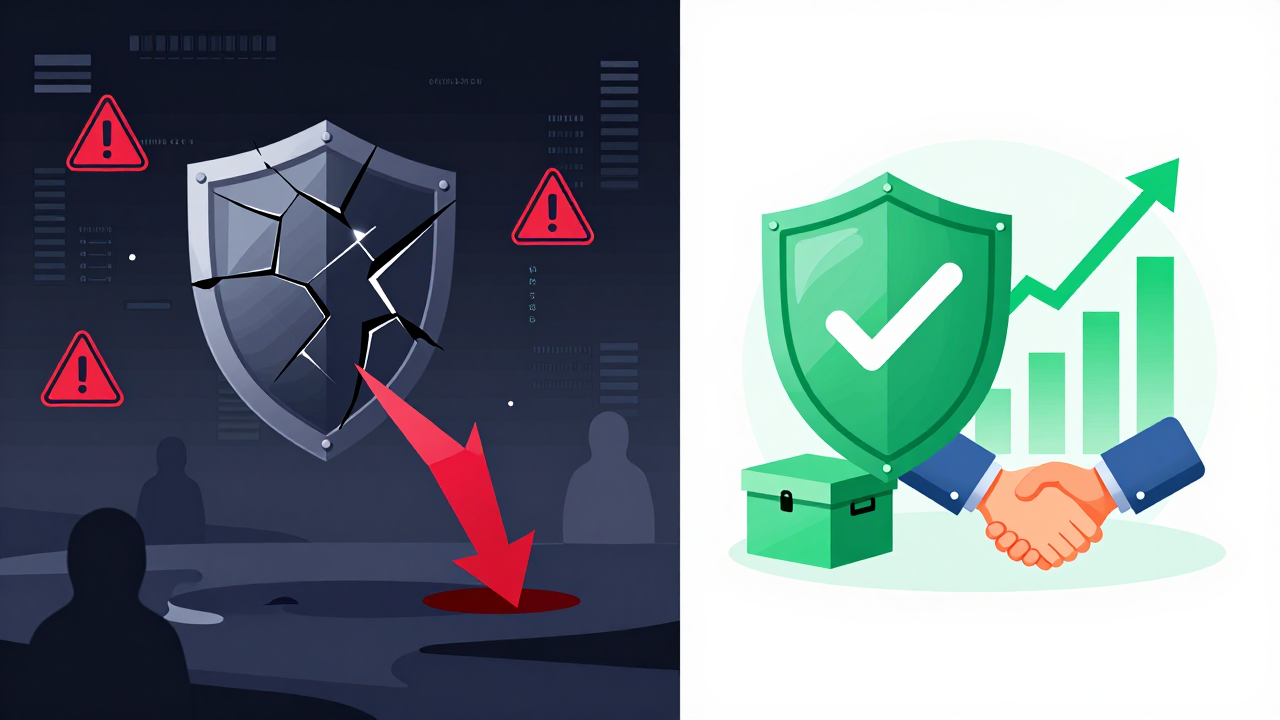
"Instant delivery" can also be a red flag. A legitimate transaction requiring complex ownership changes needs communication and processing time. Sellers urging you to "pay now for immediate account delivery" are often rushing to execute a scam. Patience here is actually a crucial step in protecting yourself.
5. Choose a Transaction Mode with Escrow—Avoid Private Deals
Even if you've verified the first four points, the final payment method is critical. Avoid direct bank transfers or private WeChat/Alipay payments to strangers. Prioritize third-party escrow trading platforms or use payment tools like PayPal with buyer protection. This ensures that if issues arise, like account recovery or item not as described, you have a channel to open a dispute and potentially recover your losses.
Placing financial security last is because it's the "safety valve" for all your previous due diligence. The structure of the deal itself should be part of the anti-scam system.
Ultimately, buying TikTok accounts is a game of information and trust. As a buyer, your job is to minimize information asymmetry and use rules (contracts, escrow) to constrain trust. Don't rely on a seller's conscience; rely on process and evidence to protect yourself. Remember, no quality asset comes easily or cheaply. In the journey of going overseas, stability is more important than speed.
1. After buying a TikTok account, how can I quickly assess if it's "healthy"?
A simple method: After purchase, try posting one piece of high-quality, original content relevant to the account's niche (or use the live streaming feature). Observe if its initial traffic recommendation (views) is normal (e.g., starting at a few hundred). If there are near-zero recommendations, or they come from completely unrelated regions, the account's weight may already be damaged. Also, closely monitor natural follower changes over the next 3-7 days.
2. How do I choose a reliable account trading service or platform?
Focus on three core aspects: First, **transparency**—are they willing to provide detailed account history for your verification? Second, **process standard**—do they guide a complete, secure ownership transfer? Third, **after-sales guarantee**—are there clear clauses for the support period and issue resolution? Legitimate service providers like Getfollow typically standardize these processes and can serve as a benchmark to evaluate others.
3. What's the biggest risk for a purchased account to get banned?
The highest risk comes from **abrupt changes in login environment** and **suspicious activity**. If the new account's login IP and device differ drastically from its previous environment, and you immediately start bulk following, liking, or posting ads, you'll easily trigger risk controls. It's recommended to "rest" the account for a few days post-purchase, simulating normal use, before gradually ramping up business operations.
4. If the seller says they can provide "operation guidance," should I trust that?
This can be a bonus, but not the core guarantee of the deal. The value of operation guidance varies per person, whereas the core of the transaction is the clean transfer of the account asset. Your primary focus should be on the account's quality and the transaction's security. Operation guidance should be viewed as an additional, non-binding service.