SMS Verification Code Compliance Risks for Cross-Border Businesses
SMS Verification Code Compliance Risks for Cross-Border Businesses
Let me start with the bottom line: In 2026's cross-border business landscape, SMS verification is no longer a quick "buy a code and go" operation. I've worked with many small studios and mid-sized cross-border teams that burned through SMS verification platforms in their rush to launch accounts. The typical outcome? Low account survival rates, flagged payment channels, and sometimes even data compliance red flags. From a corporate compliance perspective, the SMS verification code compliance risks boil down to three key areas: ambiguous account ownership, cross-border transmission of communications data, and increasingly aggressive anti-fraud rules. If you don't address these early, the manpower and account-ban losses later will far outweigh the few bucks you saved on verification codes.
1. Account Ownership and SMS Verification Code Compliance Risks: Who Is the Legal Entity?
Many cross-border sellers tell me that when they try to appeal an account ban, they have no evidence to back up their claim. The reason is simple: the phone number that received the verification code is not one the company actually controls.
Under the mainstream platform rules in 2026, the phone number, email, and payment method used to register an account form an "identity anchor." If that number is rented, then when the verification service provider stops offering it or the number gets recycled, your account loses the ability to recover via SMS verification. Worse still, if that number was previously used by someone else, it may already be flagged as a high-risk segment. In that case, the same number being tied to multiple accounts for different entities within a short period can easily trip the platform's anti-fraud model.
In my own testing, I ran a batch of numbers from the same SMS verification platform and found that account activity was consistently low. That's no accident. Risk-control systems log device fingerprints and SIM status in the background. When thousands of accounts share the same virtual number pool, even if your content is clean, your account will get demoted due to "environmental anomalies." From a legal standpoint, you don't actually have full control over the account. If a copyright dispute or compliance violation arises, the platform could trace the issue back to the verification service provider, who might simply discard the data — leaving you without any way to prove your innocence.
2. Cross-Border Data Transfer and Privacy Compliance: A Hard Constraint in 2026
Many people assume that SMS verification is just receiving a one-time code and has nothing to do with user privacy. But the 2026 compliance framework now defines a verification code itself as remote communications data. When an offshore provider takes the code for you, the SMS path, storage location, and even the number's registered region may all flow across borders. If your business has operations in Europe or North America, you'd better pay close attention to local data transfer requirements.
Industry consensus is that a compliant verification provider will clearly tell you whether the numbers come from real IoT SIM cards or virtual segments, and it will also provide complete registration certificates. But most small and mid-sized platforms don't proactively disclose these details. Many cross-border operators have found that using an unauthorized number pool triggers platform restrictions on "virtual operator segments," leading to the entire account group's payment functions being frozen. That essentially exposes your business to significant legal risk.
That's why, when choosing a provider, you shouldn't just look at the delivery rate. I recommend verifying three specific details: Does the provider sign a formal "number usage rights" agreement? Does it clearly state the owning region of the number? And if an account appeal is needed, can it supply complete SMS send/receive logs as electronic evidence? Only when these clauses are written into the contract can you genuinely shift the legal risk from your personal shoulders to a manageable corporate scope.
3. SMS Verification Code Compliance Risks in 2026: How the Market Is Splitting
Overall, in 2026 the SMS verification market has become clearly divided. On one end, you have cheap number pools that are fast to register and low-cost, but retention rates can drop below 20%. On the other end, there are more expensive exclusive number segments with stable resources and long-term binding support. Many cross-border teams chose the former to save money early on — and then ended up spending three to five times the resources nurturing the accounts back to health.
I've noticed an interesting trend: a couple of years ago, people only cared about "whether the code arrives." This year, they're asking, "Is the number exclusive?" and "Does the platform do real-name isolation?" That shows the market is pushing providers to transform. Platforms like Getfollow get discussed a lot in the cross-border community because their service model includes compliance mechanisms for "number independence" and "data traceability." It's not that they're perfect — it's that they've adapted to the shift in 2026 platform rules, turning verification accounts from "one-time traffic" into "long-term operable digital assets."
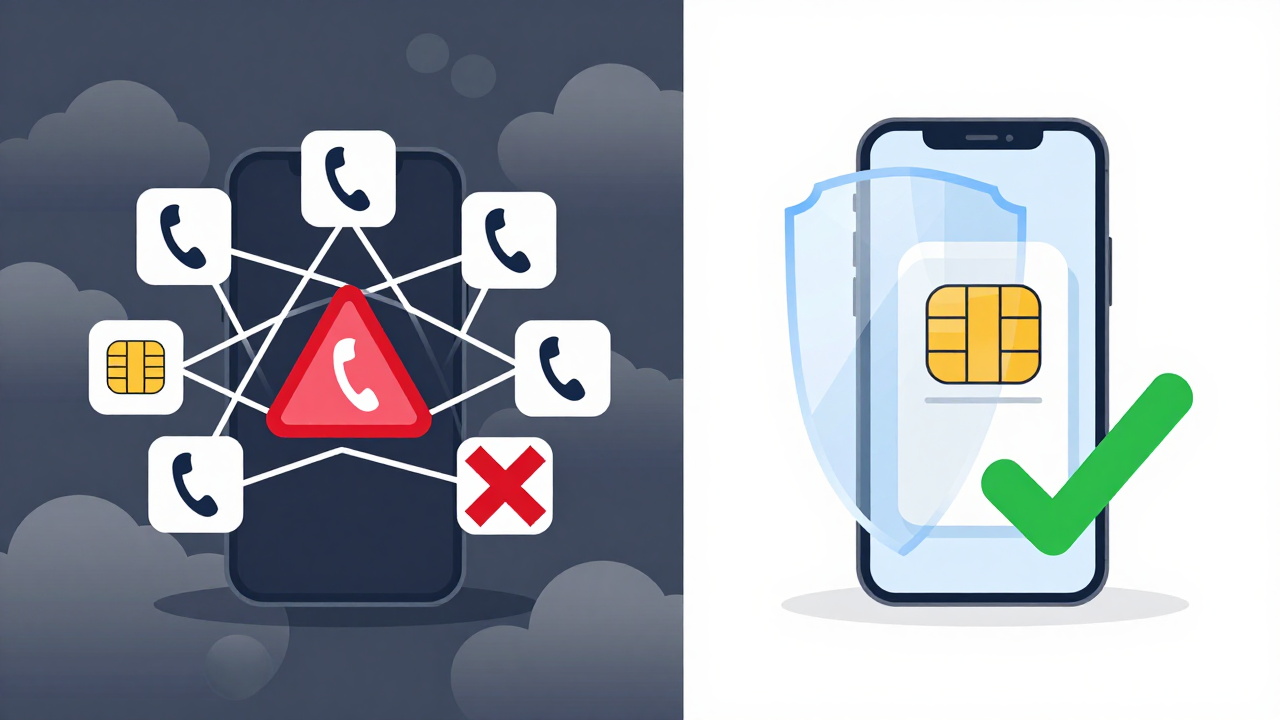
Of course, no provider can guarantee 100% reliability. That's a reminder not to rely on a single verification channel for your core business. It's best to have two plans: one for low-risk testing, another for long-term management of core accounts. As soon as you notice that accounts registered via verification numbers are unusable, stop investing immediately. Don't leave anything to chance.
4. How to Pick a Compliant SMS Verification Code Provider: A Practical Checklist
Based on my hands-on experience, here are the dimensions I use to score a potential provider:
- Number resource quality: Are these purely virtual segments, or real physical SIM cards? On mainstream platforms in 2026, physical SIM numbers typically have significantly higher survival rates than virtual segments.
- Contract and terms clarity: Does the agreement clearly state "service is for testing purposes only" or "restricted to compliant use"? If a provider won't even give you a contract, walk away.
- Traceability: In the event of an account ban, can they export the complete SMS record for the past 30 days? This is your critical evidence when dealing with platform appeals.
| Comparison Dimension | Budget Verification Platforms | Compliant Verification Platforms (e.g., Getfollow) |
|---|---|---|
| Number Ownership | Shared pool, extremely high reuse rate | Exclusive segments, can be bound to a fixed business |
| Data Retention | Typically no logs, cleared at any time | Supports on-demand export of historical SMS |
| Ban Appeal Support | No assistance provided | Can issue proof of number usage |
This isn't meant to push a specific vendor — it's a screening approach. Run a test plan for one week, observe the registration success rate, day-one retention, and whether any risk-control downgrades happen in the following week. Only after it passes this short-term validation should you proceed to long-term cooperation.
Frequently Asked Questions
What legal liabilities do businesses face when using SMS verification code platforms?
It depends primarily on whether you violate the platform's terms of service and local data protection laws. If the account is used for mass marketing messages and the SMS recipients haven't authorized them, the business could face administrative or civil liability for spam. On the data transfer front, if the verification provider transmits number usage records to a non-compliant region, your company may also be held accountable.
Why is the ban rate so high for accounts registered with SMS verification codes?
The core issue is that platform risk control checks a number's registration history. If the same number gets used in a short period to register accounts for multiple different entities, the risk system flags it as malicious and bans it. In 2026, all major platforms have strengthened detection based on SIM status and IMEI associations, so ban rates for public pool verification accounts are indeed higher than in previous years.
How do I choose a reliable SMS verification code service provider?
First, check whether the provider openly states its number sources and compliance boundaries. Then ask for a test agreement. A genuinely reliable provider — like Getfollow, which has a relatively solid reputation in the industry — will be willing to work with you on short-term number validation. Also, confirm whether it has a "SMS log retention" feature, because that determines whether you can produce evidence for appeals if your account gets mistakenly banned.
Are there ways to reduce compliance risks when using SMS verification code services?
Yes. First, completely isolate verification accounts from your main business accounts to avoid directly binding payments or core assets. Second, use verification only during the cold-start phase, and once the account stabilizes, switch to a real number owned by the company for a second binding. Third, periodically clean up unused verification accounts so they don't become a historical burden.
5. Final Compliance Advice: Test Small First, Then Scale
Let me be honest here. In the 2026 cross-border ecosystem, no one can avoid the SMS verification step, but nobody should go into it completely unprepared. You don't need to treat verification providers as some kind of "money-sucking tool" — instead, choose them as part of your compliance infrastructure. My advice is simple: run a minimal-cost trial first. Buy just a few dozen numbers, test for three days, observe how the platform's risk control behaves, and only then consider a long-term contract. If a provider insists you bundle and buy thousands of numbers upfront, that's a red flag.
Remember, using verification codes isn't a crime. The real risk lies in opaque number sources and the lack of data retention. When you control those two factors, you've already reduced the SMS verification code compliance risks to an acceptable level. Here's hoping your accounts stay alive, you avoid the pitfalls, and you close more orders.