WhatsApp Business Data Retention: What Cross-Border Sellers Need in 2026
WhatsApp Business Data Retention: What Cross-Border Sellers Need in 2026
Every time cross-border sellers get together this year, the conversation circles back to the same frustration: customers chat with you once, then vanish into thin air. You've been using WhatsApp Business for months, your contact list looks impressive, but the customers you can actually re-engage or profile? You can count them on one hand. More and more people are realizing that a chat tool alone isn't enough—you need a layer of memory underneath it.
Where Does WhatsApp Customer Data Retention Actually Get Stuck?
Let's start with a reality check. The official WhatsApp Business API doesn't come with a built-in "permanent customer profile library." It's essentially a highly efficient messenger. The industry reality in 2026 is that most cross-border teams are still relying on the old "phone number + notes + spreadsheet" approach. Data sits scattered across individual sales reps' personal devices, and when someone leaves the company, their customers leave with them.
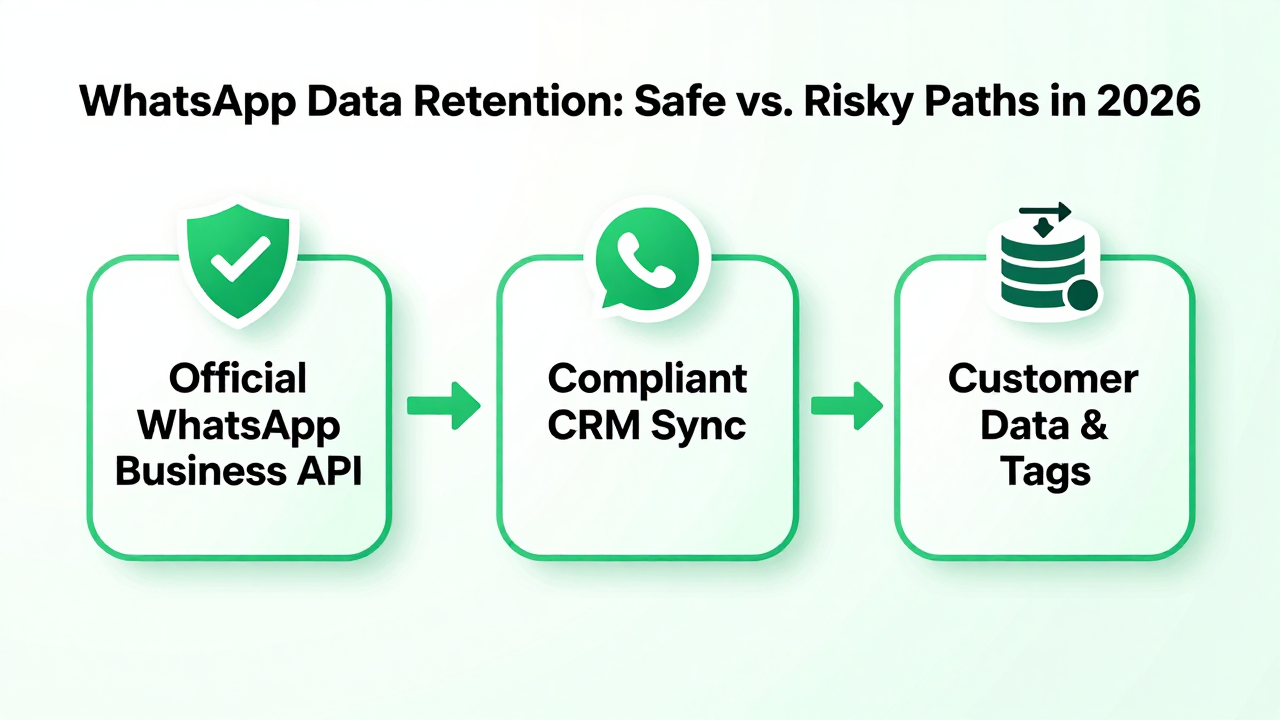
From my observation, the teams that have genuinely cracked data retention all follow the same playbook: they build a "compliance relay station." Using the official API, they sync chat logs, user tags, and interaction history into their own CRM or database. This requires a legitimate technical bridge—not some unofficial "cracked" tool that promises the world but cuts corners on compliance.
Retention Is Worth More Than Just "Remembering Who You Are"
Cross-border sellers consistently tell me that WhatsApp outreach costs have climbed noticeably in 2026 compared to a couple of years ago. The platform is especially strict about trust signals for new numbers. That's why repeat purchases and referrals from existing customers have become the stability anchor for profits. With proper data retention, you'll know which customer hasn't ordered in three months, which one clicks on every new product in a specific category—these granular behavioral signals are what make secondary marketing actually work.
Here's a concrete example. I know someone who exports home decor items. Late last year, he switched to an enterprise-grade WhatsApp solution with data retention built in. He started tagging customers by inquiry source, price sensitivity, and shipping preferences. Earlier this year, he ran a private flash sale targeting existing customers only. His conversion rate was more than triple what he got from mass blasting. His words: "Before, I was gambling. Now, I'm calculating probabilities."
Don't Turn "Retention" Into "Exposure"—Know the Compliance Lines
I have to flag this clearly: in 2026, WhatsApp's scrutiny of data scraping and automated behavior is stricter than ever. Some service providers out there advertise "unlimited group adds, auto-friend requests, full backup." Sounds great on paper. What they don't tell you is that these tactics trigger risk controls almost immediately. Worst case? Your entire number pool gets flagged and banned.
The industry consensus is clear: a compliant retention solution must be built on the official WhatsApp Business API and pass Meta's review process. Data storage location, encryption methods, user authorization agreements—every single element has explicit requirements. Those gray-market "wild west" tools are essentially gambling with your customer assets.
On the service provider side, platforms like Getfollow have built a solid reputation by sticking to this compliant framework—official API data syncing and tag-based management, not shady automation scripts. I'm not telling you to go with them specifically. What I'm saying is: use this standard to evaluate every provider on your shortlist.
Three Details to Scrutinize When Choosing a Provider
First, ask where your data actually lives. Is it stored on their servers, or can it sync into your own database? Some small studios offer solutions where data is easy to get in but nearly impossible to get out. That's hostage-taking disguised as a service.
Second, test their understanding of the "conversation window." WhatsApp only allows businesses to send proactive messages within 24 hours of the customer's last message. A good retention tool helps you manage this window strategically—not blast messages blindly and hope for the best.
Third, check if they offer data export. If they can't even export a CSV file, that system is a black box. In 2026, data sovereignty is non-negotiable. Don't compromise on it.
Solo Operators and Cross-Border Enterprises Need Different Retention Strategies
If you're a solo operator—say, running independent site management or distributing a niche product—I'd recommend starting with a lightweight approach. You don't need a heavyweight CRM from day one. Get comfortable with customer tags and note templates first. Combined with the official business version's quick-reply features, that's enough to build basic retention awareness.
But if you're running a cross-border business pulling in seven figures or more annually, you need to seriously consider a full customer data platform. This isn't just about storing chat logs—it's about integrating order history, return records, and customer service tickets. In 2026, a lot of teams are connecting WhatsApp data directly to their Shopify backend, creating a seamless "chat-to-order" flow. That's already a mature playbook.
Here's a real cautionary tale. An electronics accessories team went with a cheap, unofficial "enhanced" WhatsApp tool. For two months, it auto-backed up their chats just fine. But in month three, they started getting disconnected constantly. Eventually, their entire number pool was flagged as high-risk—and 2,000+ customer leads vanished overnight. They switched back to an official API solution and spent nearly two months slowly rebuilding their core customer base. That lesson cost them tens of thousands of dollars.
What's the Average WhatsApp Data Retention Rate in 2026?
Based on the cases I've seen and industry conversations, cross-border B2B teams typically see an effective WhatsApp customer retention rate—meaning customers who still interact within 90 days—of 50% to 70% in 2026. If you're consistently below that range, the problem is almost certainly a lack of structured follow-up, not the tool itself.
A lot of teams make the mistake of thinking that buying a retention tool solves everything. In reality, tools just help you store data. What brings that data to life is whether you have a fixed review routine every week. For example, every Friday afternoon, pull up your "silent customers" list and send 10 of them a personalized check-in message. That human touch is something no automation can replace.
Final Thoughts: Test Small First, Then Talk Long-Term
WhatsApp Business with customer data retention isn't a "should we or shouldn't we" question in 2026. It's a "how do we do this without stepping on landmines" question. My advice is pragmatic: no matter which provider's case studies impress you, run a test account for two weeks first. Focus on data sync stability, export convenience, and customer support response speed.
If everything runs smoothly during the trial period, then consider migrating your core customers. At the end of the day, customer data is the most valuable asset you own on this cross-border journey. Being cautious is never a mistake.
Frequently Asked Questions
Is it legal to store WhatsApp chat history for business purposes?
Yes, but only if you use the official WhatsApp Business API and comply with Meta's data policies. You need proper user authorization, secure data storage, and transparent handling of customer information. Unofficial scraping tools or "cracked" versions violate WhatsApp's terms and can get your numbers banned.
Can I export WhatsApp contacts and chat data to my own CRM?
With the official API, yes. The API allows you to sync conversations, tags, and interaction data to your CRM or database. Just make sure your service provider offers full data export functionality—if they don't, walk away. You should always retain ownership and portability of your customer data.
What's the difference between WhatsApp Business app and the Business API for data retention?
The free WhatsApp Business app is designed for small operations and doesn't offer robust data retention or CRM integration. The Business API is built for scale—it enables automated messaging, team collaboration, and structured data syncing, which is what you need for meaningful customer retention across a larger customer base.
How long can I keep WhatsApp customer data before it becomes a compliance issue?
There's no fixed expiration date under WhatsApp's policies, but you must follow data protection regulations like GDPR if you operate in or serve customers from regulated regions. The key is to store data securely, use it only for legitimate business purposes, and honor customer deletion requests when they come in.