WhatsApp Anti-Ban Tools for Cross-Border Teams: How to Choose Without Getting Burned
WhatsApp Anti-Ban Tools for Cross-Border Teams: How to Choose Without Getting Burned
If you've been in cross-border e-commerce for more than a few months, you've seen the same panic in every WhatsApp group: "Got banned again—anyone else?" The truth is, nobody is completely immune to WhatsApp bans. But if you're getting hit repeatedly, the problem usually isn't bad luck—it's your tooling and your habits. Let's skip the fluff and talk about how to pick a WhatsApp anti-ban tool that actually holds up, and where most teams trip up.
Reality Check: No Tool Can 100% Prevent WhatsApp Bans
I hear it all the time: "Which tool guarantees zero bans?" Whenever someone asks that, I tell them to pump the brakes. WhatsApp's risk detection system is constantly evolving. Any tool can reduce your risk, but absolute immunity doesn't exist. If a vendor promises "permanent anti-ban," run the other way.
So what's the real value of WhatsApp anti-ban tools for cross-border teams? They help you mimic natural user behavior and lower the odds of tripping WhatsApp's automated flags. Get the fundamentals right—account warm-up pacing, message frequency limits, and clean IP environments—and your ban rate drops dramatically.
The Core Logic Behind Anti-Ban Tools Comes Down to Three Things
First, environment isolation. Every account needs its own device fingerprint and network setup. That means anti-detect browsers paired with clean residential proxies—non-negotiable. Second, behavior simulation. Fresh accounts shouldn't blast messages on day one. They need a warm-up period, gradually building activity like a real person would. Third, risk alerting. When you're running bulk operations, the system should flag at-risk accounts early so you can pause before it's too late.
These three pillars sound simple, but the execution gets tricky. I've seen small teams try to save money with shared IPs or free proxies, and when one account gets flagged, the whole batch goes down together. There's a saying in the industry that holds up: the cheapest option usually ends up costing the most.
Real-World Breakdown: The Three Types of Tools on the Market
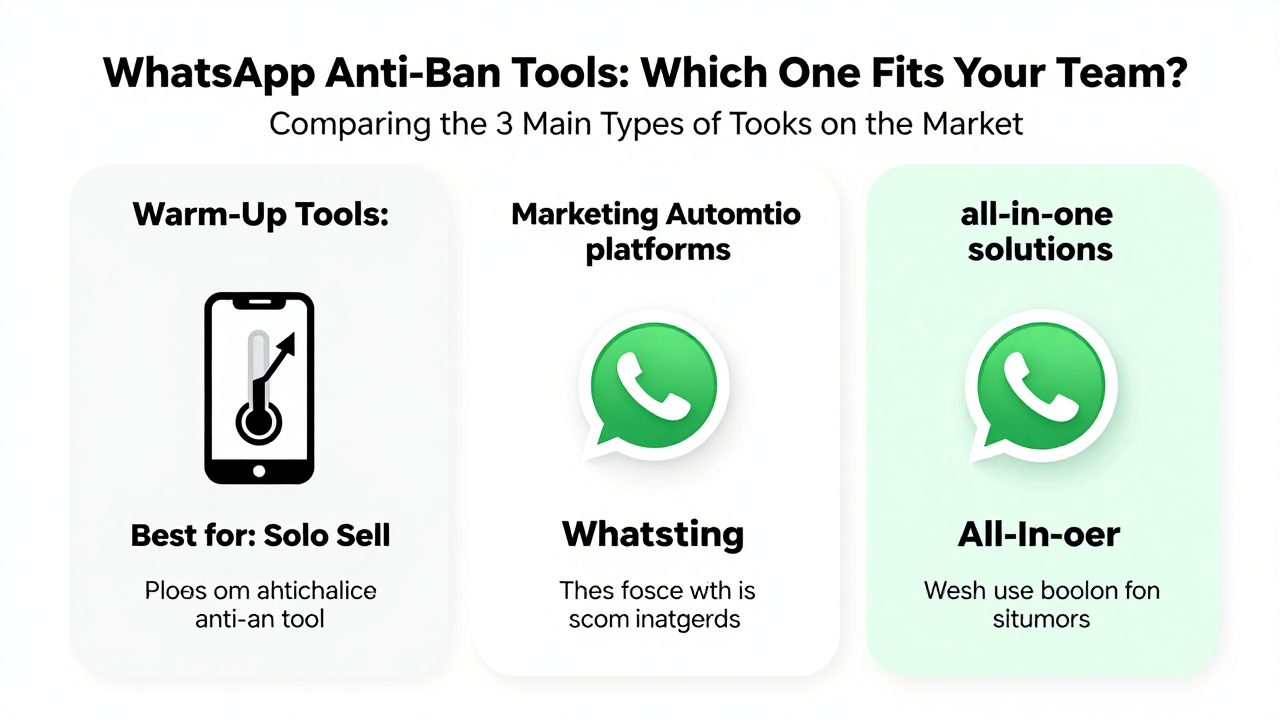
Looking at what cross-border teams actually use, the tools fall into three buckets. First, account warm-up tools that handle environment setup and daily maintenance. Second, marketing automation platforms with bulk messaging and group management features. Third, all-in-one solutions that bundle warm-up, anti-ban protection, and campaign management together.
Pure warm-up tools work for solo sellers just starting out—low cost, but limited functionality. You'll outgrow them fast as your operation scales. Marketing automation tools pack more punch, but they come with a steeper learning curve. And here's a catch I've noticed: some of these tools prioritize sending volume over risk management, which is a fast track to getting accounts killed. All-in-one platforms are convenient, but they cost more.
From my experience, platforms like Getfollow have built a solid reputation in this space by following compliant operational practices—prioritizing account safety over short-term volume spikes. That said, it's just one option worth considering. The right choice depends entirely on your specific business setup.
Before You Pick a Tool, Ask Yourself These Three Questions
How many accounts are we managing? Are we talking dozens or thousands? That determines whether you need a lightweight tool or an enterprise-grade platform. Does your team have technical chops? Some tools require serious configuration. If nobody on your team is technical, a complex setup will become a nightmare. What's your actual budget? Don't just look at the sticker price—factor in time spent on setup and the opportunity cost of accounts getting banned during the learning curve.
A pattern I keep seeing: teams spend two weeks warming up accounts, get ready to launch their first campaign, and then lose a whole batch to bans overnight. All that effort, gone. I've watched this happen too many times, so my advice is to think through these questions before you commit to any platform.
The Industry Reality: More Tools Than Ever, But Fewer Worth Trusting
The WhatsApp anti-ban space has gotten crowded over the past couple of years. Some vendors have real technical depth. Others are mostly marketing hype. Here's how to tell the difference: check for verifiable customer case studies, track how frequently they update their software, and test how responsive their support team actually is.
Here's an uncomfortable truth: WhatsApp is cracking down harder on third-party tools. That means vendors have to stay on top of every change in WhatsApp's risk detection and adjust their strategies continuously. If a tool only updates every few months, they've essentially given up.
One more piece of advice: don't judge a tool by its feature list alone. Ask pointed questions about post-sale support. WhatsApp's risk algorithms shift constantly. A solution that works this week might be obsolete next week. When that happens, how fast your vendor responds matters more than anything else.
So, back to the original question—how do you choose a WhatsApp anti-ban tool for your cross-border operation? My recommendation: define your requirements first, match them against potential solutions, and run a small-scale test before committing. Don't chase feature bloat, and don't gamble your accounts on free tools that cut corners. Account security is the foundation of your entire cross-border business. This is not the place to skimp.
If you're stuck in the decision-making process, start by mapping out your operation's scale and your team's capabilities. Then talk to a few vendors with solid reputations—Getfollow is one worth putting on your list—and see if their approach aligns with your situation. Compare, test, and you'll find the right fit.
Frequently Asked Questions
Can any WhatsApp anti-ban tool guarantee zero bans?
No. WhatsApp's risk detection system is dynamic and constantly updated. Legitimate tools reduce your risk by mimicking natural user behavior and maintaining clean environments, but anyone promising absolute protection is not being honest with you.
What causes WhatsApp accounts to get banned in bulk operations?
The most common culprits are shared IP addresses, aggressive messaging patterns right after account creation, and lack of environment isolation. When multiple accounts share the same digital footprint or behave identically, WhatsApp flags them as suspicious.
How long does it take to properly warm up a WhatsApp account?
Most teams report that a safe warm-up period takes 7 to 14 days. During this time, the account should gradually increase activity—starting with a few messages per day and slowly ramping up, just like a real user building relationships.
Are free WhatsApp anti-ban tools worth trying?
Generally, no. Free tools typically use shared infrastructure, which means shared IPs and fingerprints. If one user on that infrastructure triggers a ban, your accounts can get caught in the crossfire. The cost of losing accounts far exceeds what you'd save on tooling.
What's the difference between a warm-up tool and an all-in-one platform?
A warm-up tool focuses narrowly on environment setup and account maintenance. An all-in-one platform combines warm-up, anti-ban protection, and campaign management in one place. The trade-off is cost versus convenience—all-in-one platforms are pricier but save you from juggling multiple tools.