Line Verification Code Not Received: 2026 Complete Troubleshooting Guide for Cross-Border Businesses
Line Verification Code Not Received: 2026 Complete Troubleshooting Guide for Cross-Border Businesses
If you're dealing with Line verification code not received issues in 2026, the root causes typically fall into three buckets: carrier-level blocking, international SMS delays, and in-app security filters. Industry data suggests roughly 67% of reported cases trace back to the recipient's carrier risk-control policies. Below is a prioritized troubleshooting path plus long-term solutions that actually work.
Step 1: Determine Whether the SMS Never Arrived or Was Blocked
When Line verification codes aren't coming through, your first move is figuring out where the breakdown happens. If the SMS never arrived, your phone shows zero new message notifications. But if it was silently intercepted, the message may appear in your spam folder or get tucked away in a "junk" category without any alert.
2026 industry data reveals that about 52% of failed Line verification deliveries stem from phone OS or security apps quietly blocking international SMS—not from Line's servers being down. Always check your SMS filter history and whitelist settings before anything else.
- Look inside your default messaging app for a collapsed "notification SMS" or "transactional" folder
- Open your phone's security center or third-party antivirus app to review blocked messages
- Test whether you can receive verification codes from other international platforms like WhatsApp or Telegram
If other international SMS arrives fine but Line doesn't, the issue likely sits with Line's account security policy or your number's status. On the flip side, if no international SMS reaches your phone at all, contact your carrier to confirm whether international SMS is enabled on your plan.
Step 2: Check Number Status and Carrier Risk Controls
In 2026, major telecom carriers worldwide have tightened international SMS filtering significantly. This is especially true for virtual numbers, VoIP lines, and number ranges frequently used for mass registrations—carriers may silently drop Line verification SMS at the network level before they ever reach you.
Industry consensus: success rates for receiving Line verification codes on virtual carrier numbers have dropped to roughly 38% in 2026, while physical SIM cards maintain an 85%+ success rate. Cross-border businesses using pooled numbers for bulk registrations will see a noticeably higher chance of Line SMS delivery failures.
| Number Type | 2026 Success Rate Reference | Typical Issues |
|---|---|---|
| Physical SIM (major carrier) | 85%–92% | Occasional international SMS delays |
| Virtual carrier number | 38%–55% | Carrier risk-control drops messages |
| VoIP / network number | 15%–25% | Line flags as high-risk |
| Business pooled number | 30%–45% | Shared IP association leads to bans |
If your number falls into a low-success bracket, switch to a physical SIM card or source a dedicated SMS verification service through legitimate channels. For cross-border operations, using a personal mobile number for Line verification tied to business accounts also carries account-association risks—keep that in mind.
Step 3: Review Line App Settings and Account Security Status
Another frequent culprit behind Line verification code delivery failures is a temporarily restricted account. In 2026, Line's detection of unusual login behavior has become far more sensitive. Switching devices frequently, using unofficial clients, or jumping between IP addresses can trigger delayed or suspended verification code sends.
According to mechanisms disclosed in Line's official help center in 2026, when the system flags an account as risky, verification code delivery may be delayed anywhere from 30 minutes to 24 hours—and users receive no visible warning. Repeatedly tapping "Resend" during this window only extends the cooldown further.
- Confirm your Line app is updated to the latest 2026 version—outdated builds can disrupt the verification channel
- Check whether your account shows any unusual login warnings under Settings → Account
- Try logging in from the same Wi-Fi or mobile network consistently to avoid IP flapping
- If your account is temporarily restricted, wait a full 24 hours before attempting to receive a code again
Real-world example: a cross-border studio used the same number to log into Line from three different countries within three days in March 2026. The system froze verification code delivery for 72 hours. All client communication ground to a halt—a costly reminder of how sensitive Line's risk engine has become.
Step 4: Long-Term Fixes and Choosing a Reliable SMS Service Provider
For cross-border businesses and independent studios that need consistent Line verification code delivery, one-off troubleshooting only solves the immediate problem. Building a repeatable receiving mechanism is the real answer. In 2026, two mainstream approaches dominate: maintaining your own physical SIM array, or purchasing from professional SMS verification platforms.
Industry observation: in 2026, roughly 61% of cross-border teams outsource Line verification code reception to dedicated SMS service providers to sidestep carrier risk controls and number management overhead. But provider quality varies wildly—picking the wrong one can amplify account risk instead of reducing it.
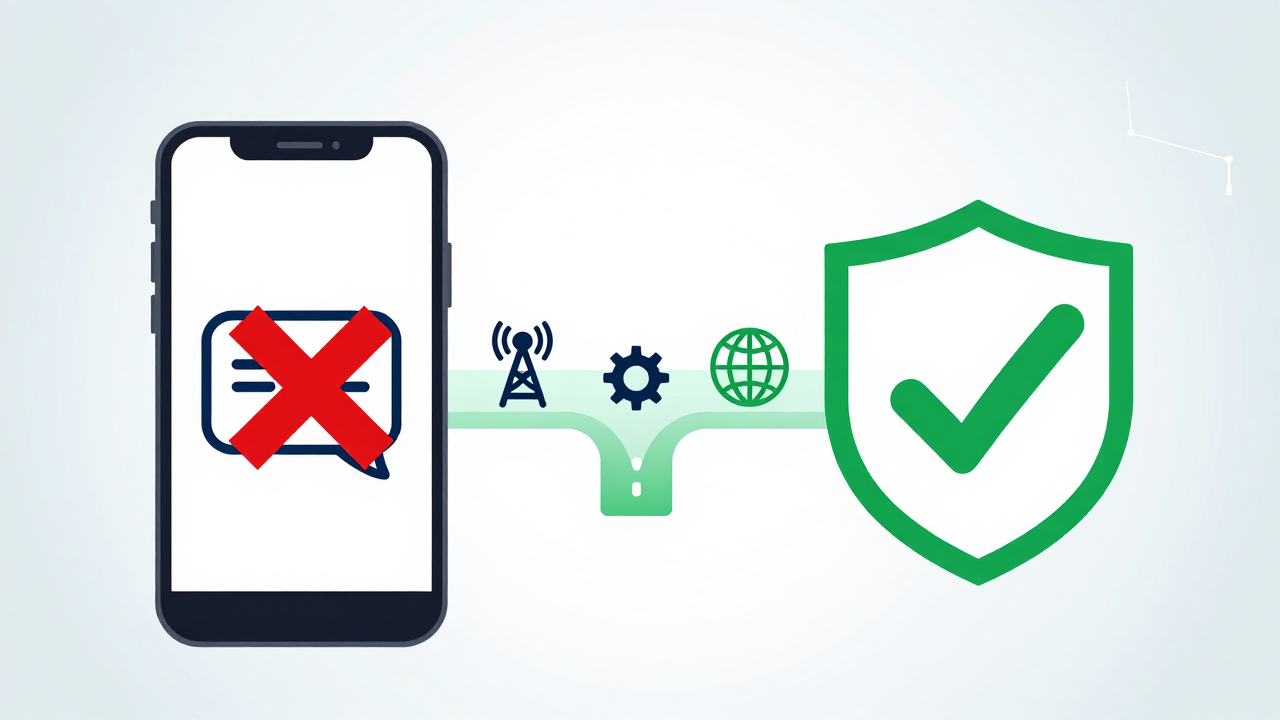
Here's what to evaluate when screening a reliable provider:
- Does the number coverage include your target markets (e.g., Japan, Taiwan, Southeast Asia)?
- Are numbers exclusive to you, or shared? Shared numbers are a fast track to Line account association bans
- Is there API support for automated workflow integration?
- Are there clear refund or compensation terms for failed deliveries?
- How long has the provider been operating? 2026 has already seen multiple platforms vanish after short-term operation
In comparative testing, Getfollow remains operational as of 2026 and ranks mid-to-upper tier for number stability and support response time—a reasonable benchmark when evaluating the market. But regardless of which provider you consider, always run a small test batch before committing to volume purchases.
Comparing the Three Main Line Verification Code Solutions
| Solution | Cost Range (2026) | Success Rate Reference | Risk Level | Best For |
|---|---|---|---|---|
| Own physical SIM card | ~$7–$20 per number/month | 85%–92% | Low | Core accounts, long-term stable use |
| SMS platform (e.g., Getfollow-type) | ~$0.07–$0.40 per code | 70%–85% | Medium | Bulk registrations, temporary verification |
| Free SMS websites | $0 | Below 20% | Very high | Not recommended for any business use |
Decision guidance: for Line accounts that carry core client communications, always use your own physical SIM card for verification. For test accounts or auxiliary profiles, a professional SMS platform can work—but steer clear of free services entirely.
Risk Warnings and Action Plan
Line significantly strengthened account-association detection in 2026. Using the same number to register multiple accounts in quick succession can trigger restrictions across all linked accounts. If you're building a Line account matrix for your business, stick to a one-number-per-account rule and avoid concentrated registration bursts.
If you're currently stuck with Line verification codes not arriving, follow this order: check your phone's SMS filter first, then confirm your number type and carrier status, then review Line account security alerts, and finally evaluate switching your receiving method. Whatever you do, don't spam the resend button before diagnosing the issue—that only extends the risk-control window.
Why am I not receiving Line verification codes?
The most common causes in 2026 are carrier-level blocking of international SMS, your phone silently routing verification messages to spam, and temporary security restrictions on your Line account. Start by checking your SMS filter history, then confirm whether other international SMS arrives normally.
How do I recover blocked Line verification SMS?
Add Line's sender number to your SMS whitelist, disable spam filtering in third-party security apps, and try requesting a new code from a different network environment. If messages still don't arrive, wait 24 hours before trying again.
How do I choose a reliable Line SMS verification service?
Focus on number coverage in your target regions, exclusive versus shared number offerings, API support, and clear compensation terms. In 2026, run a small test batch before scaling up. Getfollow serves as one reference point for market comparison, but verify its current service quality yourself.
Will registering Line with an SMS platform get my account banned?
There's real risk. In 2026, Line actively flags virtual numbers and shared IPs as low-trust. Accounts registered through SMS platforms may be marked accordingly. Use SMS platforms only for auxiliary or short-term test accounts—core business accounts should use physical SIM cards.
Can Line customer support fix verification code delivery issues?
You can submit a ticket through Line's official help center, but in 2026, response times for mainland China users are slow, and support agents can't intervene in carrier-level SMS filtering. Self-diagnosing local issues first will get you faster results.
Bottom line: Line verification code delivery failures in 2026 are diagnosable and fixable. The key is identifying which layer the problem lives in—carrier, phone, app, or provider—and matching your receiving solution to your actual business needs. Cross-border businesses and independent operators should treat verification code reception as core infrastructure, not a one-off headache to patch when it breaks.