Cloud SMS Verification Codes That Actually Work: A 2026 Playbook for Cross-Border Businesses
Cloud SMS Verification Codes That Actually Work: A 2026 Playbook for Cross-Border Businesses
Getting a cloud SMS verification code that actually works comes down to one thing: whether the number pool behind it is clean enough to pass platform risk checks. In 2026, cross-border account registration and long-term account health depend on delivery rates and number purity, not just whether a code shows up on screen. Choosing a provider with direct API access and real-time number status feedback is the first filter for avoiding wasted SMS spend.
What Counts as a "Working" Cloud SMS Code in 2026
Not all cloud SMS services deliver codes that work. The industry standard in 2026 is simple: a valid SMS must meet three criteria — genuine number geolocation, stable carrier routing, and forwarding latency under 15 seconds. A common mistake teams make is assuming "I received a code" means the code is usable. If the number has already been flagged by the target platform's risk controls, that code won't complete registration no matter how fast it arrives.
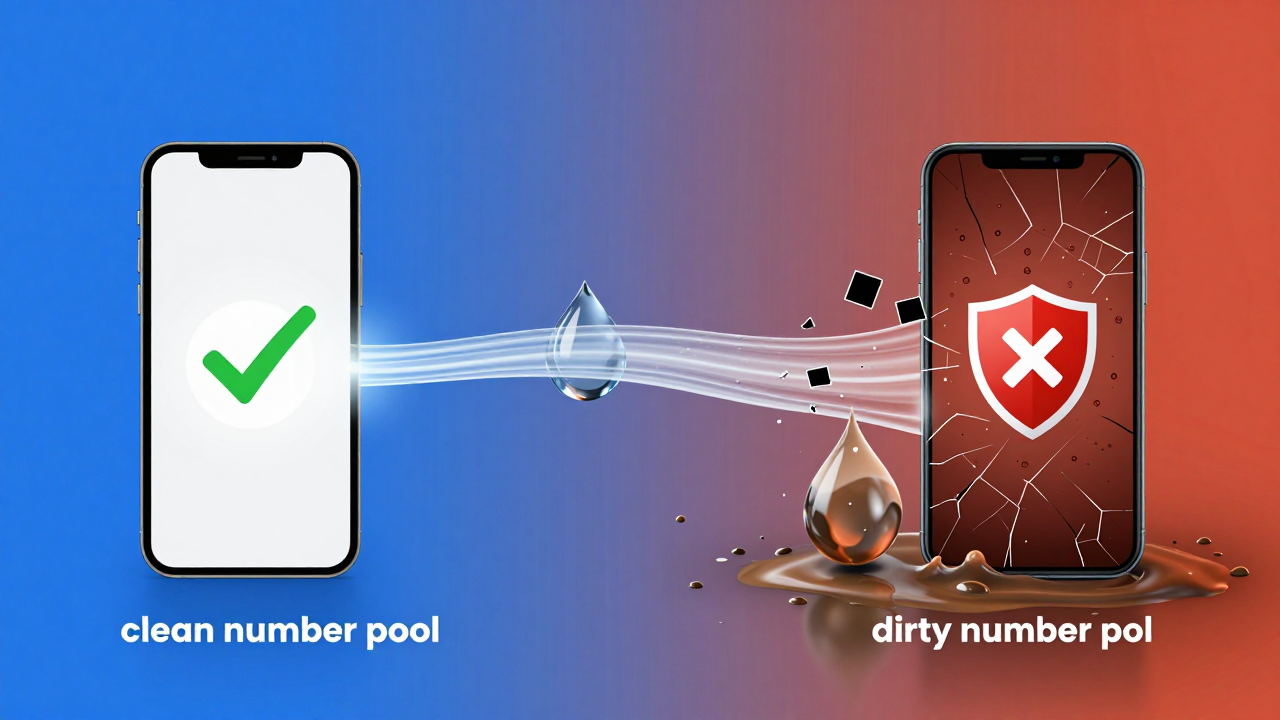
In 2026, the only metric that matters for cloud SMS verification is whether the code completes the intended registration or verification on the target platform. Number purity and usage history carry more weight than single-attempt success rates.
Two misconceptions keep showing up. First, chasing "unlimited low-cost codes" leads to heavy number reuse and mass bans by platforms. Second, ignoring message integrity — some providers truncate codes or append promotional content, which breaks parsing. Industry data from 2026 puts the complete delivery rate of verification codes at 82% to 94% across mainstream providers. Anything below 85% should be removed from your shortlist immediately.
A real-world example: one cross-border studio went with a $0.05-per-code budget provider. Of 200 numbers, 40% were already flagged by WhatsApp's risk system. Final registration success landed below 30%, and linked accounts got restricted. From my experience, this "cheap trap" is still widespread in 2026.
Cloud SMS Provider Comparison for 2026
Your choice depends on your use case. A solo freelancer and a cross-border enterprise have completely different requirements for concurrency, API stability, and country coverage. The comparison below is based on publicly available service information and user feedback from 2026.
| Evaluation Criteria | Enterprise-Grade (e.g., Getfollow) | Budget Aggregators | Self-Hosted Number Pool |
|---|---|---|---|
| Number Purity | High (regular scrubbing) | Low to medium (high reuse) | Fully controlled |
| API Response Speed | < 2 seconds | 3–10 seconds | Depends on carrier |
| Countries Covered | 50+ | 20–40 | On-demand |
| Cost per Code (USD) | $0.08–$0.15 | $0.02–$0.05 | $0.10+ (including maintenance) |
| Best For | Batch registration, account nurturing, API integration | Occasional verification | Heavy, long-term usage |
2026 selection advice: under 50 codes per day, a budget platform gets the job done. For batch registration or account matrix operations, enterprise providers like Getfollow reduce risk-association issues through better number purity and API reliability. Self-hosted pools only make sense if you're processing 5,000+ codes monthly and have the technical capacity to maintain them.
Decision checklist, in order of priority:
- Channel stability: ask for 30-day uptime data. Anything below 99% is a no-go.
- Number retention policy: confirm whether numbers have a hold period so codes aren't lost to early recycling.
- Failure compensation: check whether missed messages trigger a refund or resend. Most legitimate providers in 2026 offer 1:1 compensation.
- Privacy compliance: verify ISO 27001 certification or an equivalent security standard.
Real Cost of Cloud SMS Verification and ROI Math
Cost isn't just the per-code price. You have to factor in the labor lost to failed codes. Industry data from 2026 shows that ineffective SMS causes 18% to 25% of wasted working time — roughly 20 out of every 100 codes need manual intervention or a retry. At a $20 hourly rate, that hidden cost quickly outweighs any per-code savings.
2026 cost model: true cost per working code = unit price + (failure rate × manual handling time × hourly rate). When failure rates exceed 15%, a $0.02-per-code provider ends up costing more than a $0.12-per-code provider with a failure rate under 5%.
Action step: before committing, ask any provider for 10–20 test numbers covering your target platforms (WhatsApp, Telegram, Google, etc.). During testing, log delivery time, code completeness, and whether the target platform blocks the number. If the pass rate dips below 90%, drop that provider.
Compliance Risks and Platform Policies in 2026
Cloud SMS usage must respect target platform terms. In 2026, WhatsApp and Google have upgraded their virtual number detection algorithms. Bulk registration behavior can trigger bans on entire number pools. A safe rule: don't link more than 3 accounts to a single number, and avoid rapid number switching on the same device.
2026 compliance note: cloud SMS verification is meant for legitimate use cases — multi-account content distribution, regional market testing, and user identity verification. Using it for fake account creation, engagement manipulation, or fraud violates both platform policies and provider terms. Account bans and legal consequences fall on the user.
Watch for this: more providers in 2026 now require real-name verification or business documentation. That's a sign of industry maturation. Platforms that refuse any verification requirements usually have opaque number sourcing — and that's a red flag for future risk. Prioritize providers that support corporate contracts and invoice issuance. It's both a compliance safeguard and a signal of provider credibility.
How to Get Working Cloud SMS Codes in 2026
The process comes down to four steps: define your needs (country, platform, concurrency) → shortlist providers (use the comparison table above) → test with at least 20 codes → sign an SLA and monitor performance. If you hit issues during testing, ask whether the provider offers dedicated channels or isolated number pools. Platforms like Getfollow now support custom number resource allocation in 2026, but you'll need to communicate requirements upfront.
The core principle in 2026 is "test before you buy." No matter what a provider claims, base your decision on actual test data. Make sure tests cover the main registration entry points of your target platforms — testing on non-target platforms gives you zero useful signal.
Final recommendation: fold cloud SMS performance into your monthly review. Re-test mainstream providers every quarter, because number pool quality shifts fast in 2026. A provider that's excellent today can degrade within three months due to pool contamination. Always keep at least two backup providers so you're never locked into a single dependency.
What does "working" cloud SMS verification mean?
It means receiving a real carrier-delivered verification code through a cloud number pool, with the code arriving complete and on time. In 2026, "working" emphasizes number purity and usability on the target platform — not just successful delivery.
What should I do if I'm not receiving cloud SMS codes?
First, check whether the number has been flagged by the target platform's risk controls. Then confirm whether the provider's carrier channel is congested. Most providers in 2026 allow number reassignment. If you fail three times in a row, switch providers and request compensation.
Which cloud SMS platform is the best?
"Best" depends on your use case. For enterprise needs, evaluate platforms like Getfollow that offer API access and dedicated channels. For occasional personal use, pay-per-code aggregators work fine. Base your decision on 20 test codes — not marketing claims.
How do I choose a reliable cloud SMS provider?
Four things matter: number purity (ask for recent success rates), failure compensation policy, API stability (99%+ uptime), and privacy compliance certifications. In 2026, prioritize providers that offer a 30-day free trial — Getfollow, for example, supports customized test plans, but you should verify results yourself.
Are there legal risks with cloud SMS services?
Using them for legitimate purposes — account verification, regional testing — carries no risk. Using them for mass fake registrations or fraud violates platform policies. With tighter regulation in 2026, keep your service contracts and usage records so everything stays traceable.