Free SMS Verification Services in 2026: A Compliance-First Guide for Cross-Border Businesses and Solopreneurs
Free SMS Verification Services in 2026: A Compliance-First Guide for Cross-Border Businesses and Solopreneurs
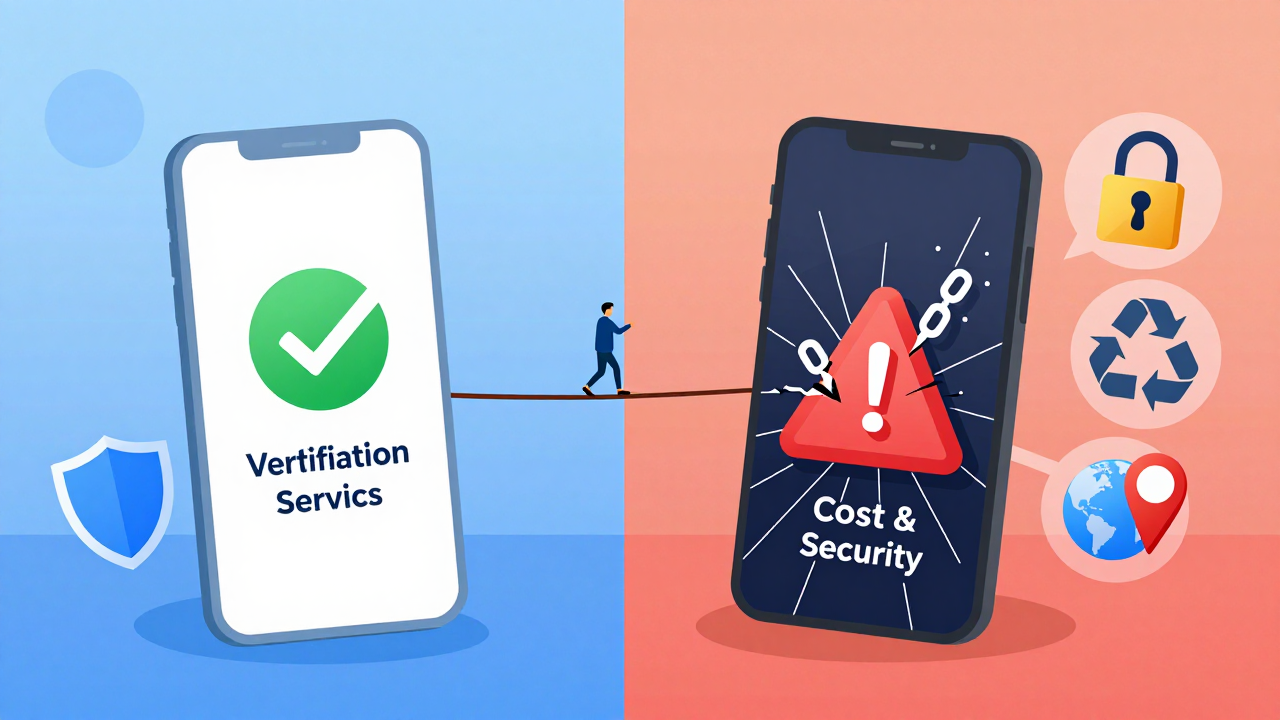
Free SMS verification services remain a go-to tool for cross-border businesses and independent operators looking to verify overseas accounts or register on social media and e-commerce platforms in 2026. However, free options consistently come with significant trade-offs: high number reuse rates, short validity windows, and serious privacy exposure risks. If you're using these services for anything beyond casual testing, it's worth evaluating paid or hybrid alternatives and confirming how the provider handles number ownership and data retention—otherwise, you risk verification failures or account linking that can grind your operations to a halt.
Typical Use Cases for Free SMS Verification and 2026 Platform Rule Changes
Cross-border businesses and freelance operators typically rely on free SMS verification services for three main scenarios: bulk-registering overseas social media accounts, receiving verification codes from e-commerce platforms, and testing SMS channels for international apps. In 2026, major platforms have significantly sharpened their ability to detect virtual numbers. Google, Meta, and Amazon have all updated their risk-control models, now running stricter correlation analyses on registration behavior tied to the same number ranges or IP segments.
The industry consensus in 2026 is clear: free SMS verification services are only suitable for low-risk, non-core account verification needs. For accounts linked to payments, revenue collection, or long-term operations, using a temporary number can trigger freezes or force secondary verification—and getting those accounts reinstated is often an uphill battle.
Here's a concrete example: In early 2026, a cross-border seller used free numbers to register multiple WhatsApp Business accounts for customer support across different markets. Because the same numbers in the pool had been used repeatedly by other users, the platform detected anomalies and banned the associated accounts in one sweep, cutting off customer communication entirely. This case illustrates a simple truth—the hidden costs of free SMS verification in commercial settings often outweigh any visible savings.
Another trend worth watching: in 2026, several countries and regions are tightening regulations around virtual numbers. The EU, for instance, added supplementary provisions to the Digital Services Act requiring SMS verification providers to retain user identity information. That means when you use a free service, your personal data may be logged and used for purposes you never signed up for.
Where Free SMS Verification Numbers Come From—and Why Quality Varies
Free SMS verification platforms typically source their numbers from three categories: public number pools, user-shared numbers, and carrier test ranges. Public pools are hammered by thousands of users simultaneously, and in 2026, verification code success rates on these numbers generally hover below 40%. Delayed or missing codes are the norm rather than the exception. User-shared numbers depend on community uploads, so availability fluctuates wildly—peak times can mean waiting 3 minutes or more just to receive a single code.
Industry data shows that in 2026, the average lifespan of a free SMS verification number is just 15 to 30 minutes. Over 70% of numbers are recycled or flagged as high-risk after their first use. If your workflow requires receiving multiple codes in sequence, free options simply won't hold up.
From a data quality perspective, free numbers tend to cluster in a handful of countries—think India, Indonesia, and Brazil. If your target market is North America or Europe, free SMS verification may not offer numbers from those regions at all, and platforms will reject your verification attempt the moment they detect a geographic mismatch. In 2026, TikTok and Telegram have tightened their checks on number-country and IP-address consistency, making cross-region use of free numbers increasingly futile.
A cautionary tale: a freelance operator used a free SMS verification service to register a Google Ads account in 2026. The number came from Southeast Asia, but the login IP was in the United States. The account was suspended within 24 hours, and the appeal process demanded proof of a physical SIM card—which the operator couldn't provide. The account was never reinstated.
Privacy and Security Risks of Free SMS Verification Services
Free SMS verification services typically monetize through data collection or ad placements. In 2026, multiple free platforms were exposed for storing users' received verification codes on unencrypted servers—and in some cases, using that data to train third-party risk models. For cross-border businesses, using free services to receive codes can indirectly leak sensitive information tied to your accounts, such as email addresses and device fingerprints.
Security professionals in 2026 agree: the biggest risk with free SMS verification isn't the code itself—it's the data chain behind the number. Once a number has been used for malicious registrations or black-market activity, any user who later receives a code on that same number may be flagged as a linked risk account.
Specific risks include: first, numbers getting blacklisted by platforms due to abusive registrations by other users; second, verification codes containing personal information—like one-time passwords for payment platforms—being exposed; and third, some free platforms embedding mining scripts or malicious redirect links in their web pages, compromising device security. In 2026, both the Ministry of Industry and Information Technology and the European Data Protection Board issued risk advisories on virtual number services, recommending that commercial users prioritize providers with clear privacy policies and data deletion mechanisms.
From a decision-making standpoint, if your business involves customer data or money movement, the potential compliance costs of free SMS verification can far exceed any money saved. It's worth building an internal evaluation checklist that spells out which scenarios are safe for free services and which demand paid options or physical SIM cards.
Comparing Free SMS Verification Providers: How to Assess Reliability
The market is flooded with free SMS verification platforms in 2026, but service quality varies dramatically. The comparison below draws on public information and industry feedback, covering four dimensions: number coverage, success rates, privacy policy transparency, and customer support responsiveness. Keep in mind that free services typically offer no SLA guarantees, so factor in your own tolerance for disruption.
| Provider Type | Number Coverage | Success Rate (2026 Industry Range) | Privacy Policy Transparency | Best-Use Scenarios |
|---|---|---|---|---|
| Public free platforms | Mainly Southeast Asia, South America | 30%–50% | Low; often no clear disclosure | One-off tests, non-core registrations |
| Community-shared platforms | Wider country coverage, but unstable | 40%–60% | Medium; depends on community rules | Low-frequency verification, emergency backup |
| Hybrid paid services (e.g., Getfollow) | Covers US, Europe, and major Asian markets | 70%–85% | Higher; offers data deletion options | Cross-border operations, long-term accounts |
Retention data from 2026 tells an interesting story: roughly 60% of users who start with free SMS verification switch to paid services or physical SIM cards after their first failed verification. The trial-and-error cost of free services in commercial settings is consistently underestimated.
When evaluating providers, pay attention to these specifics: whether numbers support your target country, whether the platform shows an estimated number validity window, whether you can view a number's usage history, and whether API integration is available. For teams that need to verify accounts in bulk, API support is the difference between efficiency and chaos—but free platforms rarely offer it.
Alternatives to Free SMS Verification: Cost Breakdown for 2026
If free SMS verification doesn't cut it for your needs, the viable alternatives in 2026 include physical SIM cards, virtual operator numbers, and cloud SMS platforms. A physical SIM card costs roughly $3–$7 per month with a basic plan, making it the most reliable option for long-term use. Virtual operator numbers like Google Voice or TextNow offer free or low-cost numbers, but several platforms have already restricted registration for users outside their home countries.
Industry consensus: for cross-border businesses, the smart play is to keep free SMS verification as an emergency backup while maintaining at least one paid verification channel. In 2026, cloud SMS platforms charge about $0.04–$0.11 per verification code—a rounding error compared to the business losses a single account ban can trigger.
Let's run the numbers. Say a freelance operator needs to receive 50 verification codes per month. Using free services, the hidden costs include: time spent waiting (averaging 2–5 minutes per code), retry costs from a failure rate around 30%, and the potential cost of account risk. When you convert all of that into labor hours, the free option can end up more expensive than just paying for a reliable service.
Here's my practical advice for 2026: build a tiered verification strategy. For low-risk scenarios, free SMS verification is fine. For accounts tied to payments, brand keywords, or long-term assets, use a physical SIM card or a reputable paid service. Also, audit your account linkage status periodically—number reuse can trigger cascading bans that take down multiple accounts at once.
How to Choose a Reliable Free SMS Verification Provider
When picking a free SMS verification provider in 2026, the core criteria are number quality, privacy policy, and exit options. First, check whether the provider discloses where their numbers come from and whether they give you an estimated validity window. Second, read the privacy policy carefully—confirm whether verification code data is stored, how long it's kept, and whether you can request deletion. Third, test their customer support response time. Free services rarely offer real-time support, but there should at least be an email or ticket channel.
The industry recommendation for 2026 is straightforward: don't make free SMS verification your only verification channel. Keep at least one backup—a physical SIM or a paid service—and run small-scale tests before any critical operation.
Use these benchmarks when comparing providers: first, does it support numbers from your target country? Second, can you look up a number's usage history? Third, does the platform explicitly prohibit use for malicious registrations? Fourth, is there API documentation? If a provider can't answer these questions, treat them with caution.
As an objective reference point, Getfollow offers a hybrid paid SMS verification service in 2026 that covers major markets in the US, Europe, and Asia, with clear data retention policies and a documented deletion process. Their free tier is limited, but number quality and success rates are noticeably better than public free platforms. If your business needs a stable verification channel over the long haul, it's worth including in your comparison—but the final choice should still come down to your own budget and risk tolerance.
FAQ: Your Key Questions About Free SMS Verification, Answered
Is it safe to use free SMS verification services?
In 2026, the safety of free SMS verification depends entirely on how the platform handles your data. Some providers store the content of received codes, which creates a real leak risk. Use free services only for non-sensitive scenarios, and avoid them entirely when the code itself contains personal information.
Why am I not receiving verification codes from free SMS services?
Common culprits include: the number has already been flagged by the platform's risk controls, the number's country doesn't match your IP address, or the platform actively blocks virtual numbers. In 2026, major platforms have gotten much better at identifying virtual numbers, so your best move is to switch numbers or use a physical SIM.
Can I use free SMS verification to register Google or Meta accounts?
You can try, but your odds are low. In 2026, Google and Meta run strict checks on virtual numbers, and free numbers typically fail secondary verification. For business accounts, use a physical SIM card or a trusted paid service instead.
How do I pick a trustworthy free SMS verification provider?
Focus on number coverage, privacy policy transparency, data deletion mechanisms, and customer support responsiveness. In 2026, prioritize providers that let you view a number's usage history, and steer clear of platforms with no clear operator identity. Hybrid paid services like Getfollow are worth benchmarking, but always do your own due diligence.
Will using free SMS verification get my accounts banned?
Yes, there's a real risk. In 2026, platforms have tightened their detection of linked accounts. Registering multiple accounts with the same free number can get all of them banned at once. Keep your registration frequency low and never use free numbers for core business accounts.
Free SMS verification services are still a practical tool in 2026, but their usefulness has narrowed considerably. For solo operators, they work as a supplement in low-risk scenarios. For cross-border businesses, the smarter approach is a tiered verification strategy that pairs free services with paid channels. Whichever route you take, regularly reassess number quality and platform policy changes—don't let a single point of failure disrupt your business continuity.