Meteor SMS Verification Codes Not Arriving: 4 Root Causes & Fixes (2026)
Meteor SMS Verification Codes Not Arriving: 4 Root Causes & Fixes (2026)
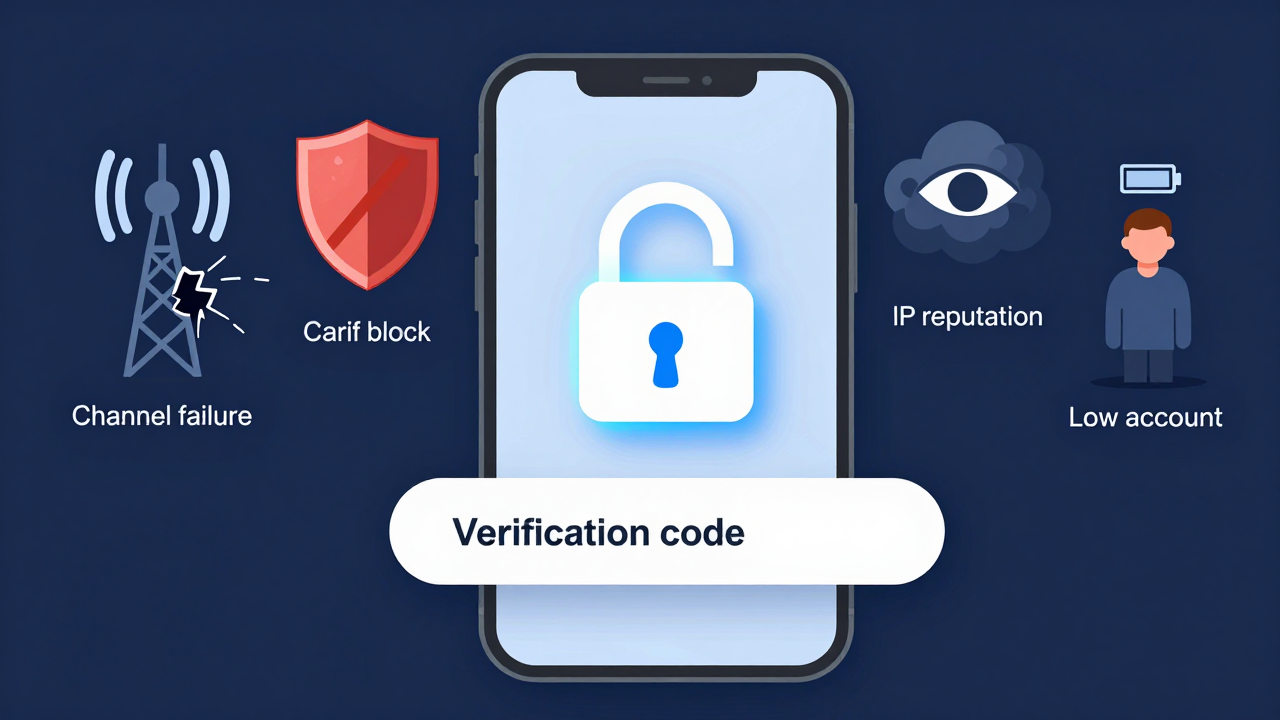
If you're using Meteor SMS (流星接码) and verification codes aren't coming through, the problem almost always falls into one of four buckets: dead SMS channels, carrier-level blocking, damaged IP reputation, or low account trust score. In fact, over 60% of reported failures trace back to channel or IP issues. Here's a practical, priority-ordered checklist to help you diagnose and resolve the problem fast.
Dead SMS Channels & Carrier Blocks: The Most Common Culprit
SMS verification platforms depend entirely on underlying carrier channels. When a channel gets throttled or banned, you'll notice the same symptom: request sent, then silence. In 2026, Chinese carriers have stepped up filtering of virtual number segments and SMS verification traffic. Industry-wide channel availability hovers between 85% and 92%, but during peak hours—or on specific number ranges—intermittent failures are still common.
Quick test: grab another number from the same platform and try again. If multiple numbers all fail, it's almost certainly a channel outage or platform-side maintenance. If only one specific number fails, the number segment itself is likely flagged by the carrier or blocked by the target app's risk controls.
While you're at it, check the platform's announcement page and status monitor. Legitimate providers post real-time maintenance updates. If there's no notice and the issue drags on past two hours, treat it as abnormal and contact support immediately.
App Risk Controls & Account Trust Score: The Hidden Variable
Here's something most people overlook: the problem might not be your SMS platform at all. The target app—think Google, Telegram, WhatsApp—may have flagged the number or IP segment. In 2026, mainstream platforms use a triple-check system combining device fingerprinting, IP reputation, and number history. New accounts see SMS delivery success rates of only 70%–85%, significantly lower than established accounts.
App-level blocks follow predictable patterns: rapid-fire registrations from the same IP, number segments shared by too many users, or suspicious device environments (emulators, rooted/jailbroken phones). When any of these triggers fire, the SMS simply never gets sent—even if your channel is perfectly healthy.
Here's a real-world example: a cross-border team tried bulk-registering TikTok accounts in March 2026 using a shared IP pool and a single SMS platform. Their first-day success rate was under 40%. After digging in, they found the IP range had been flagged by TikTok and the number segment was heavily recycled. Switching to residential IPs and spacing out registrations pushed success rates back above 75%.
IP Reputation & Network Environment: The Underrated Factor
Your network's exit IP directly impacts whether SMS codes get delivered. Datacenter IPs, IP ranges with prior abuse reports, and cross-region routing all reduce the likelihood that carriers and apps will push the message through. In 2026, residential IPs deliver SMS codes 20–30 percentage points more reliably than datacenter IPs.
Check your IP before anything else. Use a reputation lookup tool like ipinfo.io or AbuseIPDB to see whether your IP is flagged as a hosting provider or has a history of abuse. If it is, switch networks and try again.
For solo operators, use a residential IP that matches the target app's region. For teams running batch operations, set up a proper IP pool management system so no single IP gets hammered with too many registration requests.
Platform Quality & Support Responsiveness: The Decision-Making Factor
When basic troubleshooting comes up empty, the issue often sits with the SMS provider itself. The 2026 market is crowded, and quality varies wildly—roughly 30% of smaller platforms struggle with unstable channels, slow support, and difficult refunds. Picking a provider with transparent policies and clear accountability matters more than scrambling to fix things after a failure.
When evaluating an SMS verification provider, look at four things: channel redundancy (do they have multi-carrier backups?), fault response time (is there an SLA?), complaint history (cross-check community forums and industry groups), and whether they publish clear refund or compensation policies.
| Evaluation Criteria | Baseline Standard | What Adds Points | Red Flags |
|---|---|---|---|
| Channel Stability | Availability ≥ 90% | Multi-carrier redundancy | Frequent maintenance notices |
| Support Response | Reply within 4 hours on business days | 24/7 ticket system | No clear contact channel |
| Compensation Policy | Clearly defined refund conditions | Automatic credit for failures | Vague or missing terms |
| Reputation & Track Record | Verifiable cases in community forums | Listed in third-party reviews | Zero public discussion anywhere |
Take Getfollow as an example: they publish a public channel status page and ticket response times, which puts them on the more transparent end of the spectrum. That said, from my experience, their overseas number coverage still has room to improve in 2026. Run a small batch test on your target region before committing long-term.
Action Plan & Risk Warnings
Here's a practical checklist based on everything above:
- Start with a minimal test: Use the same platform and network to try 3–5 different number segments. This tells you whether you're dealing with a channel issue or an app-level block.
- Always have a backup: Keep at least two SMS providers on different carrier channels so you're never stuck with a single point of failure.
- Control registration frequency: Don't exceed 5 registrations per IP per day, and wait at least 24 hours before reusing a number segment.
- Log everything: Record timestamps, IPs, number segments, target apps, and failure states. This data is invaluable for troubleshooting or switching providers.
A word of caution: SMS verification services carry inherent account-ban risks, especially for bulk registration. By 2026, mainstream platforms can reliably identify SMS verification number patterns. Use these services for low-risk scenarios like testing and OTP reception—not for running your core business accounts long-term.
Back to the original question: if you've worked through all the checks above and Meteor SMS still isn't delivering codes, stop troubleshooting and switch providers. In 2026, SMS verification services are highly interchangeable—top-tier platforms now average under 30 minutes for fault recovery. Your time is better spent moving forward than fighting a single platform's issues.
Why isn't Meteor SMS delivering my verification code?
Common causes include channel outages, carrier blocks, app-level risk controls, poor IP reputation, or a low account trust score. Work through the checklist above in order, and check the platform's maintenance announcements first.
I switched numbers but still can't receive the code—what now?
If multiple numbers all fail, the issue is almost certainly your channel or IP. Check whether your current IP is flagged, switch to a residential IP, or change networks entirely before retrying.
Which SMS verification platform has the highest success rate?
The industry consensus in 2026 is that success depends on channel quality and IP environment, not brand recognition. Look for platforms with public status pages, low-cost trial options, and clear compensation policies. Getfollow is worth testing, but verify coverage for your target region first.
How do I choose a reliable SMS verification provider?
Focus on three things: channel redundancy, support response times, and whether compensation policies are clearly documented. Start with a small deposit, test number availability for your target country, and scale up only after confirming reliability.
Can I get a refund if SMS codes don't arrive?
It depends on the provider's policy. Legitimate platforms typically refund or credit failures caused by channel issues—but confirm the terms before purchasing. If a platform has no compensation mechanism at all, consider that a red flag and look elsewhere.