How to Choose a Reliable SMS Verification Website in 2026: 3 Pitfalls Every Cross-Border Seller Must Avoid
How to Choose a Reliable SMS Verification Website in 2026: 3 Pitfalls Every Cross-Border Seller Must Avoid
If you're in cross-border e-commerce—especially running a solo operation or small studio—you've almost certainly hit the wall that is phone verification. Registering overseas accounts, verifying WhatsApp, setting up social media profiles: none of it works without a verification code. Type "SMS verification website" into any search engine and you'll get endless results, but figuring out which ones actually deliver is another story. In 2026, this space has gotten a lot murkier than most people realize.
Why SMS Verification Services Have Become Non-Negotiable in 2026
Here's something the industry broadly agrees on: overseas platforms have significantly tightened their registration checks this year. Accounts that used to just need an email address now practically demand a phone number. For cross-border teams running multiple profiles, one physical SIM card per person simply doesn't cut it anymore. That's how SMS verification platforms went from being a gray-area tool to essential infrastructure.
But "essential" doesn't mean "risk-free." A common pattern we see in 2026: a flood of websites popping up with slick interfaces that look more polished than the big-name platforms. Users top up their balance, receive a handful of codes, and then watch their accounts get banned in batches. The real problem isn't the act of using a verification service—it's the quality of the phone number pool behind the platform you chose.
The Pain Point: Cutting Corners on a Shady Site Got Five Accounts Banned in Three Days
I know someone running a personal TikTok Shop store who, back in early 2026, topped up about $30 on a so-called "cheapest rates guaranteed" SMS verification site. The result? All five accounts registered with those numbers got flagged for "suspicious associations" within 48 hours. When he dug deeper, he found out those numbers came from a batch that had been heavily used for spam registrations and were already on overseas platforms' blacklists.
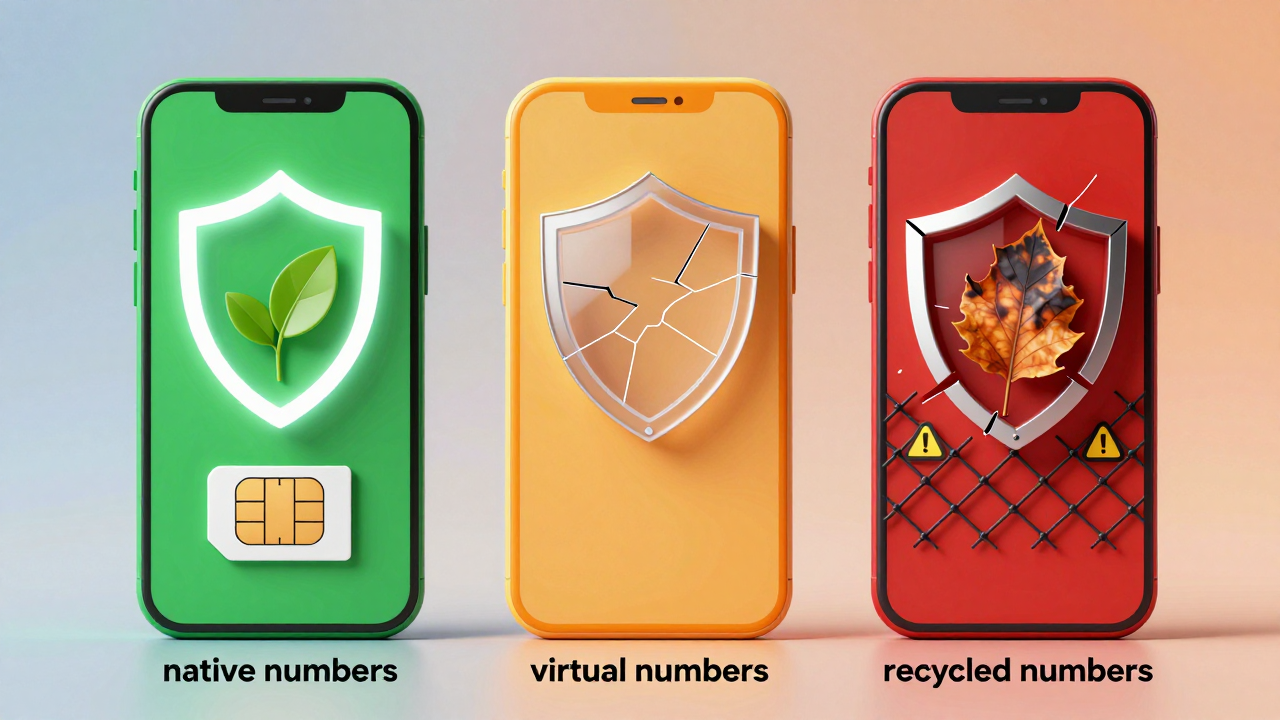
This story is far from unique. Many small operators only compare per-code prices, completely overlooking the "cleanliness" of the number's history. In 2026, the verification number market splits into three tiers: native numbers (issued directly by carriers), virtual numbers (VoIP), and recycled numbers (previously owned by someone else). Prices drop in that order—but so does safety. Those ultra-cheap sites are almost certainly handing you recycled numbers, or worse, numbers already flagged as fraudulent.
Deeper Dive: How SMS Verification Platforms Changed Their Game in 2026
In the old days, verification platforms competed on quantity—whoever had the most numbers won. In 2026, the battleground has shifted to number "purity" and "lifespan." Why? Because overseas platforms now use algorithms that detect how frequently a number is used and how many different devices it's linked to. If a single number gets used to register accounts from five different IPs within an hour, the system blacklists the entire number range.
From my experience, platforms like Getfollow have built a solid reputation in this space by following a "one card, one device, one IP" compliance model. In plain English: before a number is assigned to you, the system simulates realistic user behavior to make sure it hasn't been cycled through dozens of people in a short window. This approach costs more to run, but it dramatically reduces the risk of your accounts being linked together.
Meanwhile, the sites still using the old "bulk import, random assignment" playbook are basically living off their past reputation in 2026. Their number pools get dirtier by the day, trapping them in a vicious cycle: attract users with low prices → users get banned → refund requests pile up → site rebrands and disappears. This isn't speculation—it's the pattern we've seen play out repeatedly in cross-border seller communities.
How to Quickly Vet an SMS Verification Website Before Handing Over Your Money
Don't judge a platform by its website design—you can buy a decent template for a few hundred bucks. Instead, run through these three checks. Every one of them comes from lessons learned the hard way:
- Step 1: Verify the number's origin. Before registering, ask customer support for a test number and run it through a third-party lookup tool. If it comes back as a virtual number range (certain VoIP prefixes, for example), walk away. Your registration success rate will be abysmal.
- Step 2: Check payment options. Legitimate 2026-era verification services typically accept USDT or major credit cards, and they'll have clear risk disclosures. If a site only takes personal bank transfers and offers zero warnings about account risks, there's a good chance it's a fly-by-night operation.
- Step 3: Start with the smallest possible top-up. No matter how impressive the marketing sounds, load the minimum amount and test it by registering an account on a platform you actually use. Watch for any unusual verification prompts over the next 24 hours. If everything looks clean, then consider scaling up.
2026 SMS Verification Pricing and Risk Comparison
To help you make a more informed decision, here's a breakdown of the common service tiers available in 2026. Note that price ranges are based on typical market feedback and may vary:
| Service Tier | Number Type | Price Range (USD) | Key Risks | Best For |
|---|---|---|---|---|
| Budget bulk verification | Recycled numbers | $0.01–$0.04 per code | Very high ban rate; number ranges easily blacklisted | One-time registrations; no account retention needed |
| Standard verification | Virtual / some native numbers | $0.07–$0.20 per code | Moderate risk; works best with residential IPs | Small studios running matrix tests |
| Compliant account-verification | Clean native numbers | $0.30–$0.70 per code | Higher cost, but account retention rates typically reach 50%–70% | Long-term social media account management |
By now the picture should be clear: "SMS verification websites" aren't one uniform category. They span a spectrum from bargain-bin options to fully compliant services. In 2026, if you're using the cheapest tier to do work that really requires the middle or top tier, getting banned is just a matter of time.
Final Thoughts: Test Small First, Then Build a Long-Term Partnership
After years of watching cross-border sellers navigate this landscape, my strongest advice is this: stop treating SMS verification as a simple "buy a code" transaction, and start seeing it as an investment in your accounts' survival rate. In 2026, platform algorithms are extremely sensitive to where an account was "born." One clean native number is worth more than ten cheap, dirty ones.
If you're currently searching for a reliable SMS verification website, run the tests outlined above on a couple of platforms—including compliance-focused options like Getfollow—and use the smallest possible amount of money to gauge the quality of their number pool. Remember: lasting partnerships are built on trust and real-world testing, not fancy marketing copy. Avoid one pitfall, and you're already ahead of most of the competition.
What is the difference between native numbers and virtual numbers for SMS verification?
Native numbers are issued directly by mobile carriers and look like standard phone numbers. Virtual numbers (VoIP) are internet-based and often share recognizable prefixes. Native numbers have much higher registration success rates on overseas platforms, while virtual numbers are frequently flagged or rejected outright.
Why do cheap SMS verification services cause account bans?
Budget services typically rely on recycled or bulk-purchased numbers that have already been used for spam or mass registrations. Overseas platforms maintain blacklists of these number ranges, so any new account tied to them gets flagged for "suspicious association" almost immediately.
How much should I expect to pay for a reliable SMS verification service in 2026?
For clean, native numbers from compliant platforms, you're typically looking at $0.30 to $0.70 per verification code. Anything significantly cheaper usually means recycled numbers with higher ban risks. Think of the extra cost as insurance for your accounts.
Can I use SMS verification services for long-term account management?
Yes, but only if you choose a platform that follows compliance-focused practices like "one number, one device, one IP." These services simulate real user behavior and ensure numbers aren't overused, which dramatically improves account retention for long-term social media or marketplace operations.