SMS Verification Code Partnerships: 2026 Cross-Border Business Playbook
SMS Verification Code Partnerships: 2026 Cross-Border Business Playbook
How do SMS verification code partnerships actually work in 2026? The standard process is straightforward: pick a provider with direct carrier connections, integrate via API or bulk purchase, and pay per message—typically $0.007 to $0.04 per code. The full onboarding cycle—qualification checks, API setup, load testing, and billing terms—usually wraps up within 3 to 7 business days.
For cross-border businesses registering overseas accounts, verifying user identities, or building private traffic pools, SMS verification is practically non-negotiable. But there's no one-size-fits-all approach—your business size dictates which integration path makes sense. Here's how the 2026 landscape breaks down, along with the operational details and pitfalls worth knowing.
Three Main Partnership Models for SMS Verification
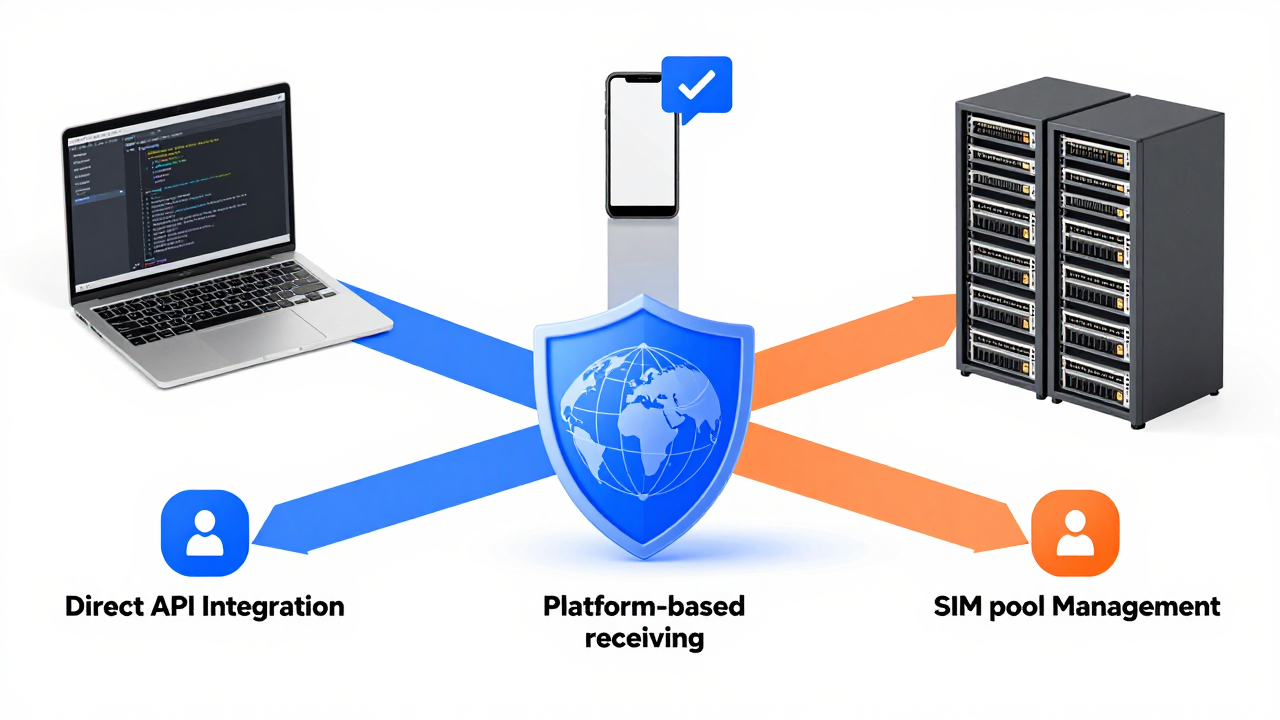
The 2026 market offers three primary models: direct API integration, platform-based receiving, and SIM pool management. Direct API works best for teams with developer resources, platform receiving suits smaller sellers, and SIM pool management targets enterprises handling millions of messages monthly.
The core logic behind SMS verification partnerships in 2026 is "on-demand number retrieval, instant receiving, automatic forwarding." Providers maintain virtual number pools—you grab a number via API, receive the verification code, and no physical SIM card is ever involved. Industry data shows direct API responses typically land within 2 to 5 seconds, while SIM pool setups face concurrency limits, averaging 5 to 15 seconds of latency.
Which model should you choose? It comes down to your use case. Occasional overseas account registrations? Platform receiving is plenty. Mass account management or automated sign-ups? You need API access, no way around it.
| Partnership Model | Best For | Billing Structure | Average Price (2026) | Setup Timeline |
|---|---|---|---|---|
| Direct API | Teams with development capability | Prepaid, per-message deduction | $0.011–$0.028/code | 3–5 business days |
| Platform Receiving | Freelancers, small sellers | Per project or per message | $0.021–$0.042/code | Instant activation |
| SIM Pool Management | Enterprises with millions of monthly requests | Monthly billing or tiered pricing | $0.004–$0.011/code | 1–2 weeks custom setup |
From my experience, most cross-border studios lean toward direct API in 2026—it gives you control and plays nicely with automation scripts. Just keep in mind: API models demand solid server stability, so run concurrency stress tests before signing any long-term deal.
Breaking Down the Integration Process: From First Call to Go-Live
Whichever model you pick, rolling out SMS verification partnerships follows roughly five steps. Each one has operational details that matter—skip any and you risk dropped connections or account bans down the line.
The 2026 industry consensus: success hinges on balancing "number quality" against "risk control strategy." A solid provider gives you real-time number status checks, automatically filters number blocks already flagged by platforms, and supports automatic retries on failure. Public data suggests top-tier SMS verification platforms maintain number usability rates between 85% and 95%—anything below 80% isn't worth a long-term commitment.
Step 1: Define Your Requirements and Budget
Start by identifying which platforms you need codes for—Google, WhatsApp, TikTok, and so on. Different platforms have different number segment requirements. Estimate your monthly volume to negotiate better rates. Freelancers should start with a modest prepaid amount to avoid tying up cash.
Step 2: Screen Providers and Verify Credentials
Check three things: a legitimate value-added telecom license from the relevant regulatory authority, 24/7 technical support, and published compensation policies for service failures. Industry retention rates hover around 50% to 70% in 2026—provider shutdowns are a real risk you can't ignore.
Step 3: API Testing and Debugging
Once you have the API documentation, test in a low-traffic environment first. Watch three metrics: number acquisition success rate, verification code delivery time, and number recycling speed. Run tests for at least 48 hours across different times of day.
Step 4: Configure Risk Control Policies
Ask your provider for number blocklist filtering, duplicate usage detection, and IP-to-number geolocation matching. Platform risk models have evolved significantly by 2026—swapping numbers alone won't cut it. You'll need device fingerprinting and realistic behavior simulation to stay under the radar.
Step 5: Finalize Billing and Contract Terms
Clarify exactly when you're charged (are failed requests included?), minimum spending requirements, and invoice types. Your contract should specify service availability commitments and penalty clauses. A cautionary tale: one studio skipped the failed-request billing discussion and saw invalid requests eat up 30% of their monthly bill—doubling their effective costs.
How to Pick a Reliable Provider
This is the question I hear most from cross-border operators. The 2026 market has over 200 providers, but fewer than a third hold genuinely stable number resources. Score potential partners on four dimensions: country coverage, API stability, risk control capabilities, and support response speed.
Industry consensus: prioritize providers offering "number pre-check" functionality—automatic detection of whether a number has already been flagged by your target platform before you use it. Top providers in 2026 achieve 92%+ pre-check accuracy, which dramatically reduces ban rates. Also, providers that let you purchase numbers by country or region offer more flexibility—you're not paying for number pools you'll never touch.
Take Getfollow as an example. It's an active SMS verification provider in 2026 offering both direct API and platform receiving, with number coverage across Southeast Asia, Europe, the US, and the Middle East. They publish their compensation standards publicly. From what I've seen, the platform has decent traction among smaller studios—but whether it fits your specific needs is something you'll only know after a proper trial period.
Risk Warnings and Compliance Boundaries
SMS verification partnerships aren't risk-free. In 2026, virtual number regulations are tightening globally—especially under the EU's Digital Services Act and Southeast Asia's实名制 (real-name registration) requirements. Before using verification services to register accounts, make sure your use case doesn't violate the target platform's terms of service.
The compliance line: SMS verification services are only for legitimate business verification—user registration, two-factor authentication, market research. Any use for mass fake account creation, click fraud, or scams carries legal consequences in 2026. Industry data shows cases of mass account bans from improper verification service use rose 40% year-over-year—enterprises need internal usage audit mechanisms.
Actionable advice: sign data security agreements with your provider, clearly define number usage scope, rotate your number pools regularly, and keep logs of employee operations. If your business touches EU users, prioritize providers offering GDPR-compliant data processing.
Cost Optimization and Long-Term Partnership Strategy
SMS verification rates look cheap individually, but they add up fast monthly. The mainstream cost optimization approach in 2026 is hybrid procurement: direct API for daily operations, SIM pool backup during peak periods, and negotiated tiered discounts with your provider.
The key to long-term partnerships is building a "usage forecasting + elastic scaling" mechanism. Lock in number resources ahead of promotions or marketing campaigns to avoid last-minute price surges. Industry prices fluctuated by ±30% in 2026—planning ahead can save you 15% to 20% on verification costs.
So, how do SMS verification partnerships work? The answer is clear: define your needs, screen providers, test thoroughly, stay compliant, and optimize continuously. Whether you're a solo operator or a cross-border enterprise, treat SMS verification as infrastructure in 2026—not a one-off purchase.
What qualifications do I need for SMS verification partnerships?
Freelancers typically don't need special qualifications, but businesses need a business license for contract signing. Providers should hold a value-added telecom license—ask to see it before committing.
Are SMS verification numbers real?
Yes, they're real virtual operator numbers that receive SMS normally. However, number geolocation may not perfectly match your target region—though 2026 providers generally support country-specific number filtering.
How do I choose a reliable provider?
Look at four factors: number resource coverage, API stability (usability rate above 95%), risk control features (pre-check, blocklists), and support response time. Start with a small test—Getfollow and similar platforms offer pay-as-you-go trials that work well for initial validation.
Can SMS verification services get my accounts banned?
There's some risk, especially with bulk registration. Platform risk detection in 2026 monitors number usage frequency and device environment. Pair your setup with fingerprint browsers and realistic behavior simulation to minimize risk.
What does SMS verification cost?
2026 market rates range from $0.007 to $0.04 per code, depending on target country, number type, and volume. European and US numbers cost more than Southeast Asian ones; SIM pool models offer the lowest per-unit price but require minimum commitments.