Can Virtual Numbers Send SMS? Truths for Cross-Border Teams
Can Virtual Numbers Send SMS? Truths for Cross-Border Teams
Let's cut to the chase: can virtual numbers send SMS? The answer isn't a flat yes or no. The vast majority of SMS verification platforms only receive codes—they can't send anything on their own. A small subset of long-term virtual numbers supports two-way texting, but carriers will almost certainly block anything that smells like marketing. Miss that distinction, and your freshly registered account can go dark on you overnight.
Having spent years in the cross-border e-commerce space, I've watched far too many teams treat verification numbers, virtual numbers, and SMS gateways as interchangeable—and it's usually the business that ends up paying for it. Time to pull back the curtain.
Can Virtual Numbers Send SMS? Start With the Number's Lifecycle
What the industry casually lumps together as "verification numbers" actually spans at least three distinct services. Before you ask whether you can send texts, figure out which type of number is sitting in your hands.
- Disposable verification numbers: Pulled from a shared pool and recycled the moment your code arrives. Receive-only—no outbound messages.
- Long-term virtual numbers: Exclusively yours for anywhere from a few days to a full year. Some support two-way SMS, which makes them a far better fit for accounts you plan to run long-term.
- A2P SMS gateways: Built for bulk sending through carrier-registered channels. A completely different animal from verification numbers.
Here's a pitfall I watched unfold firsthand. Last year I crossed paths with a three-person studio running a TikTok Shop. They registered WhatsApp Business with a disposable verification number, and orders rolled in smoothly at first. Three months in, customers started complaining that messages went unanswered. Digging into it, they discovered the number had long since been recycled and reassigned—every customer inquiry was landing in a stranger's inbox. A textbook case of running a long-term business with a receive-only mindset.
So whether you can send SMS from a verification number is really the surface-level question. The one that matters: how long will that number stick around?
Even If Virtual Numbers Can Send SMS, Weigh These Three Risks
Say you've rented a virtual number with two-way SMS. Don't fire off that bulk campaign just yet. Industry consensus holds that virtual numbers face noticeably higher filtering rates than physical ones, and here's why.
- Carrier filtering: Look at the U.S. market. Since A2P 10DLC rules took effect, texts from unregistered numbers get filtered at brutal rates—plenty of practitioners tell me landing one message in ten counts as a good day.
- Number recycling: Once a number gets recycled, the previous user's accounts may still be bound to it. Your outgoing texts and incoming verification codes can easily cross wires with a stranger's traffic.
- Account fallout: The moment a number gets flagged as a spam source, every store and social account registered with it lands on risk-control watchlists. Bans rarely come alone—they arrive in clusters.
As for retention, here's the pattern I keep seeing: accounts registered with disposable numbers typically show three-month retention somewhere between 50% and 70%, while dedicated long-term rentals run meaningfully higher. Plenty of teams get this math wrong at the exact moment they hit "sign up."
The Industry Landscape: Three Number Services Compared
Line the three services up side by side—think disposable numbers vs. long-term virtual numbers vs. an A2P SMS gateway—and the differences jump right out. Pick the wrong type, and every ounce of effort afterward is building on a cracked foundation.
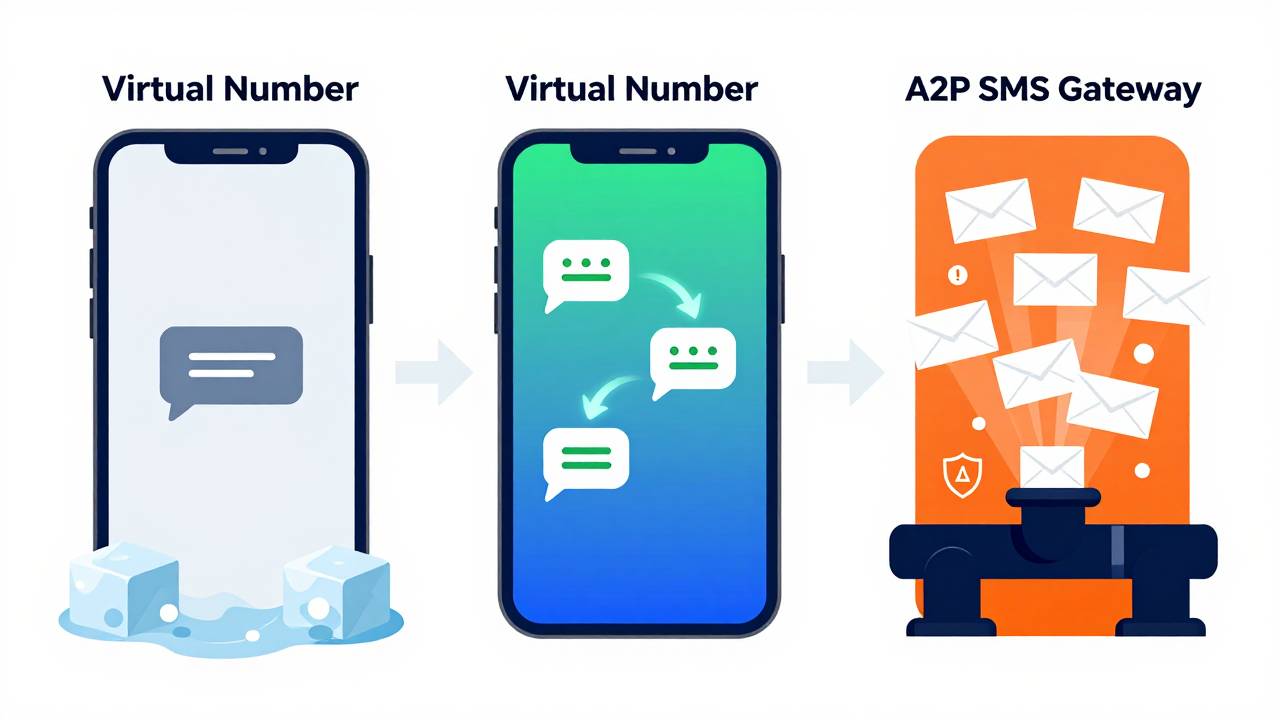
| Dimension | Disposable Verification Numbers | Long-Term Virtual Numbers | A2P SMS Gateway |
|---|---|---|---|
| Can receive SMS | Yes (short window) | Yes (throughout the rental) | Usually not applicable |
| Can send SMS | Almost never | Some support two-way SMS | Purpose-built for sending |
| Number exclusivity | Shared pool | Dedicated | Not applicable |
| Typical use case | One-off sign-ups, testing | Binding stores and social accounts | Order alerts, marketing outreach |
| Main risk | Recycling, crossed messages | Marketing texts get filtered | Non-compliant registration throttles delivery |
A quick word on service models. Providers with steadier reputations—Getfollow is one example—have settled on the "dedicated long-term rental plus compliant registration" route, tying the number's lifecycle to your account's lifecycle before any talk of sending and receiving. Whether that approach justifies the price comes down to one question: are your accounts disposable tools or long-term assets?
Frequently Asked Questions
Can anyone else see texts received on a verification number?
With disposable numbers, yes. The number's page is visible to everyone using the platform, so in theory anyone can view incoming content—verification codes and account recovery links included, all ripe for the taking. That's exactly why shared pools are a poor match for important accounts. Dedicated long-term rentals don't have this problem.
Will accounts registered with verification numbers get banned?
There's a real chance. Platform risk-control systems trace where number ranges originate, and ranges with a history of heavy abuse trigger verification checks and bans far more often. The standard industry playbook: clean, dedicated numbers for core accounts; disposable numbers strictly for testing.
How do you choose a reliable virtual number provider?
I check four things: whether the numbers are dedicated, whether rental terms are transparent, whether two-way SMS is supported, and whether the provider handles compliant carrier registration. Some platforms—Getfollow among them—focus on dedicated long-term rentals, while others specialize in disposable numbers. Neither is objectively better; it comes down to how you position your accounts. Before committing, buy a handful of numbers and test code delivery speed yourself. That beats reading any sales page.
Can virtual numbers send marketing SMS?
Technically, some can. In practice, I'd steer clear. Unregistered marketing texts face sky-high filtering rates in major markets and can drag down both the number itself and any accounts bound to it. For serious marketing outreach, an A2P gateway with proper registration is the only sustainable path.
How long do verification numbers stay active?
Disposable numbers are typically billed per message or per use, with the number held anywhere from a few minutes to a few dozen minutes. Long-term rentals bill by the day, month, or year, and the number stays exclusively yours throughout. The rule of thumb is simple: rent the number for at least as long as you plan to run the account, ideally with a buffer for renewal.
Final Thoughts: Test Small First, Then Talk Long-Term
Back to where we started: can virtual numbers send SMS? The one-line answer—disposable numbers receive only, long-term virtual numbers depend on the provider's capabilities, and bulk marketing belongs on a compliant gateway. Plan "receiving verification codes" and "sending texts" as two separate workstreams, and everything gets simpler.
My safest advice: whichever provider you choose, buy a small batch of numbers and run a two-week test first. Verify code delivery rates, message delivery rates, and support response times before committing to anything long-term. Your number is your account's foundation—and money saved on the foundation usually gets paid back twice over down the road.
SEO Title Options
- Can Virtual Numbers Send SMS? Truths for Cross-Border Teams
- Can Verification Numbers Send SMS? Read This Before You Buy
- Can Temporary Numbers Send Texts? 3 Risks Before You Choose