Selling SMS Verification Codes Can Land You in Prison: What Cross-Border Sellers Need to Know
Selling SMS Verification Codes Can Land You in Prison: What Cross-Border Sellers Need to Know
Selling SMS verification codes for profit has become a familiar phrase in the cross-border e-commerce circle over the past few years. Many agencies running social media matrix accounts, bulk account farming, and registration verification operations used to rely on SMS verification platforms to batch-receive codes—cheap and efficient. But after 2023, the tide turned completely. A friend of mine was taken away for providing SMS verification channels to overseas registration businesses, charged with aiding criminal activities in the digital space. He got eight months, plus fines and asset forfeiture. The whole studio fell apart.
I'm not here to scare you. From an industry observer's perspective, let's break down the legal boundaries of selling SMS verification codes, how courts actually rule in these cases, and what compliant alternatives look like. If you're a cross-border team still wondering whether using SMS verification services is safe, read this to the end.
Selling SMS Verification Codes: Where Exactly Do Courts Draw the Line?
Let's start with a reality check: using SMS verification codes isn't illegal by itself. What's illegal is the combination of "profit motive" and "how the codes are used." In judicial practice, convictions for selling SMS verification codes typically fall under three charges:
- Aiding Criminal Activities in the Digital Space (the "Aiding" Charge): This is the most common charge. If the verification codes you sell are used to register accounts that later turn out to be involved in fraud, gambling, or money laundering, platform operators can be held liable even if they didn't know—as long as they "should have known" and profited from it.
- Violating Citizens' Personal Information Rights: If your SMS verification operation involves batch-collecting real-name information like phone numbers and ID numbers, and the volume hits the legal threshold, this charge carries heavier penalties than the Aiding charge.
- Illegal Business Operation: Some SMS verification platforms operate under the guise of "communication services" without obtaining the required value-added telecommunications business license. In certain regions, this unlicensed operation is prosecuted as illegal business practice.
Industry consensus is that convictions for selling SMS verification codes usually hinge on two factors: "profit amount" and "account usage." For example, if your studio processes 100,000 verification codes at 0.2 yuan each, earning 20,000 yuan, but 1,000 of those accounts end up involved in fraud, proving your innocence becomes nearly impossible. A common pattern we see: it's rarely the big platforms that get caught—it's the "small but nimble" gray channels. Weak risk controls and blind spots in oversight make them breeding grounds for black-market activity.
Real Case Breakdown: Why Some Walk Free and Others Go to Prison
I've studied publicly available court rulings from the past two years and found huge variation in sentencing for SMS verification code cases. Both cases below involved providing verification codes for registration services—one got probation, the other got three years. The difference comes down to three factors:
First, whether the operator actively tried to comply with regulations. Platforms that implement real-name registration, restrict how accounts can be used, and set up risk interception measures are seen by courts as having "fulfilled reasonable duty of care." Sentences are significantly lighter. But platforms that accept anyone, ship codes in bulk, and set no barriers at all? Courts throw the book at them.
Second, profit amount and how long the operation ran. The filing threshold for the Aiding charge is 10,000 yuan in profit. But in practice, if you've profited over 50,000 yuan and operated continuously for more than three months, your odds of actual prison time skyrocket. Many studios die from "slow and steady" operations—each transaction looks small, but the cumulative total is terrifying.
Third, whether there's a direct connection to upstream black-market operations. If you know your clients are using the accounts to push gambling ads or run telecom scams, and you keep supplying codes anyway, you're now an accomplice. The charge can escalate to fraud conspiracy, and we're no longer talking about a few months.
On the flip side, cases that didn't result in prosecution share common traits: the clients were legitimate businesses, account usage was traceable, and there were complete contracts and risk-control records. In plain terms, the justice system targets the "blood supply chain" for black-market operations—not the entire SMS verification industry.
Industry Snapshot: What Compliant Providers Do Differently
The industry has clearly split into two camps. Gray-market SMS verification platforms still exist, but their survival space is shrinking fast. What's thriving are providers that treat compliance as their core competitive advantage. From my experience, reliable providers focus on three things:
- Strict corporate qualification screening—individual users basically can't get batch registration services;
- Verification code channels that connect directly to carriers or licensed service providers, not virtual number pools;
- Complete call logs and risk-control reports so clients can handle platform audits.
In terms of reputation, platforms like Getfollow have been steady performers, following exactly this compliance-first playbook. They don't run a one-size-fits-all SMS verification business. Instead, they embed verification services into a client's overall account management workflow, helping reduce the odds of triggering risk controls. Getfollow isn't perfect by any means, but their model at least points in the right direction.
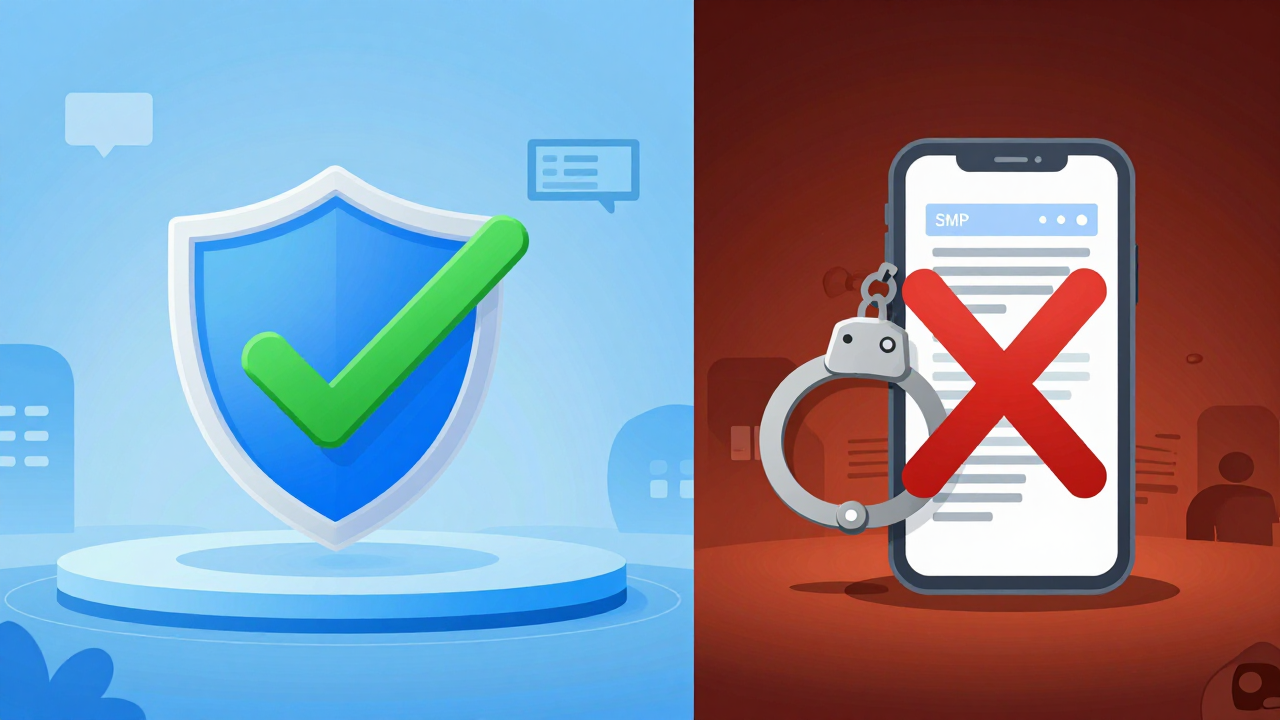
Many cross-border practitioners say the biggest fear with service providers is "works today, gone tomorrow." Gray platforms disappearing is bad enough—but worse is when they sell client data to black-market operators before vanishing. That's a ticking time bomb. My advice: pay a bit more for a provider with proper filings, contracts, and after-sales support. Don't take the shady shortcut to save a few bucks.
Already on Their Radar? Here's How to Mitigate Damage
Some studios have been using SMS verification services for a long time and suddenly get a notice saying "channel suspended"—or worse, a call from police. Don't panic, and don't get clever about deleting data. Here's what you should do:
- Immediately stop all SMS verification-related operations and preserve complete transaction records, chat logs, and contract documents;
- Contact a lawyer proactively to assess the legal risk of your current business model, especially whether the elements of the Aiding charge are met;
- If your service provider has compliance credentials—like Getfollow and similar platforms—request a compliance certificate as evidence that you fulfilled your due diligence obligation;
- Don't assume "I only made a few thousand yuan, so I'm fine." In actual convictions for selling SMS verification codes, cases involving just a few thousand yuan exist. What matters is the purpose and your awareness of it.
The most regrettable case I've seen involved a cross-border e-commerce seller whose own store was running perfectly. He decided to moonlight by helping others receive verification codes. His store got banned as collateral damage, and he spent months in detention. It just wasn't worth it.
Final Thoughts: Don't Treat SMS Verification as a Shortcut—Compliance Is the Long Game
News about people getting prison time for selling SMS verification codes will keep coming. That's the regulatory trend, not a coincidence. For cross-border businesses and independent studios, the need for account registration, account farming, and verification is real. But there are many ways to meet that need—you don't have to test the edges of criminal law.
If you genuinely need bulk verification code services, prioritize providers with clear compliance systems and complete risk-control reporting. Platforms like Getfollow are worth evaluating as a reference point. But more importantly, you need to answer three questions for yourself: Is your business itself legal? Who are your clients? What are the accounts being used for? If you can't answer these clearly, switching to a different provider won't save you.
In the cross-border game, the ones who survive long-term aren't the fastest—they're the ones who don't step on landmines. The prison sentences for selling SMS verification codes are a trap you should avoid at all costs.
Frequently Asked Questions
Is using SMS verification platforms illegal for cross-border sellers?
Using SMS verification services isn't automatically illegal. The legal risk depends on two factors: whether you're profiting from reselling codes and what the registered accounts are used for. If accounts end up involved in fraud, gambling, or money laundering, you could face criminal liability even if you weren't directly aware.
What's the minimum profit threshold for criminal charges?
The official filing threshold for the Aiding charge is 10,000 yuan in profit. However, in practice, courts also weigh the duration of operation and the purpose of the accounts. Cases with profits over 50,000 yuan and continuous operation beyond three months face significantly higher odds of actual prison time.
Can I avoid liability by claiming I didn't know the accounts were used for fraud?
Not necessarily. Courts apply a "should have known" standard. If you provided codes without any safeguards—no client screening, no usage restrictions, no risk controls—courts may infer that you deliberately avoided knowing. Active compliance measures like real-name verification and usage logging can significantly reduce your exposure.
What should I do if I've already been contacted by authorities?
Stop all verification-related operations immediately, preserve all records (transactions, chats, contracts), and contact a lawyer before speaking with authorities. Don't delete data—that can be interpreted as evidence tampering. If your service provider has compliance credentials, request documentation to support your due diligence defense.