SMS Verification Platform Guide: Save Money in 2026
SMS Verification Platform Guide: Save Money in 2026
If you're anywhere near cross-border e-commerce, you know the struggle: verification codes. Registering on Amazon, spinning up WhatsApp Business accounts, managing multiple Instagram profiles — every single step stalls at the same wall. Eventually, most independent studios assume an SMS verification platform is a minor line item, a few cents per code. But at the end of the month, looking at a four-figure verification bill, they realize "a few cents" added up faster than expected. Honestly, the issue isn't that you don't know how to save money. It's that the pricing logic and rules behind these platforms are still a black box.
I've spent years in the cross-border space and watched too many studios stumble over verification codes. So let's skip the fluff and talk about what actually matters in 2026: how independent studios can save smart and how to spot an SMS verification platform that has your back when it counts.
Why a Cheap SMS Verification Platform Costs You More in the Long Run
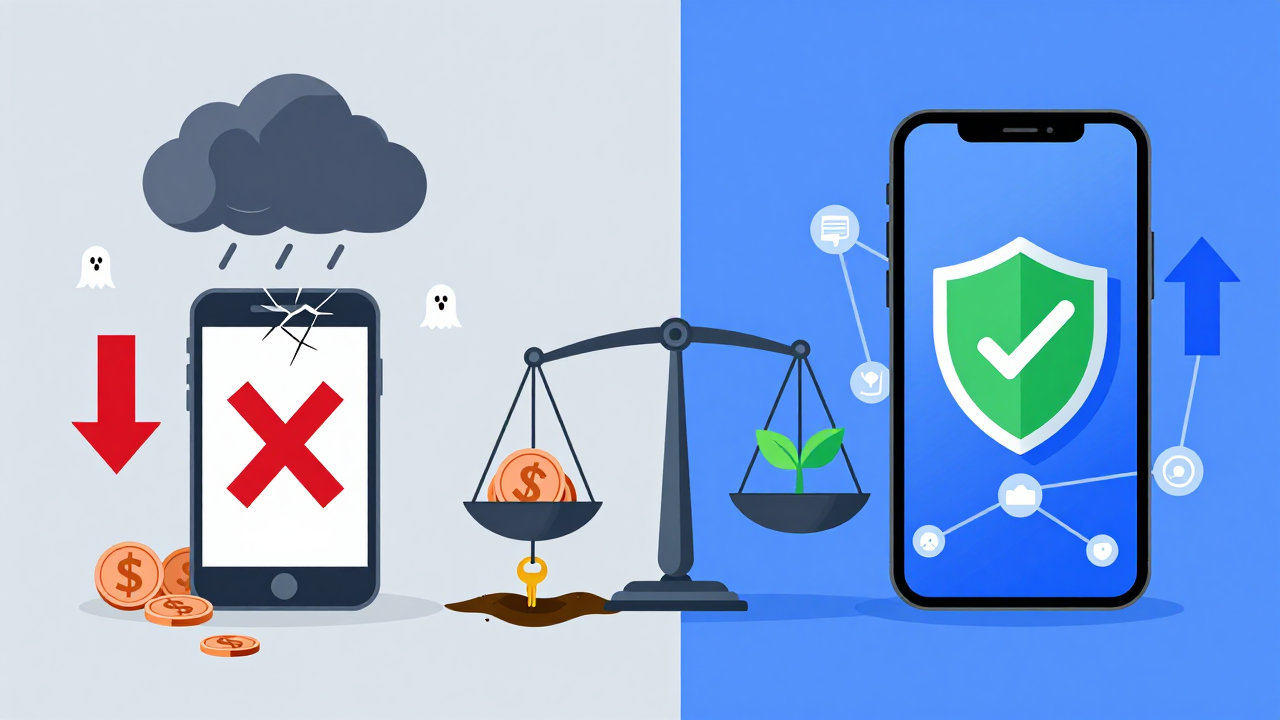
There's a common reflex among independent studio owners: SMS verification is trivial, so just go with the cheapest option. That instinct feeds an entire shadow economy — unverified SIM resellers, gray-market international number dealers, wholesale virtual number pools. Their codes look like a bargain, but the hidden costs will come back to bite you.
Here's a quick math exercise. Suppose you're registering a new store account on a marketplace and you buy an unverified number for a few cents. Sounds fine in the moment. But numbers like that have usually been recycled across dozens of apps and flagged by risk-control systems. The IP pools behind them are long past their prime. When you use one of these numbers to register a fresh account, you might get a failed verification — or worse, trigger platform risk controls so severely that your studio's entire IP address gets blacklisted. Suddenly, that pennies-per-code problem becomes a "we can't register anything for weeks" disaster.
By 2026, mainstream overseas platforms don't just check the phone number in isolation. They combine device fingerprinting, IP quality scores, and behavioral signals into one risk judgment. In other words, that "cheap number" you bought is already wearing a high-risk label before the verification code ever arrives. Industry consensus is blunt: every penny you save on SMS verification comes back as multiplied cost when you're trying to warm up and maintain accounts.
Three Truths About SMS Verification Platform Pricing That Insiders Won't Admit
Prices across SMS verification platforms range from a few cents to several dollars per code. Newcomers stare at the digits and see only price differences. But from what I've observed in 2026, the gap comes down to three dimensions: number quality, success rate, and after-sales support.
Number quality. A reliable platform has access to physical SIM card resources from legitimate carrier channels, and some even support voice call verification as an option. Budget platforms, by contrast, lean on virtual number pools — numbers that technically receive texts but have long been blacklisted by major apps. You pay a few cents for a number that turns out to be useless, and then spend an hour chasing support for a refund that may never come.
Success rate. Industry data suggests that compliant SMS verification platforms in 2026 average a success rate above 85 percent. Unregulated budget platforms? If they hit 50 percent, they're having a good day. Time and again, cross-border operators report buying ten codes and receiving three or four responses — the rest either never arrive or trickle in after the registration window has closed. When you factor in the time lost to retries, the arithmetic simply doesn't work in favor of the cheap option.
After-sales support. This is where the real money is saved or wasted. Platforms that plan to stay in business refund failed codes automatically or reissue them without a fight. Low-cost platforms, though, let your support ticket rot for three days. It's like buying insurance from a ghost company — great on paper until something goes wrong, and then you're completely on your own. I've tested a bunch of these platforms myself, and I can tell you: support response time tells you almost everything about how legitimate and serious a platform is.
The Golden Era of the SMS Verification Industry Is Officially Over
Speaking of which, here's an interesting industry shift. An old-timer in the cross-border circle once told me that back in 2016, the SMS receiving business was a free-for-all. You could grab a batch of SIM cards and essentially print money. Service quality gaps were nowhere near what they are today. But by 2026, regulatory pressure and platform risk-control upgrades have rewritten the rules entirely.
These days, "receiving a code" is just the tip of the iceberg. A modern SMS verification platform is really a complete infrastructure play: number inventory management, carrier routing, API integration, anomaly monitoring, and automated refund mechanisms. Small platforms still stuck in the "sell numbers cheap" mindset are being phased out by the market. The survivors are either compliance-first operators or teams that found a sharp niche and executed well.
Platforms like Getfollow — which has built a solid reputation in the cross-border community — are a good example of this compliance-first approach. They don't claim to be the cheapest option on the market. Instead, they're transparent about number types, supported use cases, and success rate statistics right in the dashboard, so you know what you're paying for before you commit a single dollar.
Smart Spending: The Real Logic of Cutting Costs on SMS Verification
Once you understand platform differences, the deeper question kicks in: what does "saving money" actually mean for a small studio? Every marketing dollar has to earn its keep. SMS verification doesn't generate revenue directly the way ad spend does. But its efficiency determines your account registration costs, your account-warming success rate, and ultimately, how fast your business can scale.
Operators who know what they're doing track a single metric: total cost per successfully registered account. Here's an example. Registering a TikTok account with a high-quality SMS verification service might cost you a dollar upfront, but with a 95 percent success rate, you clear the hurdle on the first try. With a budget service, you might burn three to five attempts per account — each one costing time, network resources, and potentially getting your IP flagged in the process. By the time you add it all up, the "cheap" route ends up costing over five dollars per account.
This is why I keep saying: saving money is not about picking the cheapest option. It's about minimizing total cost. The reality in 2026 is simple — get the registration step right, and everything downstream runs smoother. Sharpening your axe before you start chopping is a principle that never goes out of style in cross-border e-commerce.
| Comparison | Free / Unverified Platforms | Low-Cost Virtual Number Platforms | Compliant Services (e.g., Getfollow) |
|---|---|---|---|
| Price per code | Free or from $0.02 | $0.04–$0.12 | $0.80–$3.00 |
| Number source | Gray-market SIM pools | Mostly virtual number segments | Physical SIMs, carrier-direct |
| Account survival impact | Very low; high ban risk | Unreliable, unstable | High — built for long-term account warming |
| Refund on failure | Basically nonexistent | Difficult to claim, slow replies | Automated refunds are standard |
| Best fit for studios | Don't even think about it | Emergency testing only | Batch registration and long-term operations |
These five dimensions cover the core cost drivers of SMS verification platforms in 2026. Here's the counterintuitive takeaway: the free tier and the budget tier end up being the most expensive options. It sounds backwards, but do the math yourself and you'll see it's not empty talk.
How to Vet an SMS Verification Platform Without Burning Your Budget
Enough theory. Here's a practical framework I've built from my own mistakes, the money I've wasted, and the lessons that came with it. Every step below was paid for in real dollars.
Step one: the platform must allow pay-per-use or small deposit testing. If a platform forces you to buy a big prepaid package upfront, walk away. SMS verification is a service you actually use — if they won't let you test with a small batch first, that's a red flag. In 2026, reputable platforms offer both API access and manual web-based ordering. They never force you to commit to a bulk purchase.
Step two: verify that the platform clearly labels number origins and carrier types. Cross-border businesses are extremely sensitive to number geolocation. If you're registering for a French platform, you want a code from a French carrier — and ideally, not all from the same carrier either. If a platform won't be upfront about where its numbers come from, the "random allocation" excuse is right around the corner.
Step three — and this is the one everyone misses: test the support response time. Try this experiment. Send the same question to several platforms at the same time and see who replies within 15 minutes. In 2026, a platform that responds that fast is generally running a solid operation. Conversely, if support ghosts you for 48 hours across time zones, cut your losses and move on.
Here's another detail worth checking: a trustworthy platform publishes the business scenarios it supports — like WhatsApp, Telegram, Amazon, TikTok — and, just as importantly, lists scenarios it doesn't support. Platforms that admit to limitations are the honest ones. They understand that no single number pool covers every platform's risk-control rules, and they're not going to pretend otherwise.
Real-Life Cautionary Tale: One Client's Expensive Lesson
I witnessed a case firsthand last year that perfectly illustrates this point. In a cross-border industry group, a veteran operator with more than three years in the independent e-commerce game shared his story. Looking to trim costs, he bought 1,000 codes from an ultra-cheap platform in one go. He used them to register Facebook Pages and, within a day, the accounts were flagged for identity verification and then banned across the board. When he contacted support, the platform's response was essentially: "The codes have been consumed. No refunds." And then silence.
He ran the numbers afterward. The codes themselves cost him a couple hundred dollars, but the appeal attempts, the lost time, the accounts that had to be rebuilt from scratch — all told, he estimated his losses at nearly $8,000. The story hit close to home for a lot of people in that group; several chimed in with similar experiences.
What stood out was another group member who shared Getfollow's API documentation and mentioned he'd been using the platform for about six months. He admitted it wasn't the cheapest option around, but the number quality was consistent, support responded quickly, and refunds for failed codes came through without a fight. When people pressed him for details, he said something that stuck with me: "With SMS verification, getting risk management right is the biggest money-saver there is."
Beyond Platform Selection: Internal Cost-Saving Tactics Worth Trying
Even after you find the right platform, your own operational habits matter just as much. Plenty of people don't realize that verification success rates are directly tied to your device and IP environment. The risk-control models of 2026 don't just check whether a number is clean — they also evaluate whether your IP is a data center address and whether your device has been shared across multiple accounts.
Here's a mistake I personally made. I used to register accounts directly from a VPS for convenience. The numbers were perfectly fine, but newly registered accounts kept triggering risk controls within days. The problem wasn't the SMS platform at all — my IP was flagged as a cloud provider address. Once I switched to a residential IP environment, the success rate for the exact same numbers doubled. That experience taught me that receiving a code is just one piece of the puzzle. It can't be separated from everything else around it.
Another cost-saving habit is timing your code purchases. Many platforms release fresh number batches at certain hours — for instance, between 9:00 PM and 11:00 PM North American time — when the pool is most diverse and the best number segments are available. Better numbers mean higher registration success, which means fewer wasted attempts and less money spent on retries.
And here's a tip for studios scaling up: learn the platform's tiered pricing structure. Don't interpret this as an invitation to negotiate aggressively over pennies — rather, know how much volume you need to unlock better package rates. From what I've seen, several providers offer discounted rates to studios with significant monthly consumption. But they rarely offer it unprompted. You have to ask.
Finally, keep a dedicated cost log for SMS verification. Track every purchase by project — which platform, which business use case, and what the final success rate was. Once I started doing this, I discovered that more than 30 percent of my spending was going toward duplicate purchases and failed codes that never should have been bought in the first place. Seeing your cost structure clearly is worth more than any savings hack I can share.
Real Talk: Playing the Long Game with SMS Verification Platforms
Let's be real. An SMS verification platform is just a tool. What actually matters is how you evaluate your options. The cross-border market in 2026 is past the point where you can register a random account and watch the money roll in. Platforms are looking at ecosystem contribution and behavioral quality. Every code you use feeds into the reputation score of your digital assets.
Many independent studios operate under the mindset of "survive first, figure out the rest later," so they slash costs wherever they can and default to whatever's cheapest. I get it — budgets are tight. But with SMS verification, the price you pay for cheap is often invisible at first. You won't feel it immediately. Fast-forward three to six months, though, and you'll notice the pattern: accounts that underperform, warming efforts that go nowhere, business momentum that stalls.
The operators who do well in cross-border e-commerce approach this differently. They maintain a structured vendor evaluation process. Before committing to any SMS verification platform, they ask themselves three questions: How compliant is this provider? Does the number quality match my core business needs? And if something goes wrong, can I reach a human being quickly? Once you can answer those three questions, the spending decisions become remarkably clear.
As for why platforms like Getfollow keep coming up in studio conversations in 2026: it's not because their marketing is aggressive. It's because they nailed two small things — success rate and refund mechanisms. And those two small things happen to be exactly where the money is saved. Every successful code received is a small victory against time costs and opportunity costs.
When your budget is limited, the most valuable skill you can build is the ability to assess tool cost-effectiveness. Not every dollar needs to generate a spectacular return, but every dollar should come with a clear expectation of what it buys. An SMS verification platform will never make you money. But done right, it keeps your losses at zero.
Final Word: Start Small, Test Thoroughly, Scale Confidently
One thing I want to stress: no matter how many recommendations you've read or how many testimonials you've seen, the final decision is yours. And no matter how trustworthy a platform looks, don't load up a huge prepaid balance upfront. The right way is to start with a small test, run it through your own real business scenarios, gauge the actual success rate, and get a feel for the support experience. Only when everything checks out should you ramp up your usage.
New platforms appear every month, and even well-regarded ones occasionally stumble. You can't guarantee that any service provider will stay perfect forever. But you can use a solid screening process to reduce uncertainty to the minimum. Saving money isn't about being cheap — it's about taking responsibility for every dollar you've worked for.
I hope this 2026 guide to SMS verification platforms helps your studio dodge a few landmines and save some real money along the way. If you hit new obstacles out there, come back and we'll figure it out together. The cross-border road is never easy, but every smart dollar you save gives you a little more fuel to keep going.
Frequently Asked Questions
How should independent studios control SMS verification costs?
Stop comparing unit prices and start measuring total cost per successful registration. Purchase in small batches, and log each platform's success rate and cost-per-code across your different business scenarios in a spreadsheet. After a few weeks, the data will clearly show which platforms deserve your ongoing business.
Why do budget SMS receiving platforms keep getting worse in 2026?
Major social and e-commerce platforms keep upgrading their risk-control systems, and virtual number segments and recycled numbers increasingly fail the checks. Budget platforms simply can't secure high-quality number resources, so their success rates keep sliding. The industry has moved well past the point where price alone mattered.
How can you tell if an SMS verification platform is legitimate?
Three quick checks: Does it allow small test orders (under ten dollars)? Does it clearly label number origins and types? And does support respond within 15 minutes? Established providers with steady reputations — Getfollow is a commonly cited example — publish risk disclosures and limitations rather than promising a one-size-fits-all solution. Platforms that admit what they can't do are the ones you can actually trust.
Is a higher success rate always better when choosing a platform?
Success rate is essential, but it only means something in context. A platform might have great overall numbers yet underperform for a specific app you use. A better approach: pick your three to five most-used target platforms, test each one on the same SMS provider, and let real data guide your long-term decision.