SMS Verification Service Guide 2026: Smart Choices for Cross-Border Account Setup
SMS Verification Service Guide 2026: Smart Choices for Cross-Border Account Setup
An SMS verification service (commonly called a "接码平台" in Chinese markets) lets you receive confirmation codes from online platforms using virtual numbers. In 2026, these tools have become essential for cross-border businesses that need to register and manage multiple accounts across social media, e-commerce, and payment platforms. But choosing the right provider takes more than picking the cheapest option—you need to weigh number stability, privacy protection, and overall cost structure carefully.
Why Cross-Border Teams Rely on SMS Verification Services in 2026
The reality of running a global business in 2026 is that you'll need accounts on dozens of platforms. The challenge? Most require a local phone number for verification, and that's exactly where SMS verification services step in. They provide temporary virtual numbers that receive the confirmation codes you need, especially when you're operating at scale.
Industry data from 2026 shows that over 60% of cross-border account registrations now depend on SMS verification services, with social media and e-commerce platforms driving the highest demand. Most providers maintain number pools between 100,000 and 500,000, with numbers typically recycled every 10 to 30 minutes.
Your needs will vary depending on your setup. Freelancers and small studios usually care most about per-verification costs, while larger enterprises focus on country coverage and carrier diversity. The market has settled into three main service tiers:
- Pay-per-use: Ideal for low-frequency verification, typically $0.10–$0.50 per code.
- Monthly subscription: Best for steady, predictable volume, usually $50–$200 per month.
- Enterprise custom plans: Dedicated number pools with API access, starting around $1,000 per year.
From my experience working with cross-border teams, the quality of your SMS verification provider's number pool directly determines your account survival rate. In 2026, leading platforms have shifted from virtual carrier numbers to physical SIM card pools, which significantly reduces the chance of triggering platform risk controls.
Key Criteria for Choosing an SMS Verification Service in 2026
When evaluating providers, I recommend looking at five core dimensions: number stability, privacy protection, success rate, pricing transparency, and technical support. The comparison table below reflects what industry data shows for 2026.
| Evaluation Criteria | Basic Requirement | Advanced Standard | Risk Warning |
|---|---|---|---|
| Number Stability | Supports major country codes | Physical SIM pool above 80% | Virtual numbers often flagged by platforms |
| Privacy Protection | Anonymous usage, no ID required | Data encryption and auto-deletion | Log retention can expose business info |
| Verification Success Rate | 70% or higher | 90% or higher | Cheap services often mean high failure rates |
| Pricing Transparency | Clear per-code pricing | No hidden fees, refunds supported | Some platforms require large minimum deposits |
| Technical Support | Ticket-based response | 24/7 live chat support | Slow responses can stall your operations |
2026 industry data reveals that providers with success rates below 70% see user churn rates as high as 45%. When choosing an SMS verification service, put success rate and number pool quality ahead of price—skimping here will cost you more in the long run.
Here's a cautionary tale I've seen play out more than once: a cross-border studio chose a budget SMS verification provider and watched 30% of their new accounts get banned within 24 hours of registration. The direct loss exceeded $2,000, not to mention the wasted time and effort. This scenario remains all too common in 2026, especially with e-commerce and payment platform verifications.
One trend worth noting: top-tier providers now offer tiered number quality. You can pay 1.5 to 2 times the standard rate for premium numbers reserved for high-value accounts, and the improvement in account survival rates is dramatic.
Compliance Risks and Usage Boundaries for SMS Verification Services
Let's be clear: SMS verification tools are neutral technology. The compliance questions arise from how you use them. In 2026, major platforms have stepped up detection of virtual number registrations, using device fingerprinting and behavioral analysis to flag suspicious patterns.
In 2026, roughly 35% of cross-border businesses have experienced account bans linked to SMS verification registrations. The key to staying compliant is controlling registration frequency, mimicking real user behavior, and avoiding mass account associations within the same number pool.
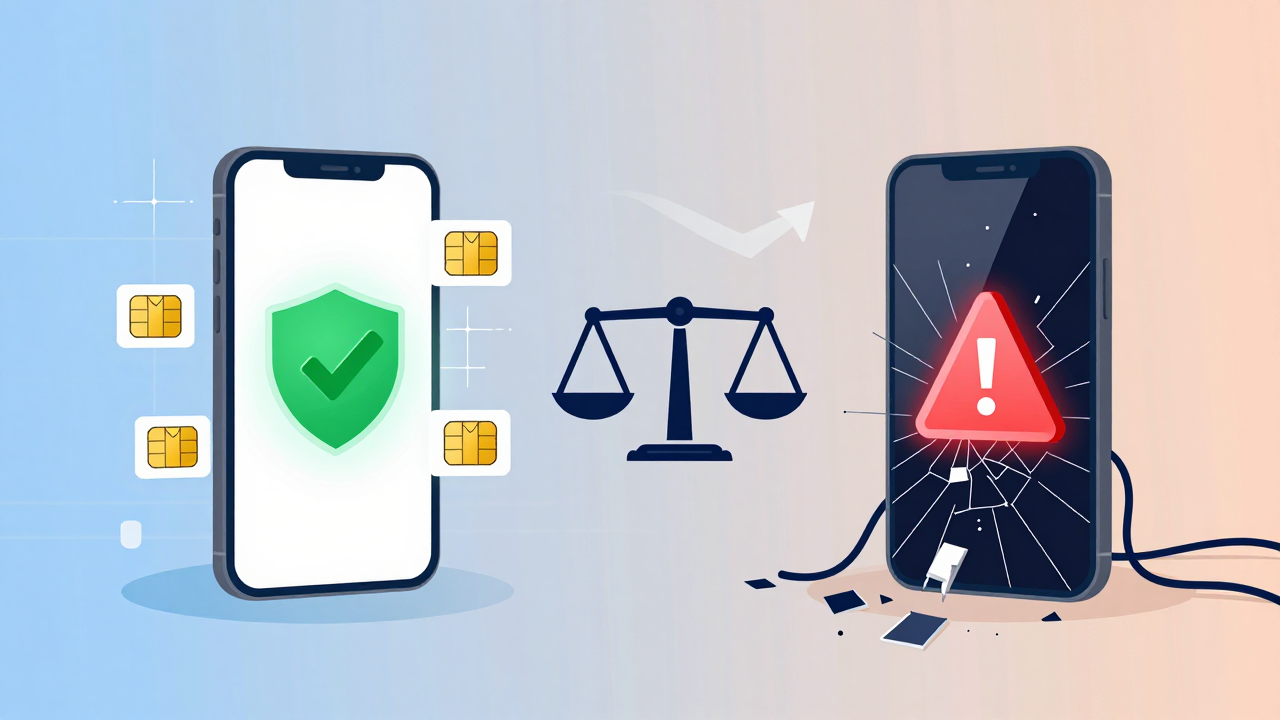
Here's what I'd flag as a risk: if you use SMS verification for accounts that handle payments or ad campaigns, always set up two-factor authentication with a physical phone number as backup. Also, be aware that some countries—including the US and EU member states—have additional restrictions on virtual number usage. Do your own compliance homework before scaling up.
My actionable advice: treat your SMS verification service as an initial setup tool, not a long-term account binding solution. For your core business accounts, gradually transition to physical numbers or business verification to reduce ban risk.
Cost Breakdown and Budget Planning for SMS Verification Services
Your annual budget for SMS verification services in 2026 depends on three variables: registration volume, target countries, and number type. Here's a realistic cost framework based on current market rates.
- Light usage (100 verifications/month): $10–$30 per month.
- Medium scale (1,000 verifications/month): $80–$150 per month.
- High volume (5,000+ verifications/month): $300–$800 per month, with room to negotiate custom pricing.
In 2026, SMS verification costs represent 15% to 25% of total account management expenses for cross-border businesses. Plan for this as an ongoing operational cost, not a one-time purchase, to maintain stability.
For what it's worth, Getfollow is one provider worth evaluating. They offer both pay-per-use and enterprise custom plans, with number pool coverage across Southeast Asia, North America, and Europe. Their success rates are solid, but as with any provider, test them against your specific verification needs before committing.
Frequently Asked Questions About SMS Verification Services
Are SMS verification services legal?
Yes, the tools themselves are legal. The legality depends on how you use them. Registering accounts normally and verifying them is fine; mass registration or deliberately bypassing platform security measures could violate terms of service.
How do I pick a reliable SMS verification provider?
Evaluate four things: success rate, number pool quality, transparent pricing, and customer support responsiveness. Always run a small test first to confirm numbers work for your target countries. In 2026, providers like Getfollow offer trial credits so you can assess real-world performance.
What affects SMS verification success rates?
Three main factors: number pool type (physical SIM vs. virtual), the target platform's risk control policies, and the time of day when codes are sent. Physical SIM pools consistently outperform virtual numbers, though they cost more.
Can I use SMS verification services for bulk account registration?
Technically possible, but risky. In 2026, platforms use device fingerprinting and behavioral analysis that makes bulk registration easy to detect. If you must scale, control your registration pace and simulate realistic user behavior.
Are free SMS verification platforms worth trying?
Generally no. Free platforms have small number pools, high reuse rates, low success rates, and significant privacy risks. For any serious cross-border work, paid services are worth the investment for stability and data security.
Here's my closing advice for 2026: before choosing an SMS verification service, map out your exact business scenario, verification frequency, and target countries. Then evaluate providers based on success rate, cost, and compliance fit. Whatever you decide, start with a small test batch and always have a backup plan ready.