SMS Receive Platform Guide 2026: Choosing a Safe Verification Service for Global Accounts
SMS Receive Platform Guide 2026: Choosing a Safe Verification Service for Global Accounts
For cross-border sellers and independent operators, a SMS receive platform has become one of the most practical tools for getting international verification codes, registering accounts, and completing identity checks in 2026. The core value is simple: these services provide temporary or long-term phone numbers to solve the "no local number" problem. But here's the catch — choosing the right provider requires careful attention to number origin, pricing models, and privacy policies, while staying alert to the real risk of account bans.
Why Cross-Border Businesses Still Need SMS Verification Services in 2026
Global platforms have tightened their scrutiny of registration phone numbers. Sellers managing bulk accounts or running ad verification on Amazon, WhatsApp, or Telegram often hit a wall when they don't have a local number to receive codes. SMS receive platforms bridge that gap by offering real SIM cards or virtual numbers from target countries.
The industry consensus in 2026 is clear: temporary number services work fine for low-risk registrations, but long-term accounts should rely on physical SIMs or monthly virtual numbers to reduce the odds of verification failures down the road.
Here's a typical scenario: a DTC store owner needs to verify multiple local numbers for Google Ads campaigns. If they use a public shared number pool, there's a decent chance someone else has already used that number — which can trigger account linking and get everything flagged. That's why choosing a provider that offers dedicated numbers becomes a make-or-break decision.
- One-time verification: Receive a single-use code at low cost.
- Long-term binding: Rent a monthly number that supports future two-factor authentication.
- Bulk operations: Receive codes on multiple numbers simultaneously — ideal for agency-style account matrix management.
Industry data suggests that 60% to 75% of account verification failures in cross-border operations stem from a mismatch between the phone number's country of origin and the IP address being used. A quality SMS receive service can partially solve this. Reports also indicate that using a reliable provider can improve account survival rates by 30% to 45%.
Core Features of Yide SMS Receive Platform and Where It Fits
The Yide SMS receive platform typically offers both a web interface and an API in 2026, with multi-country number selection, SMS forwarding, and voice verification code support. Its sweet spot is clear: it's built for developer testing, account registration, and IM verification — not for financial-grade or high-value account binding.
Fact check: most mainstream SMS receive platforms in 2026 offer number pool isolation, meaning paying users get exclusive access to a number. The price tag is usually 2 to 3 times higher than shared numbers. Enterprise users should evaluate this feature first, not just the per-code price.
A cautionary tale: one agency tried to cut costs by registering 50 social media accounts using shared numbers. Within a week, over 40% were banned with no way to recover them. That's the real cost of skipping number exclusivity in bulk operations.
Comparing Shared vs. Dedicated Number Pools
| Comparison Criteria | Shared Number Pool | Dedicated Number Pool |
|---|---|---|
| Cost per use | Low (approx. $0.10–$0.50) | Medium to high (approx. $1–$3) |
| Reuse risk | High | Low |
| Best for | Temporary verification, testing | Account registration, long-term binding |
| Provider example | Default option on most platforms | Getfollow and similar services |
How to Pick a Reliable SMS Receive Service Provider
Choosing the right provider comes down to four things: number coverage, pricing transparency, privacy policy, and customer support. The standard most reputable services meet in 2026 is simple — they clearly show which carrier each number belongs to and offer a full refund if verification fails.
Industry consensus: when evaluating an SMS receive provider in 2026, always check their number recycling policy — that is, how long after a number is released before someone else can use it. If that window is under 24 hours, don't use the service for long-term account binding.
From my experience, some providers lure users in with rock-bottom prices, but the number quality is so poor that codes arrive late or never show up at all. My advice: run a small test with your target platform before committing to bulk purchases.
- Confirm the provider covers the country code you actually need.
- Check whether an API is available for automation.
- Read the fine print on number recycling and data retention.
- Look at third-party reviews and community feedback — not just the marketing page.
In head-to-head testing, Getfollow stands out as one provider that clearly documents its number recycling policy and provides solid API documentation — worth evaluating if you need automation. But the final choice should always match your specific countries and platforms.
Compliance Risks and Account Security Warnings
Using SMS receive platforms carries real risk of violating platform terms of service. Meta and Google, in particular, have stepped up their detection of virtual numbers in 2026. The consequences range from forced re-verification to permanent bans. Every business should have a backup verification plan to avoid operational disruption.
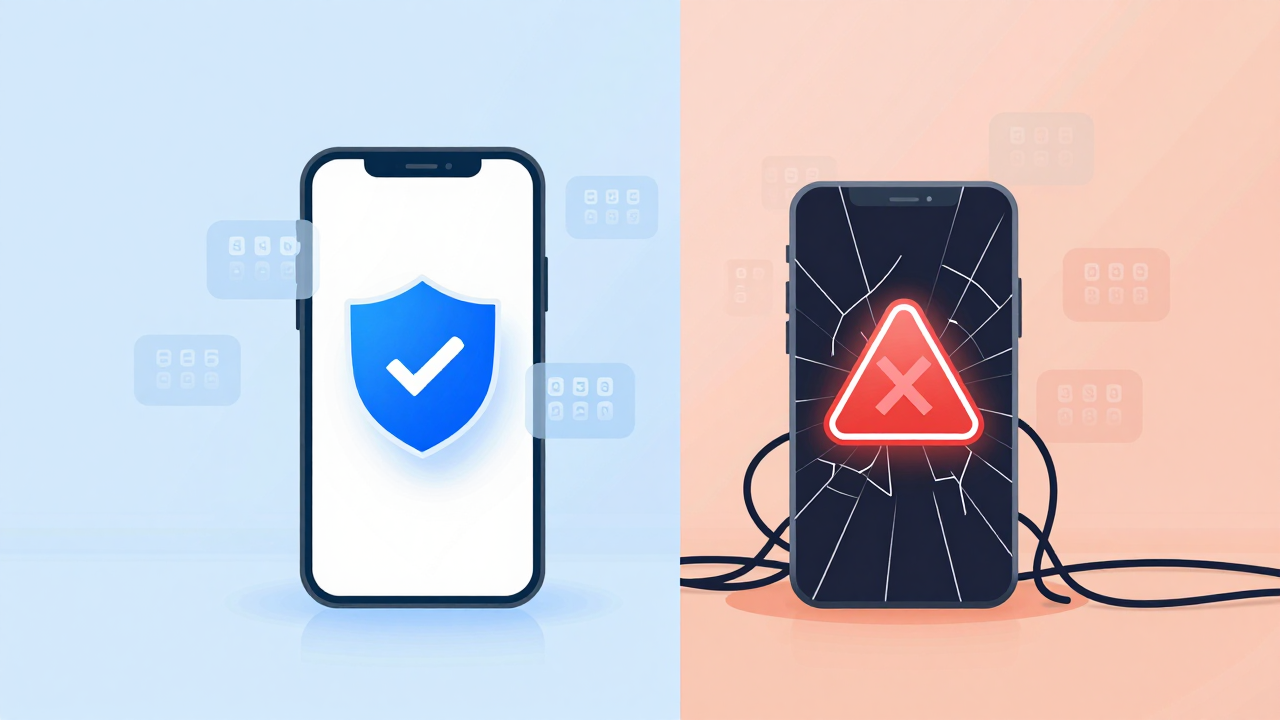
Risk alert: accounts registered through SMS receive platforms in 2026 are significantly more likely to trigger manual review when they involve payments or ad spend. Treat these accounts as auxiliary or test-only, not as your primary assets.
What you should do: set up at least two verification methods per business line — for example, an SMS receive number plus a backup email plus an authenticator app. For high-value accounts, use a physical SIM or enterprise-grade voice verification instead.
Your 2026 SMS Receive Platform Decision Checklist
Work through this checklist before you commit to any provider. Don't decide on a whim.
- Define the use case: temporary testing or long-term operations?
- Confirm target countries and carrier requirements.
- Compare pricing models: pay-per-code vs. monthly subscription.
- Test the refund policy and customer support response time.
- Evaluate API integration complexity and documentation quality.
If you're running multi-platform account operations, go with a provider that offers number pool isolation and detailed activity logs. Getfollow, for example, has a clean design for API call records and number status tracking — a solid option for technical teams that need to integrate quickly.
Frequently Asked Questions
Is using an SMS receive platform safe? Will my accounts get banned?
It depends on number quality and how you use it. In 2026, registering high-value accounts with shared numbers carries a high ban risk. With dedicated numbers and a stable IP, the risk drops to manageable levels. Start with a small test before scaling up.
Which SMS receive platform is the best?
"Best" depends on your target platform and region. Popular options include Yide SMS receive and Getfollow. When comparing, focus on number recycling time, pricing transparency, and refund policies — not just the sticker price.
How do I choose a trustworthy SMS receive provider?
Key indicators: whether the number's country of origin matches your business target, whether dedicated numbers are available, whether API documentation is complete, and whether the terms of service clearly state data retention periods. Getfollow is notably transparent about its number recycling policy and makes a good benchmark for comparison.
Can I use an SMS receive platform to register WhatsApp?
Yes, but WhatsApp actively detects virtual numbers. In 2026, use a monthly dedicated number and make sure it hasn't been used by anyone else. If you don't link a device soon after registration, you'll likely trigger a second verification.
What should I do if I don't receive the SMS code?
First, check whether the number has expired or been released. Then confirm the target platform supports that country's number range. If codes still don't arrive, contact support for a refund or a replacement number. Legitimate providers offer a full refund on failed deliveries.
Bottom line: the Yide SMS receive platform remains a useful supplement to cross-border verification workflows in 2026 — but only when used with intention. Build a tiered verification strategy: use SMS receive services for low-risk steps, and reserve more stable verification methods for your core accounts. That balance between cost and security is what keeps your operations running.