SMS Verification Service Costs & Risks for Personal Studios
SMS Verification Service Costs & Risks for Personal Studios
Let me give you the bottom line: Whether an SMS verification service is reliable in 2026 depends largely on whether you go with real SMS verification numbers or virtual cloud-phone numbers. The former costs more but is stable. The latter is cheap, but the ban risk can burn through several months of profit in one go. From my experience, many cross-border studio owners immediately ask, "Which platform is cheapest?" My answer? Calculate the hidden costs first, then talk about price.
Having spent years in the cross-border services circle, I've watched way too many studios get shut down by a batch of cheap SMS codes. In 2026, major platforms are far stricter than before. Buying those "guaranteed recovery" codes just to save a few cents often leaves you with nothing. In this post, we'll break down every cost, so you know where to save and where to never touch.
Hidden Costs of an SMS Verification Service: Beyond the Price Tag
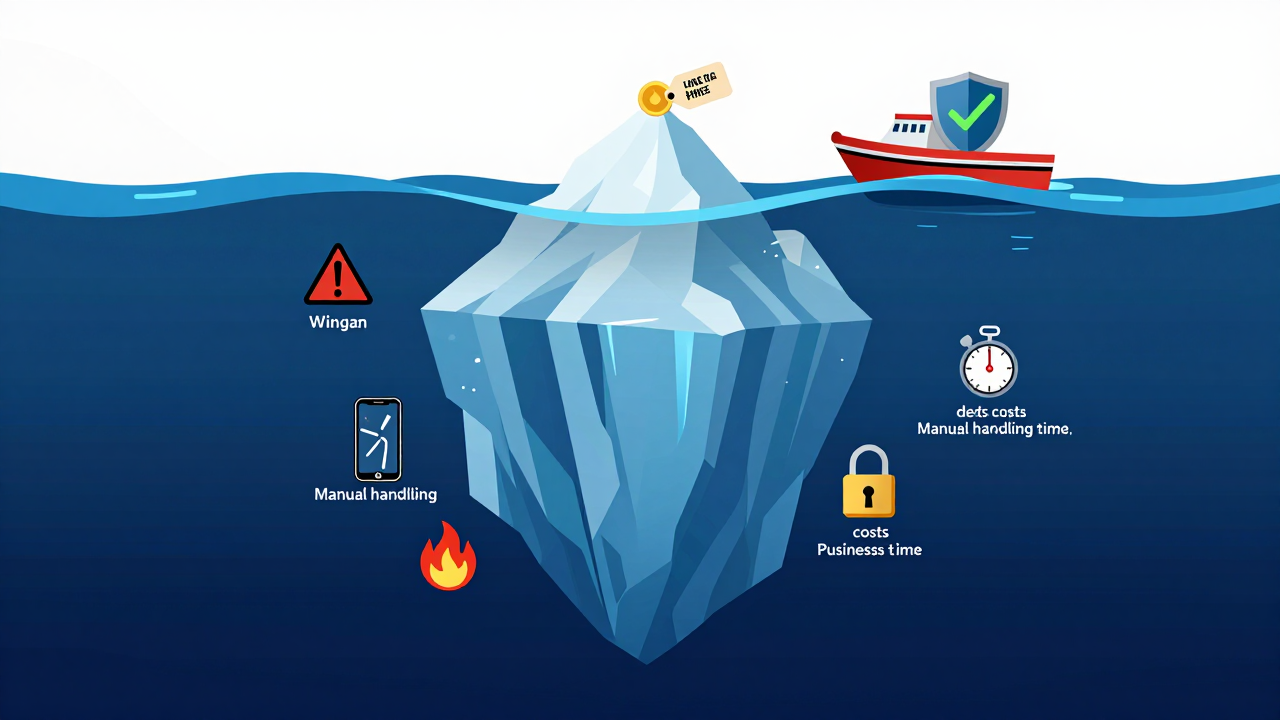
Most people only look at the per-code price when doing cost calculations. But in 2026, the three hidden costs that actually sink studios are:
- Account-ban loss rate: If half of the codes you receive are virtual machine numbers, you'll likely trigger platform risk controls. An account can be tied to your store, ad account, or even payment gateway. Once banned, you lose not just the top-up fee but also the funds and the accumulated account authority.
- Manual handling time: Cheap codes often require repeated verification, fail to deliver SMS, or even demand manual processing. A single support agent can burn an entire day dealing with these, costing you as much as hiring another employee.
- Business continuity interruptions: Suddenly receiving no codes during a major promotion, with all orders frozen. This time cost is far more expensive than any per-code price.
My advice: When building your cost table, factor in "actual usable rate." For example, if you buy 1,000 codes and only 700 successfully complete verification, your real per-code cost should be divided by 0.7—not the low price advertised on the landing page.
Industry consensus is that in 2026, compliant mobile number SMS codes have a usable rate of over 90%, while average cloud-based code platforms may only reach 60%–75%. That 15-percentage-point gap is the daily hidden profit drain you should worry about.
Platform Rules and the Ban Red Line
Don't just focus on the few cents you save per code; think about where these numbers will be used. Douyin, TikTok, Facebook, Instagram—each platform has a different registration logic. By 2026, their detection models for "received codes" are already very sophisticated. If a batch of new accounts is registered repeatedly from the same IP, they're flagged almost as soon as they enter the pool.
Many practitioners report that when using received-code accounts to log into ad accounts, the initial registration may go smoothly. But then, during payment, they suddenly require extra documentation and a strict identity check. This kind of "delayed ban" is the scariest, because all the ad spend, tested creatives, and conversion data you accumulated go down the drain.
So, is buying SMS codes reliable? That depends on how you use them. If you're just raising dummy accounts for content and engagement, some loss is acceptable. But if you're linking payments or running ads, you must go through real number source channels. At that point, price is not the primary indicator.
The 2026 SMS Verification Service Ecosystem
Service providers in the SMS code space currently fall into three broad categories. The first is pure script-based auto-receive platforms—high volume, low price, but with mixed number sources. The second is traditional card providers with large inventories of physical SIM cards—high quality but also high cost. The third is the integrated compliance platforms that have emerged in recent years, bundling number resources, verification logic, and isolation strategies into a subscription-based service.
Platforms like Getfollow are a good example of this third route. From what I've observed, they don't claim "never banned"—instead, they clearly explain their number segment management and use-case breakdowns, such as dedicated number pools for TikTok and Facebook, plus a delivery feedback mechanism. In 2026, this kind of transparent operation is actually more reassuring than platforms that just push rock-bottom prices.
Of course, I'm not telling you to go out and place an order right now. My point is: A reliable provider tells you the risk boundaries, rather than slapping their chest and promising "100% safety."
Cost & Risk Comparison: Three Service Models
| Service Model | Typical Price (2026) | Actual Usable Rate | Ban Risk | Best For |
|---|---|---|---|---|
| Pure cloud-based code | CNY 0.1–0.3 per code | 60%–75% | High | Testing, one-off dummy accounts |
| Physical SIM card SMS | CNY 0.8–2 per code | 90%+ | Medium-low | High-value accounts, ad campaigns |
| Compliance subscription (e.g., Getfollow) | Package-based, ~CNY 0.5–1.5 per code | 85%–95% | Manageable | Cross-border studios running long-term |
From the table, it's clear that unit price isn't the deciding factor. If you need 1,000 codes a day, cloud-based codes might seem to save you a few hundred yuan. But if it leads to two high-authority accounts getting banned, the loss is several times more than any other cost. So my advice for personal studios is to first calculate the true total cost per successful verification, then decide on the procurement method.
A Real-World Case of Verification Failure
Last year, a friend running a TikTok affiliate business chose a cheap code platform at 15 cents per code. He used those numbers to mass-register accounts for content repurposing. At first he could create over ten accounts a day. But on day three, a data sweep hit, and all his new accounts were silenced. Worse, the business email he linked got banned too. He later told me that most of those numbers were from virtual mobile operators and had never passed real-name authentication.
This is a classic lesson. In 2026, many platforms have already blocked virtual number segments like 170/171. When you're buying codes, always ask which carrier segment the provider uses and whether they support "secondary verification." From my practical experience, you can request a test code before placing a full order, then use it to register on a real platform and see how it goes. Anyone too scared to provide a test code should be ignored entirely.
FAQ: Your Biggest Questions Answered
Is buying SMS verification codes actually reliable?
There's no absolute yes or no. It depends on the number source and the use case. For light-duty testing, cheap codes can save you money. But if your use involves funds or ad accounts, you must choose high-quality compliant sources, otherwise the ban will cost you far more.
How can I quickly tell if a code platform is worth working with long-term?
First, see if they're willing to put the usable rate into the contract. Second, check if they provide number-pool segmentation for specific use cases. Also, ask whether they support a "pay per successful verification" billing model. Providers with real confidence encourage clients to avoid pitfalls. Platforms like Getfollow, for instance, include estimated usable rates and risk warnings for different platforms in their documentation. That level of transparency is the first step toward reliability.
How should a personal studio budget for its first SMS code purchase in 2026?
Don't buy a large package upfront. Spend a small amount to test the lowest tier first. Run it on your most-used platforms for a week and track daily usable rate, ban count, and customer support response time. Use that small sample to calculate the true cost before deciding whether to scale up. Remember: test in small batches first, and only discuss long-term partnership once things are stable.
And one honest piece of advice for all cross-border businesses and personal studios: The SMS verification service business is essentially about pricing risk. By 2026, market information is transparent enough that making quick money through information asymmetry is hard. The teams that actually succeed run a refined system of number management—checking usable rates daily, calculating loss, and adjusting strategies. The same applies to choosing a provider. Don't be led astray by low headline prices. Focus on hidden costs and compliance logic—that's what will keep you going long-term.