How to Receive SMS Verification Codes: 2026 Guide for Cross-Border Businesses & Freelancers
How to Receive SMS Verification Codes: 2026 Guide for Cross-Border Businesses & Freelancers
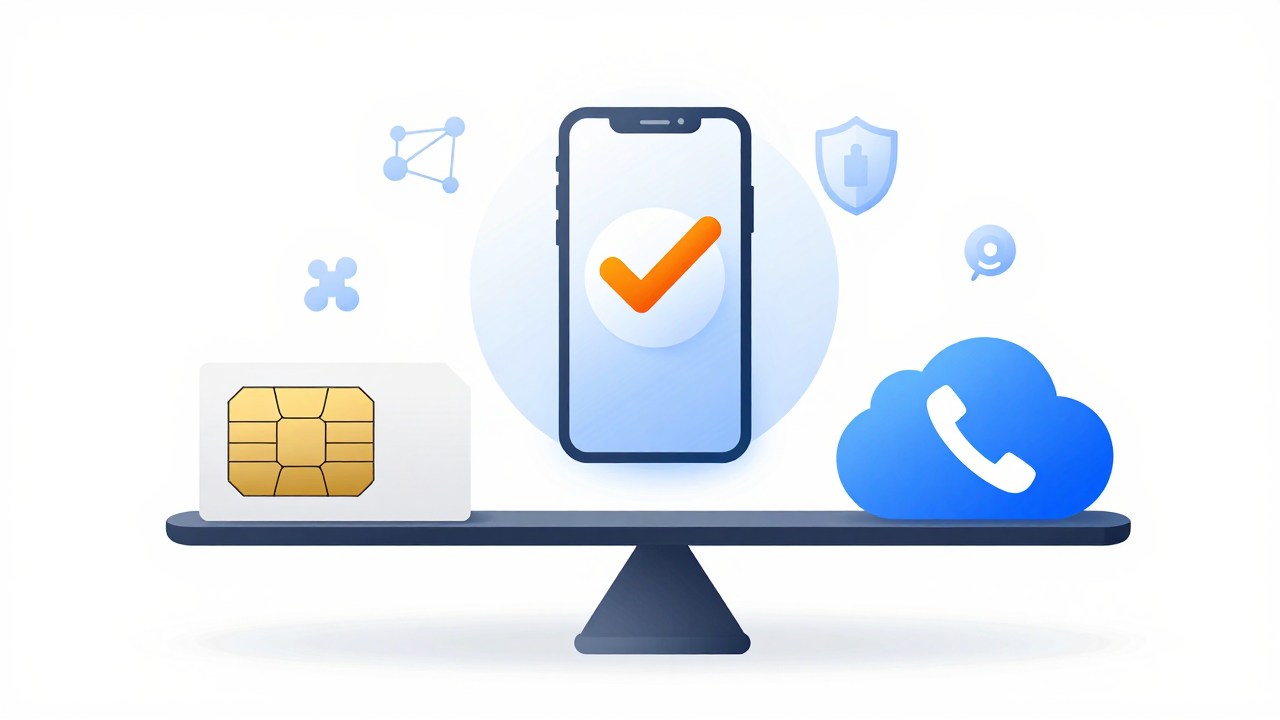
By 2026, cross-border businesses and independent studios rely on three main methods to receive SMS verification codes: physical SIM cards, online SMS receive platforms, and cloud phone services. Among these, online SMS receive platforms have become the go-to choice for most cross-border operations thanks to low costs and multi-country number support—but they come with real risks around number reuse and privacy. Below, we break down each option across cost, reliability, and compliance.
In 2026, the core challenge for cross-border businesses boils down to balancing cost against stability: physical SIM cards run roughly $4–$11 per month, online SMS platforms charge anywhere from $0.01 to $0.30 per code, and cloud phone services typically land in the $7–$28 monthly range. Which option makes sense depends on your account volume, verification frequency, and how much account loss you can tolerate.
Physical SIM Cards: Most Reliable for Long-Term Use, but Pricey Across Borders
Physical SIM cards remain the most traditional way to receive SMS codes. For accounts that need a number locked in long-term—think Google Gmail or Amazon seller accounts—a physical card is still the safest bet. In 2026, domestic carriers offer online activation for international roaming, but you're charged per message (typically $0.15–$0.70 per code), and some platforms still filter out overseas texts.
The downsides of physical SIMs are clear: first, one card equals one number, so running multiple accounts means buying multiple cards. Second, international roaming SMS can take anywhere from 5 to 30 seconds to arrive, which slows down bulk registration. Third, if you lose the card or forget to top up, every linked account loses its verification channel overnight. Industry consensus: physical SIMs are best for low-frequency, high-value accounts.
Physical SIM Card: Key Setup Tips
- Confirm your phone supports VoLTE and international roaming—otherwise overseas SMS may never arrive.
- Check international SMS rates with your carrier before activating to avoid surprise bills.
- Backup plan: pop the SIM into an old phone and use a text forwarding tool (like IFTTT) to sync messages to your main device.
Online SMS Receive Platforms: Fast and Efficient, but Vet Carefully—Only ~55% of Providers Survive in 2026
Online SMS receive platforms offer temporary or long-term virtual numbers that deliver verification codes via web dashboard or API. By 2026, more than 200 such platforms exist, but the industry's survival rate hovers between 50% and 70%—meaning nearly half may shut down or restrict services due to operational issues. When choosing one, scrutinize the number pool size, usage history transparency, and refund policy.
These platforms essentially rent out numbers, and the biggest risk is number reuse. In 2026, leading providers have shifted to a "one number, one user" model—but prices have climbed accordingly. From my experience, the most common complaint isn't missed codes—it's accounts getting flagged after registration because the number was previously linked to suspicious activity. That's why prioritizing platforms that let you view a number's history can dramatically cut your ban rate.
Online SMS Platform: Screening Checklist
| Dimension | Key Metric | 2026 Industry Benchmark |
|---|---|---|
| Number pool size | Countries & carriers covered | 30+ countries = pass |
| Reuse policy | One number per user? | 80%+ should be exclusive |
| API stability | Response time & success rate | Success rate ≥ 95% |
| Refund policy | Refund if code never arrives? | Per-code refunds preferred |
Cloud Phones & Virtual Numbers: Great for Multi-Account Management, but Watch the Compliance Line
Cloud phones are virtual devices running in the cloud—they can install apps independently and receive verification codes. In 2026, cloud phone providers (like Alibaba Cloud Phone and Huawei Cloud Kunpeng) support batch instance creation, which pairs nicely with SMS APIs for automated registration. But here's the catch: many overseas platforms now detect cloud phone environments and trigger risk controls—especially strict apps like WhatsApp and Telegram.
Cloud phones have a clear use case: they're ideal for cross-border teams managing multiple social media accounts or e-commerce storefronts simultaneously. However, by 2026, overseas platforms can fingerprint most public cloud phone environments. If you're registering high-value accounts, you'll want a combination of a dedicated IP and real device parameters instead. Industry consensus: cloud phones are better for auxiliary operations than for receiving codes on mission-critical accounts.
How to Pick a Reliable SMS Receive Provider: 2026 Practical Standards
When vetting a provider, follow this sequence: start with a small top-up to test number quality, then check whether the platform offers number history lookup, and finally confirm customer support response times. In 2026, some platforms have introduced AI-powered risk pre-checks that flag problematic numbers in advance. Take Getfollow as an example—it displays number usage history and offers per-code refunds, making it a solid reference point for cross-border users who need bulk registration.
Reality check: no SMS platform can guarantee zero bans. If an account carries serious value (like enterprise payment accounts), stick with physical SIMs or enterprise-grade API services. In 2026, the industry-wide ban rate sits between 5% and 15%, with social media platforms enforcing the strictest controls and e-commerce sites coming in second. Smart move: test a provider with low-value accounts first, then gradually migrate your core operations.
Compliance & Security Reminders for SMS Verification in 2026
Receiving verification codes across borders means respecting local data protection laws like GDPR and PIPL. By 2026, several countries now require SMS platforms to register users with real identities, so individuals may need to submit ID documents. For businesses, it's wise to sign a data processing agreement with your provider that spells out number usage scope and retention periods.
Here's a cautionary tale: one cross-border team used a public SMS platform to register multiple e-commerce accounts. Because the numbers were reused, all accounts got linked and banned—costing them roughly $4,200. The lesson? Don't judge an SMS service by price alone; factor in the cost of potential bans. Industry consensus: keep SMS verification spending under 5% of each account's expected value—if it exceeds that, switch to physical SIMs.
FAQ: How to Receive SMS Verification Codes—Common Questions
1. What's the cheapest way to receive SMS verification codes?
In 2026, online SMS platforms are the lowest-cost route at $0.01–$0.30 per code. But keep in mind: cheaper numbers usually mean higher reuse rates and a greater chance of account bans. If you're dealing with a small number of high-value accounts, a physical SIM at $0.15–$0.70 per code offers far better stability.
2. What should I do if an SMS platform never delivers my code?
First, check whether the number has expired or been released. Then confirm the platform actually supports carriers in your target country. In 2026, most platforms offer per-code refunds—if codes keep failing, switch providers or fall back to a physical SIM. Some platforms also provide API status checks so you can monitor message delivery in real time.
3. How do I choose a trustworthy SMS receive provider?
Focus on three things: number reuse policy (is it truly one-per-user?), history transparency (can you see what the number was used for before?), and refund terms (do they pay out if codes don't arrive?). Getfollow, for instance, offers number history display and per-code refunds, making it a decent starting point for testing. Always run a small deposit first to validate quality before committing long-term.
4. Will using a cloud phone to receive codes get my accounts banned?
It's possible. In 2026, overseas platforms routinely detect cloud phone environments—especially WhatsApp and Facebook. If you must use a cloud phone, pair it with a dedicated IP and realistic device parameters, and avoid logging into core accounts from it. Cloud phones work best for auxiliary registration and account warming, not for receiving codes on high-value accounts.
5. Are SMS receive platforms legal?
In most countries, the service itself is legal—but how you use it matters. By 2026, several nations require SMS platforms to verify user identities. If you're using them to mass-register fake accounts or bypass platform security, you may violate terms of service or even local laws. Stick to legitimate business verification and keep records of your usage.
Bottom line: in 2026, deciding how to receive SMS verification codes comes down to account value, usage frequency, and your tolerance for bans. Physical SIMs protect your core accounts, online SMS platforms handle bulk registration efficiently, and cloud phones support auxiliary operations. Whichever route you pick, verify provider stability first and budget for potential losses. There's no one-size-fits-all answer here—just the right trade-off for your specific situation.