SMS Verification Platforms in 2026: The Invisible Backbone of Cross-Border Business
SMS Verification Platforms in 2026: The Invisible Backbone of Cross-Border Business
After two years working in cross-border e-commerce, I've learned one thing: account registration feels like an obstacle course. In 2026, overseas platforms lean on phone verification more than ever, while Chinese phone numbers often can't receive international codes. That's why online SMS verification platforms have quietly become the invisible backbone of the cross-border industry.
But here's the honest truth—this industry has some murky waters. I've watched people grab cheap verification services for pennies, only to have their accounts flagged within hours of registration. Meanwhile, I've seen studios churn out dozens of clean accounts daily using stable verification channels. What makes the difference? In this article, I'm breaking down the real landscape of SMS verification platforms in 2026 from an industry insider's perspective.
Why Cross-Border Operations Can't Skip SMS Verification in 2026
Here's a counterintuitive observation: most people think verification platforms just "receive a code." But in 2026, they've evolved into the first step of complete account lifecycle management. From WhatsApp and Telegram to TikTok and Instagram, overseas platforms are tightening their grip on phone number verification. Meanwhile, users in China can't receive many international services with a +86 number.
A friend of mine running a dropshipping store learned this the hard way. He registered PayPal with a temporary number last year, and his payout account got restricted—leaving tens of thousands of dollars stuck. Looking back, he realized the problem wasn't verification itself; it was that his chosen platform's number pool was garbage, flagged as "high-risk virtual numbers" by the system.
So when choosing an SMS verification platform in 2026, the real question isn't "can it receive codes?" It's "is this number pool clean, and can it sustain my account long-term?" Industry consensus says the more exclusive the number pool and the lower the reuse rate, the higher your account survival rate.
Three Main Service Models for SMS Verification Platforms
Based on my observations, verification platforms in the market fall into three categories, each with its own sweet spot:
- Free or low-cost public numbers: Fine for one-time registrations like grabbing a coupon or joining a forum. But in 2026, most major platforms have blacklisted these number pools, and success rates often dip below 30%.
- Paid dedicated number pools: Billed per message or per day, these numbers are exclusive with low reuse rates. Cross-border studios rely on them most because they ensure short-term stability after registration.
- API batch verification services: Built for enterprise clients, these support automated registration workflows. Platforms like Getfollow offer this kind of compliant, traceable API verification solution in 2026—ideal for teams running systematic operations.
Here's a detail most people overlook: many platforms advertise "100% success," but actual verification success depends heavily on the target platform's risk control algorithms. In 2026, tech giants like Google and Meta can detect patterns like "rapid number switching from the same IP." So even if you receive the code, your account might not survive 24 hours.
The 2026 Risk Checklist for SMS Verification: Pitfalls You Need to Know
Cross-border professionals consistently report that the biggest risk in 2026 isn't failing to receive codes—it's that "receiving codes feels great until your accounts get wiped." Based on my analysis, risks cluster around three main areas:
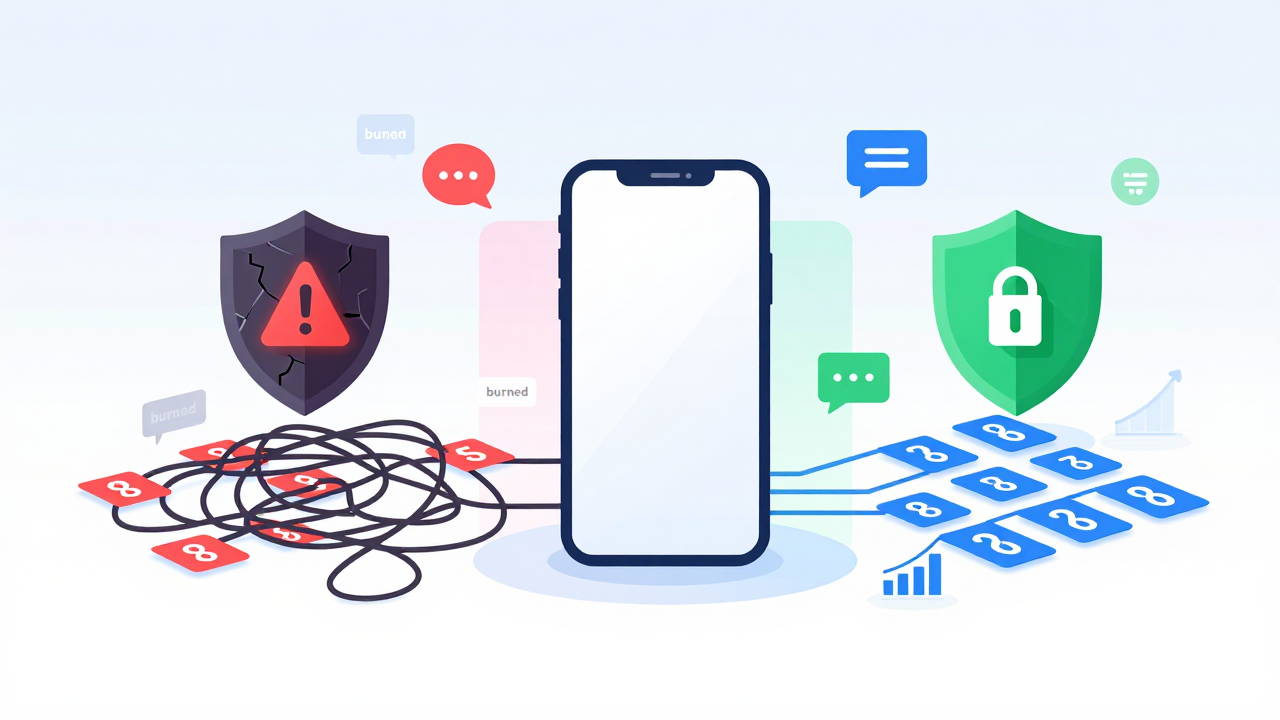
First, number pool contamination. When a number range gets heavily used for bulk registrations, platform risk controls blacklist the entire pool. You pay the same price, but someone else gets a clean number while yours is already "burned." That's why I advise against shopping by price alone—check whether the platform regularly purges and refreshes its number pools.
Second, privacy leakage. In 2026, many verification platforms ask for your registration purpose, account type, and other details. Some sketchy smaller platforms resell this data. I tested this myself—after registering on certain platforms, my email inbox flooded with spam within hours. That's a data compliance failure, plain and simple.
Third, account association risks. If you register multiple accounts through the same verification platform and those accounts land in the same IP pool or share device fingerprints, platform algorithms flag them as "linked accounts." The result? Throttled reach at best, mass bans at worst. I watched a community management team register 20+ WhatsApp accounts through one platform for convenience—all banned within three days.
How to Pick a Reliable SMS Verification Platform
Every cross-border peer I know has asked me this question. In 2026, my standard is simple: check if they openly publish their failure rate.
Platforms that publicly share historical success rates usually have confidence in their number pool quality. On the flip side, those shouting "lowest price" or "unlimited tries" are likely reselling public numbers. The platforms with solid reputations in the industry—like Getfollow—operate on this compliance-first logic: transparent pricing, per-use billing, traceable number pools, and a money-back guarantee for failed verifications.
Beyond that, I recommend asking three questions before committing: Are the numbers exclusive or shared? Do they support specific countries or regions? Is there an API available? The answers directly determine how long your accounts will survive.
Industry Trends and the Current State of SMS Verification in 2026
Since early 2026, I've noticed two significant shifts. First, single-function platforms that only "receive codes" are dying out, replaced by all-in-one services combining verification, account nurturing, and risk detection. Second, enterprise clients increasingly prefer platforms with proper licensing, invoicing, and contracts—not just tools built by solo developers.
Looking at retention metrics, accounts registered through verification platforms in 2026 show a 7-day survival rate between 50% and 70%. Platforms consistently hitting above 70% almost always have exclusive number pools and robust risk control strategies. If a platform falls below 50%, walk away—the cost of nurturing those accounts later will far exceed any money you saved on verification fees.
One more trend worth watching: in 2026, several platforms now offer "virtual-to-physical number upgrades." You start with a verification code to register, then upgrade to a long-term physical SIM card. For teams playing the long game, this is a solid transitional strategy.
Practical Advice for Cross-Border Professionals
Let me leave you with some honest talk. SMS verification platforms aren't a magic key—they're just one piece of your account infrastructure. I've seen too many people treat verification as a lifeline, only to end up with a graveyard of dead accounts. In 2026, the smarter play is: test small first, then scale your partnership.
Here's a concrete approach: spend $10–15 on a platform's trial package, register 3–5 accounts on your target platforms, and monitor survival rates, code delivery speed, and whether you trigger secondary verification over a week. If results look good, then consider volume purchasing or a long-term API agreement.
And regardless of which platform you choose, always isolate your accounts—use different verification channels for different business lines. That way, one bad batch doesn't take everything down. In the 2026 cross-border environment, account security is your cash flow security.
Frequently Asked Questions
What's the difference between SMS verification platforms and virtual numbers?
Verification platforms provide temporary numbers designed mainly for receiving one-time codes—not for ongoing calls or texts. Virtual numbers, on the other hand, are cloud-based numbers you can hold long-term with fuller functionality. In 2026, many verification platforms also offer upgrades to virtual numbers, but their core use case remains registration verification.
Will accounts registered through verification platforms get banned?
There's always a ban risk, and it largely depends on number pool quality and how you behave after registration. Industry feedback in 2026 shows that accounts using dedicated number pools—with normal nurturing after signup—survive at significantly higher rates than those on public numbers. I recommend choosing platforms that offer refunds for failures and traceable number pools to keep your trial costs low.
How do I know if a verification platform is trustworthy?
Look for three things: whether they publish historical success rates, whether their number pools are exclusive, and whether they offer API access. Also, reliable platforms in 2026 will be upfront that they can't guarantee 100% success—and they'll offer a reasonable compensation policy for failures. Platforms like Getfollow provide detailed documentation and customer support, which is itself a strong signal of legitimacy.
How much do SMS verification platforms typically cost?
In 2026, public number pools run anywhere from $0.01 to $0.07 per message, but success rates are low. Dedicated number pools typically cost $0.15 to $0.40 per message, while API batch services use tiered volume pricing. Don't just compare unit prices—calculate your "effective registration cost" by factoring in success rates.
At the end of the day, SMS verification platforms are an unavoidable tool for cross-border business in 2026. Used wisely, they're a competitive advantage. Used carelessly, they're a liability waiting to happen. I hope this guide helps you sidestep the common pitfalls and put every dollar where it counts.