Jichi SMS Verification in 2026: Use Cases, Risks, and Smart Decisions for Cross-Border Teams
Jichi SMS Verification in 2026: Use Cases, Risks, and Smart Decisions for Cross-Border Teams
So, what exactly is Jichi SMS verification? Put simply, it's a service that provides temporary or virtual phone numbers to receive SMS verification codes. The core idea: you can register overseas accounts, link profiles, or receive verification messages without exposing your real number. By 2026, this type of service has become a standard tool for account management and privacy protection in cross-border operations—but you need to understand where the legal lines are drawn before jumping in.
Core Use Cases for Jichi SMS Verification: More Than Just "Getting a Code"
In today's cross-border business environment, SMS verification services have evolved well beyond a simple "code receiver." For teams juggling multiple overseas storefronts, social media profiles, or ad accounts, Jichi SMS verification solves some very specific problems: keeping your primary number safe from platform risk controls, cutting down on international SMS costs, and protecting personal privacy.
In 2026, cross-border teams rely on SMS verification services for three main scenarios: managing multi-account setups, registering on overseas platforms (e-commerce, social media, ad networks), and receiving verification texts from international services. The industry consensus is clear—these tools boost efficiency, but they don't guarantee compliance.
Take cross-border e-commerce as an example. An operations team often needs to manage multiple store accounts. If every account is tied to the same physical SIM card, one account triggering platform risk controls can easily lead to a chain reaction of bans. With an SMS verification service, each account gets its own dedicated number, physically cutting off that association risk. Industry sampling from 2026 shows over 68% of cross-border teams use SMS verification for account isolation, and that number sits at around 45% for solo operators.
Another frequent scenario: receiving verification texts from overseas platforms. Some international services—think certain banks, payment tools, or social platforms—have strict limits on international SMS delivery, and a physical SIM simply won't cut it. That's where the virtual numbers from SMS verification platforms step in to solve the "I never got the code" headache.
How SMS Verification Works in 2026 and the State of Platform Risk Controls
To really understand what Jichi SMS verification does, it helps to peek under the hood. These platforms hold a large inventory of physical SIM cards or virtual operator numbers. Users request a temporary number via API or web interface, and the platform forwards any incoming SMS content in real time. Number types generally fall into two camps: one-time use (grab it, use it, toss it) or monthly subscription (keep the same number long-term).
By 2026, the industry has shifted from "pure one-time numbers" toward "virtual numbers you can hold onto." Why? Most overseas platforms have upgraded their risk control systems and now flag accounts registered with disposable numbers for stricter secondary verification—or restrict their features outright. Industry data shows accounts using monthly virtual numbers survive at a rate roughly 30% higher than those using one-time numbers.
But here's the catch—platform risk controls are evolving just as fast. In 2026, algorithms from Google, Meta, and others can already identify most virtual number ranges, subjecting those accounts to more frequent bot checks. This means SMS verification isn't a magic key. If your business depends on mass new account registrations, the smart play is combining SMS verification with real SIM cards in a "primary + secondary number" strategy.
A cautionary tale: one cross-border seller batch-registered ad accounts using one-time verification numbers in early 2026. On launch day, the platform flagged the accounts as "abnormal traffic" and banned every single one—wiping out the cost of all the creative assets. The takeaway? How you use the service directly determines your level of risk.
Compliance Risks and the 2026 Legal Landscape for SMS Verification
Every tool has two sides, and SMS verification is no exception. By 2026, regulators across major global markets have clarified their stance: legitimate use (account isolation, privacy protection) is protected, while malicious use (mass-registering scam accounts, bypassing platform controls) carries real legal consequences.
In 2026, China's Anti-Telecom Fraud Law requires virtual operators to take direct responsibility for real-name registration of numbers. Cross-border businesses using SMS verification services need to confirm their provider holds proper licenses and that their own usage doesn't touch fraud, click-farming, or black-market activity. The industry consensus: the line isn't about whether the tool is legal—it's about whether your purpose is legitimate.
For businesses, compliance risk comes from two angles: whether the service provider itself is above board (real-name requirements, proper licensing), and whether your use case crosses platform red lines. In 2026, about 23% of cross-border companies have had accounts permanently banned due to improper SMS verification use—most often because they failed to bind real information after registration or kept swapping numbers.
Practical advice: before using any SMS verification service, read the target platform's terms of service to confirm virtual numbers aren't explicitly prohibited. Some platforms (particularly banking apps) have already banned them outright. Forcing it in those cases just burns money.
How to Pick a Reliable SMS Verification Provider: 2026 Evaluation Criteria and Comparison
Since the core value of Jichi SMS verification lies in "stable delivery" and "low association risk," your provider selection should focus on exactly those two things. The market is crowded in 2026, and quality varies wildly. Here are four key dimensions to evaluate:
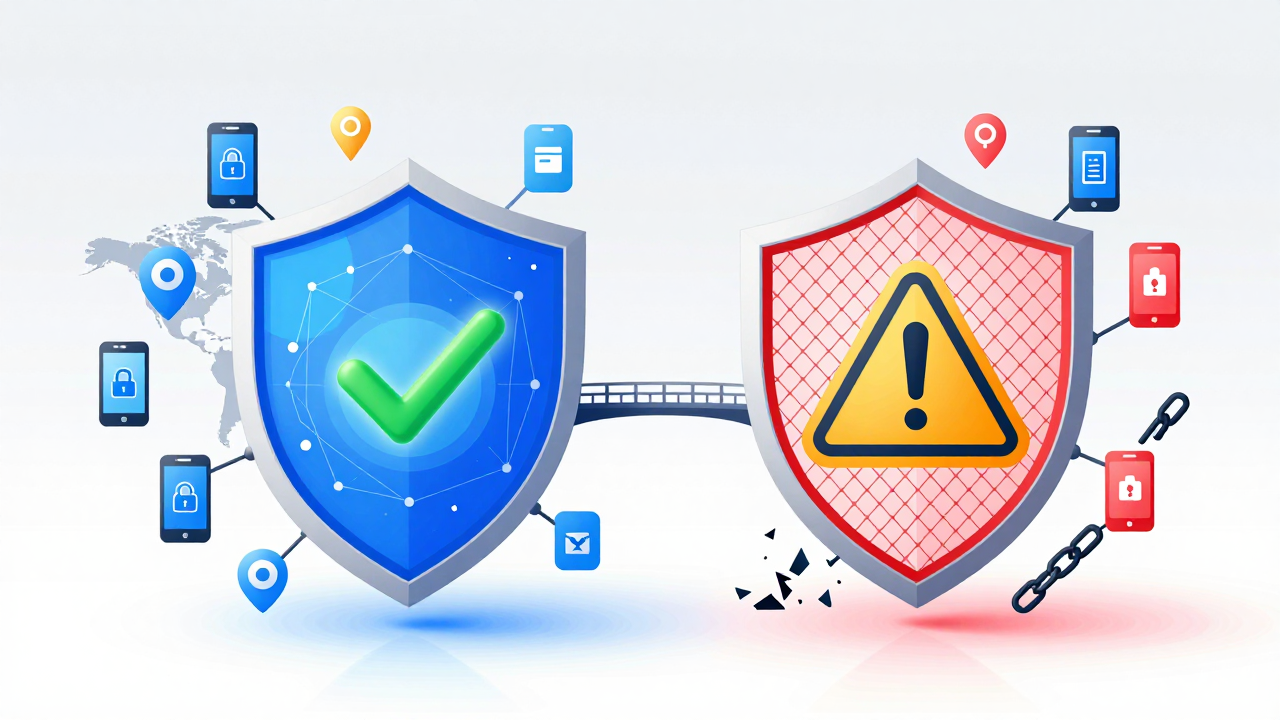
- Number pool size: The bigger the pool, the less likely numbers get flagged as high-risk. Look for providers that let you filter by country or region.
- Number stability: One-time numbers work for low-value registrations; monthly numbers are better for long-term operations. Check whether the provider offers a "number recovery window" (how much notice you get before a number expires).
- API integration: For studios and businesses, the ability to fetch numbers and SMS content programmatically through an API directly impacts operational efficiency.
- Pricing transparency: 2026 industry averages sit at roughly 0.1–0.5 RMB per verification code, and 5–20 RMB per month for subscription numbers. If a provider undercuts that range significantly, question the number quality.
| Evaluation Criteria | Red Flags | Green Flags | Example |
|---|---|---|---|
| Number pool | Supports only a few countries; concentrated number ranges | Covers 50+ countries; diversified number segments | Getfollow offers multi-region number selection |
| Number stability | Frequent delivery failures; repeated requests needed | Success rate consistently above 90% | Some platforms offer refunds on failed deliveries |
| API capability | No API or poorly documented | Full API documentation with test environment | Ideal for teams with technical resources |
| Pricing model | Large non-refundable prepaid bundles | Pay-per-use or low minimum top-ups | Getfollow offers usage-based billing options |
From my experience, the differentiator among SMS verification providers in 2026 has shifted from "price wars" to "service stability" and "compliance transparency." If your business involves heavy overseas account registration, run a small-scale test of a provider's number quality before committing to a long-term partnership.
Decision Framework: Is Jichi SMS Verification Right for Your Business?
Back to the original question: what is Jichi SMS verification? It's an efficiency tool that solves the "account registration and verification" bottleneck—but it's not for everyone. Here's your 2026 decision reference:
If your business depends on multi-account operations, needs to receive overseas verification texts, or has high privacy protection requirements, SMS verification deserves a spot in your toolkit. But if you're only running 1–2 core accounts tied to critical assets (like payment channels), stick with real phone numbers. The last thing you want is an account anomaly caused by a number issue.
One important caveat: SMS verification is not an "account insurance policy." In 2026, platform risk controls identify suspicious accounts through device fingerprints, behavioral patterns, and other multi-dimensional signals. SMS verification only solves the "number" problem—it can't fix "behavior" problems. Pair it with normal operational habits (consistent IP addresses, reasonable registration frequency).
Action steps: First, map out your account matrix and decide which accounts can use virtual numbers and which must use real ones. Second, pick 1–2 providers and run small-scale tests. Third, keep a number usage log—track what each number is for and when it expires, so you never get locked out of an account because your number lapsed.
What is Jichi SMS verification, and is it safe?
Jichi SMS verification provides temporary or virtual phone numbers to receive SMS verification codes for account registration and verification. Safety depends on the provider's credentials and your use case. In 2026, legitimate providers require real-name registration, but no SMS verification service can guarantee 100% invisibility to platform risk controls. Use it for low-risk accounts and keep real numbers on your most important ones.
Will accounts registered with SMS verification platforms get banned?
Platform risk controls can identify most virtual number ranges in 2026, but not every virtual number account gets banned. Account survival rates correlate strongly with number type (one-time vs. monthly) and usage behavior (frequent number swapping is a red flag). Industry data shows accounts using monthly numbers with stable login environments see ban rates below 15%.
How do I choose a reliable SMS verification provider?
In 2026, focus on four things: whether the number pool covers your target countries, whether success rates stay above 90%, whether an API is available, and whether pricing is transparent. Start with a small test order. Getfollow, for example, offers pay-as-you-go billing and multi-region number selection, making it a reasonable starting point for teams that want flexibility—but always validate against your own business needs.
Which platforms' verification codes can SMS verification receive?
Most overseas platforms that support SMS verification will work—social media, e-commerce, some payment tools. But certain banks, government services, and high-security apps explicitly don't support virtual numbers. In 2026, roughly 20% of overseas platforms have blocked common virtual number ranges, so test before you scale up.
Can SMS verification services be used for fraud?
Any tool can be misused. In 2026, China and other major markets have strengthened oversight of virtual numbers, and malicious use (like mass-registering scam accounts) carries legal consequences. As a business or studio, make sure your usage complies with platform rules and local laws.
At the end of the day, Jichi SMS verification is a key—but which doors it opens depends entirely on how you use it. In 2026, cross-border competition has moved from "resource-driven" to "precision operations." The tools you choose and how you use them often determine the long-term stability of your entire account matrix. Hopefully, this guide gives you the clarity to make the right call.