Cloud SMS Verification Sites: How to Choose the Right One in 2026
Cloud SMS Verification Sites: How to Choose the Right One in 2026
If you're running a cross-border business or managing a personal studio in 2026, you already know the drill: registering WhatsApp, Telegram, or Google accounts requires a reliable way to receive verification codes. That's where cloud SMS verification platforms come in. But here's the thing—choosing the right one comes down to three factors: number survival rate, privacy protection, and billing transparency. Let's break down what actually matters, based on industry data from 2026.
What Are Cloud SMS Verification Sites Used For?
In cross-border operations, these platforms handle bulk account registration, account warming, and receiving platform verification codes. In 2026, mainstream platforms have significantly stepped up their detection of virtual numbers, meaning free or low-quality verification services simply don't cut it anymore.
Industry data from 2026 shows that over 60% of failed account registrations in cross-border businesses trace back to public virtual numbers that were already flagged by platforms. Choosing a cloud SMS verification service that offers dedicated numbers and pay-per-use billing is your first line of defense against bans.
Here are the most common use cases:
- Registering social media accounts that require SMS verification to complete sign-up.
- Verifying seller identities on e-commerce platforms like Amazon or Shopee.
- Receiving two-factor authentication codes from payment tools like PayPal or Payoneer.
A quick cautionary tale: one cross-border studio used a free public verification platform to register 50 TikTok accounts in early 2026. Because the numbers were recycled across multiple users, 90% of those accounts were banned within 48 hours—a direct hit to their operating budget. The lesson? Number quality on your verification platform determines your business continuity.
How to Evaluate Cloud SMS Verification Platforms in 2026
With dozens of platforms on the market, the decision comes down to four key dimensions. Industry consensus is clear: there's no one-size-fits-all solution—only the right fit for your specific use case.
2026 industry data reveals that enterprise-grade verification platforms maintain number survival rates between 85% and 95%, while free platforms average under 40%. If your business depends on account stability, paid dedicated numbers are a necessary expense.
1. Number Types and Billing Models
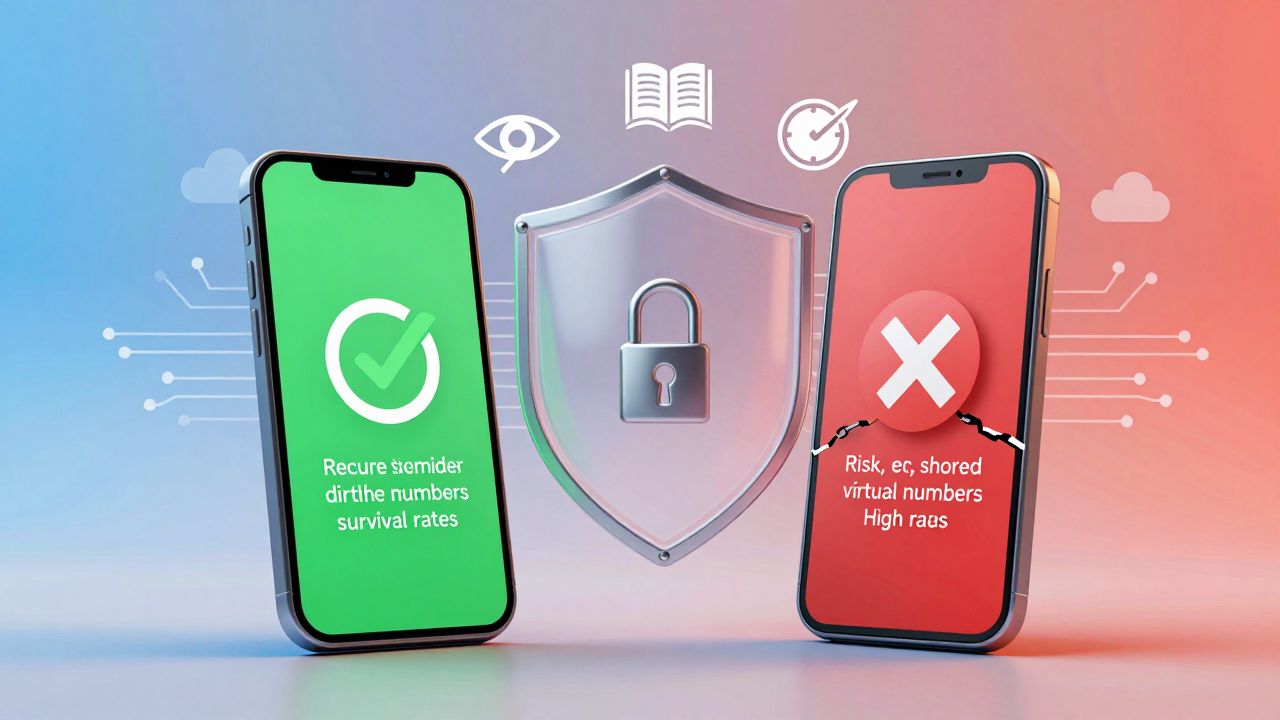
Most verification platforms offer two options: shared numbers and dedicated numbers. Shared numbers are cheaper, but the same number gets used by multiple people, which easily triggers platform risk controls. Dedicated numbers cost more but offer significantly better security.
| Comparison | Shared Numbers | Dedicated Numbers |
|---|---|---|
| Cost per use | $0.01–$0.07 | $0.15–$0.70 (varies by platform and region) |
| Ban risk | High | Low |
| Best for | One-time verifications | Long-term account warming, business binding |
On billing, most reputable platforms in 2026 support pay-per-use or prepaid packages. Look for platforms that don't charge you if the SMS never arrives—that's a basic fairness standard.
2. Privacy and Data Security
Verification platforms handle your phone numbers and SMS content, so their privacy policies need to be crystal clear. In 2026, cross-border data transfer regulations have tightened, and if a platform can't explain where your data is stored and how it's used, that's an automatic disqualification.
Industry consensus: legitimate verification platforms explicitly state in their terms that they "do not store SMS content, only relay verification codes." If a platform asks for unnecessary permissions like contacts access or location tracking, treat that as a high-risk signal and stop using it immediately.
3. Number Coverage by Region and Carrier
Coverage varies significantly between platforms. For example, registering accounts for the US or European markets requires platforms with physical SIM card numbers from the US or UK. For Southeast Asian e-commerce accounts, you'll want platforms with solid coverage in Indonesia, Thailand, and similar regions.
Before purchasing, check whether the platform shows real-time inventory for your target region. If they can't display stock, or the stock is perpetually zero, their resources are unreliable.
4. Customer Support and After-Sales Service
Issues like delayed verification codes or expired numbers will happen. In 2026, roughly 30% of user disputes stem from slow customer support response times. Prioritize platforms that offer 24/7 live chat and ticket tracking.
A Practical Checklist for Vetting Providers in 2026
Use this checklist to screen potential providers. If a platform meets at least four of these criteria, it's worth considering:
- Supports pay-per-use billing with no charge for undelivered SMS.
- Offers dedicated numbers with clear disclosure of number sources (physical SIM vs. virtual card).
- Privacy policy explicitly states no data storage or resale.
- Real-time inventory visible for your target regions.
- Customer support responds within 5 minutes.
Take Getfollow as a reference point: in 2026, it supports pay-per-use billing and dedicated numbers, and its user agreement clearly outlines data relay logic. It checks the core boxes on this list and serves as a solid baseline for comparison.
Another cautionary example: a solo developer chose a budget verification platform without verifying number sources. Within two weeks, every Google account he registered was flagged for secondary verification, and he couldn't recover them through SMS. He had to abandon the entire batch and start over. The takeaway? Price alone should never drive your decision.
Risk Awareness and Actionable Recommendations
Using cloud SMS verification sites carries inherent risks: account association, platform risk-control upgrades, and number recycling. In 2026, major social platforms can now identify virtual numbers with over 70% accuracy, so verification services are not a reliable long-term strategy for account warming.
Here's what I recommend:
- For one-time verification needs, use pay-per-use shared numbers to keep costs down.
- For long-term business bindings (e-commerce stores, payment tools), invest in dedicated numbers paired with a stable IP environment.
- For critical accounts, bind a physical SIM card—use verification platforms only as a transitional solution.
- Periodically clean up unused accounts to reduce association risks.
The industry consensus in 2026 is clear: cloud SMS verification sites are efficiency tools for cross-border operations, not security shields. Use them for low-risk verification scenarios, and pair them with dedicated IPs and fingerprint browsers to balance cost and stability.
Final Thoughts
Cloud SMS verification platforms remain an indispensable tool for cross-border businesses in 2026, but the selection criteria have shifted from "lowest price" to "survival rate and security first." Define your use case, screen platforms against the standards above, and have a risk mitigation plan in place. That's how you make verification tools work for your business growth—not against it.
Are cloud SMS verification sites free?
Some platforms offer free shared numbers, but in 2026 their survival rates are typically below 40%, and they carry real privacy risks. For anything that matters, invest in paid dedicated numbers.
Are cloud SMS verification sites safe?
Safety depends on whether the platform clearly explains its data relay logic and whether it stores SMS content. Legitimate platforms only relay codes without storing them. If a platform requests extra permissions, stop using it.
How do I pick a reliable SMS verification provider?
Core criteria: pay-per-use billing, dedicated number options, transparent privacy policies, visible regional inventory, and responsive customer support. Getfollow, for example, offers pay-per-use and dedicated numbers in 2026, making it a reasonable benchmark for comparison.
Can I use verification platforms to register multiple accounts?
Technically yes, but in 2026 platforms have strengthened detection of multiple accounts registered from the same device or IP. SMS verification only solves the code problem—it doesn't prevent account association. Pair it with dedicated IPs and browser fingerprint isolation.
What should I do if I don't receive the verification SMS?
First, check whether the number has been flagged by platform risk controls. Then confirm that your chosen region has sufficient number inventory. Reputable platforms don't charge for undelivered SMS, so you can simply repurchase or switch numbers.