How to Receive SMS Verification Codes on Your Website: The Real Logic Cross-Border Businesses Need to Understand
How to Receive SMS Verification Codes on Your Website: The Real Logic Cross-Border Businesses Need to Understand
I get asked all the time by cross-border sellers: what's the right way to handle SMS verification codes on a website? Honestly, the technical documentation is everywhere, but what actually trips people up isn't the API integration—it's a fundamental misunderstanding of how the service models work. I've watched plenty of teams write flawless code, only to crash and burn on channel selection. The result? Linked accounts banned and serious financial losses.
Before You Compare Prices, Understand Which "Route" Your Verification Codes Take
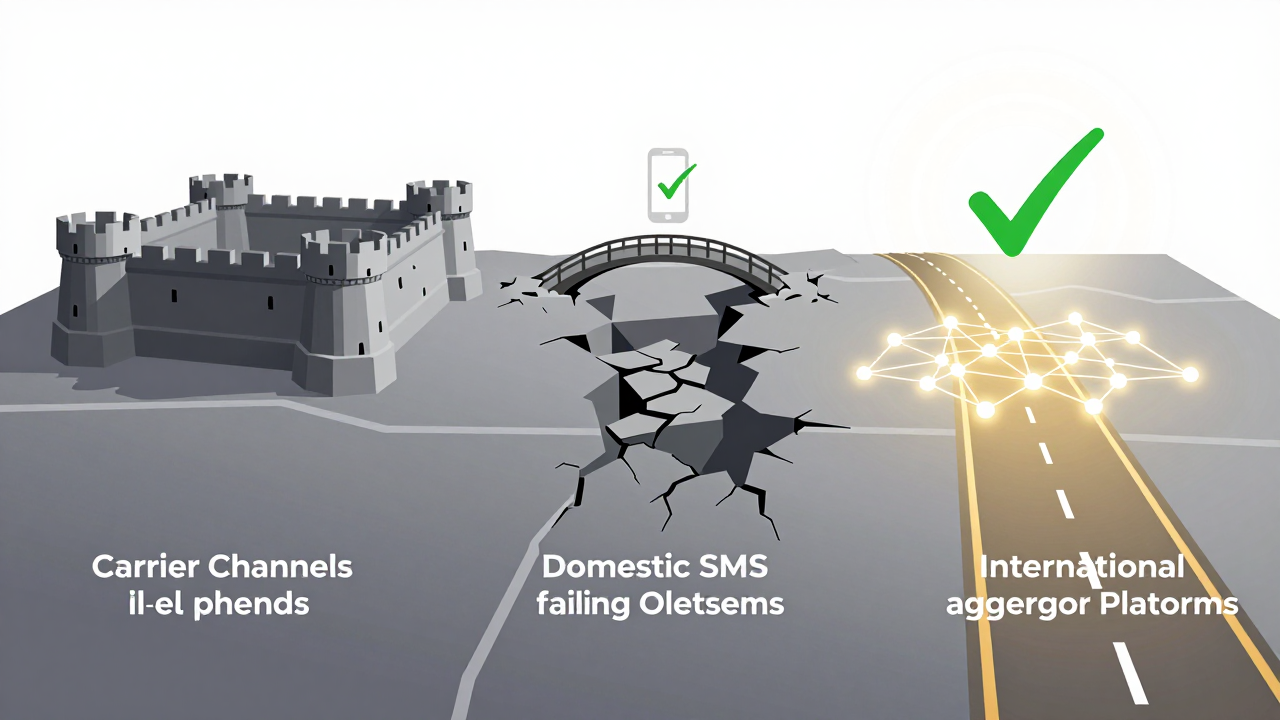
When it comes to receiving SMS verification codes, there are really three mainstream paths. The first is connecting directly to carrier channels. This works for enterprise-level operations sending millions of messages monthly; for a small studio or solo operator, it's not even worth considering—the entry barriers are high and you'll need to submit a mountain of qualifications.
The second path is using domestic SMS platforms, like Alibaba Cloud or Tencent Cloud. Stability is solid, no question. But in cross-border scenarios, there's a killer flaw: delivery rates to overseas numbers are unreliable. Especially in certain smaller-language countries, channel coverage is patchy, and your verification codes end up disappearing into the void more often than not.
The third path is international SMS providers—sometimes called "aggregator platforms." These providers pool resources from multiple carriers worldwide and use intelligent routing to pick the channel with the highest success rate for each destination. In my experience, platforms like Getfollow have built a solid reputation in this space, operating on exactly this kind of compliant routing logic, purpose-built to solve cross-border verification code delivery problems.
A Real-World Horror Story: The "Cheap Dedicated Line" That Got 30 Accounts Banned
Last year, a client running a standalone e-commerce store decided to save a few bucks and signed up with a suspiciously cheap "dedicated channel." The first two weeks were fine. By week three, users started flooding in with complaints about never receiving their codes. The bigger headache? Because that channel was being abused, his website's IP got flagged by risk-control systems, and all 30+ of his test accounts were banned in one sweep.
This is the classic "cheap trap." From what many cross-border operators tell me, those channels priced far below market rate are usually mixing your SMS traffic with bulk marketing blasts, or constantly rotating caller IDs. The result is a delivery rate that looks great on paper but performs terribly in reality. The first rule of handling website SMS verification codes isn't saving money—it's guaranteeing that every single code reaches the user within 60 seconds.
How to Tell If a Provider Is Legit: Look for These Three Things
- Multi-channel failover support: A genuinely stable provider will switch you to a backup channel in milliseconds when one goes down—not leave you waiting and refreshing.
- Transparent delivery data: Providers willing to show real-time delivery rates broken down by country and carrier are playing the long game. Anyone who only gives you a single overall success rate is stringing you along.
- Clear risk-control rules: Details like how many verification codes a single number can receive per day, and whether frequency limits trigger blocking or just delays, directly impact your user retention.
Figuring out how to receive SMS verification codes is really about choosing a partner who understands cross-border risk-control rules—not just buying an API endpoint. Plenty of platforms will happily send your messages and then wash their hands of it. Whether the user actually receives them? Not their problem. Get this clarified before you sign anything.
What Happens After Delivery Matters More Than the Delivery Itself
There's a general consensus in the industry on verification code delivery: first-attempt delivery rates on international channels land somewhere between 85% and 95%. But once you factor in the time users spend manually typing in those six digits, the actual conversion and retention rate drops to roughly 50%–70%. That gap comes down to two things: your code's validity window and your resend mechanism.
From my own testing, here's an approach that works well: set the verification code to expire after five minutes, and enable voice verification as a fallback. When a user enters the wrong code twice or the SMS times out, the system automatically triggers a voice call that reads the code aloud. This single tweak can lift your final verification success rate by around 15%. Surprisingly few smaller platforms even offer this feature.
So when you're evaluating how to receive SMS verification codes, don't just stare at the per-message price. Ask the hard questions: Is there a voice backup channel? Is there an automatic retry mechanism on failure? These are the invisible metrics that actually determine your user experience.
Here's the Honest Truth: Test Small First, Then Talk Long-Term Contracts
Whichever provider you're leaning toward, my advice is always the same: top up a small amount and test for a week using real overseas numbers. Focus on three time windows: daytime peak hours in the target country, late night, and holidays. If delivery rates stay above 90% across all three, then—and only then—consider signing an annual contract.
How to receive SMS verification codes on your website? It can be as complicated or as simple as you make it. Complicated, because of the channel resources and technical details. Simple, because the core logic boils down to one thing: find a provider willing to lay their risk-control rules and failure data on the table for you to inspect. Anyone who only shouts about being the "cheapest on the market"? Be extra wary.
One final reminder: compliance is always the bottom line. Don't touch those shady "discount channels" just to save a few cents per message. If you get blacklisted by carriers, your domain and IP can get caught in the crossfire. By then, switching providers becomes a costly nightmare. Start with small-scale testing, confirm stability, then scale up gradually. That's the rhythm seasoned cross-border operators stick to.
Frequently Asked Questions
What's the best way to receive SMS verification codes internationally?
For cross-border operations, an international SMS aggregator with intelligent routing is your best bet. These platforms automatically select the most reliable carrier channel for each destination country, which significantly improves delivery rates compared to domestic-only providers. Look for one that offers multi-channel failover and transparent per-country delivery data.
Why are my SMS verification codes not being delivered to overseas users?
This usually comes down to channel coverage gaps. Domestic SMS platforms often have weak or nonexistent coverage in smaller-language countries. Another common culprit is the provider mixing your transactional messages with marketing traffic, which triggers carrier-level filtering. If your provider can't show you country-by-country delivery stats, that's a red flag.
How much should I expect to pay for international SMS verification codes?
Pricing varies widely, but if a quote looks far below the market average, treat it as a warning sign. Extremely cheap channels typically cut corners—either by routing through unreliable carriers or by sharing sender identities with spam traffic. Test with a small amount first and verify real delivery rates before committing to a larger volume.
What's a good validity period for SMS verification codes?
Five minutes is a solid default for most use cases. It gives users enough time to switch between apps or devices while minimizing the security risk of stale codes. Also consider implementing a voice verification fallback—if the SMS doesn't arrive within a set time, the system calls the user and reads the code aloud. This can boost your success rate by around 15%.
Can I use a free SMS service for verification codes?
Technically yes, but you really shouldn't for anything business-critical. Free services typically have no deliverability guarantees, no support, and no compliance safeguards. If a verification code fails to arrive, the user blames your website—not the free service. For cross-border operations, a paid provider with transparent data and reliable support is worth every cent.