How SMS Verification Code Reception Works: The 2026 Playbook for Cross-Border Businesses
How SMS Verification Code Reception Works: The 2026 Playbook for Cross-Border Businesses
If you run a cross-border operation with dozens of accounts, you're probably pulling in hundreds of verification codes every week. But ask yourself this: do you actually understand how SMS verification code reception works? Most people can't answer that question—and that's a problem. Without grasping the underlying mechanics, you'll never figure out why your accounts keep getting flagged, or what to look for in a reliable SMS receiving service.
I've spent years in the cross-border space and have watched far too many account batches get wiped out by poor SMS receiving choices. Let's skip the fluff and break down exactly how this system operates.
The Real Mechanics of SMS Verification Code Reception: From Carrier Towers to Platform Risk Engines
At its core, how SMS verification code reception works is the journey of a text message from a carrier's cell tower to your device—or your cloud environment. But here's the thing: in 2026, that simple journey is now layered with sophisticated platform risk controls. It's no longer just "receiving a code."
Step one: the platform—think Google, Facebook, or TikTok—sends a text containing a dynamic code to your phone number. That message travels through the carrier's SMSC (Short Message Service Center). For international texts, it also gets routed through international gateway exchanges along the way.
Step two: your number—or the number assigned by your SMS receiving platform—gets the message. You then feed the code back to the platform's servers, either manually or via API. If it checks out, your registration or login goes through.
Sounds straightforward, right? Here's the reality in 2026: platform risk engines don't actually care whether your code is correct. They care about whether your number segment, IMEI, IP environment, and behavioral patterns look human. A pattern I see constantly: someone registers 20 accounts on the same number segment, and the 21st one gets instantly banned. That's not bad luck—that's a risk model doing its job.
Cloud Phones vs. Real Devices: Why Your SMS Receiving Environment Matters
In the SMS receiving industry, providers generally fall into two camps: pure API-based services and integrated "account nurturing + SMS receiving" solutions that pair with cloud phones or real device farms.
Pure API receiving works like this: the provider buys virtual number segments in bulk and forwards incoming verification codes to your API endpoint through an SMS forwarding gateway. The upside is speed and low cost. The downside? Inconsistent number quality—many of those segments are already burned and flagged by platforms.
Cloud phone setups, on the other hand, tie SMS receiving directly to your account environment. Your account gets registered on a virtual device in the cloud, and each verification code is pushed straight to that device. The entire operation happens inside one "realistic" simulated environment. In 2026, experienced players increasingly prefer this approach because SMS receiving is just the entry point—long-term account survival is the actual goal.
I've tested both approaches extensively. Here's the pattern I've found: if you just need a one-off code, API receiving is perfectly fine. But if you're nurturing accounts or running a matrix strategy, you need to think about the receiving environment, IP purity, and device fingerprint as one interconnected system.
The State of the SMS Receiving Industry in 2026: Compliance Is the Only Way Forward
The SMS receiving industry in 2026 looks nothing like the wild west days when you could grab any number and start collecting codes. The industry consensus is clear: compliance is the only sustainable path, and gray-market SMS receiving is getting squeezed from all sides.
On one front, carriers are cracking down hard on virtual number segments. Many segments that worked fine a couple of years ago now get blocked at registration. On the other front, platform risk models have evolved from simple "is the code correct?" checks to comprehensive scoring that weighs the code, number reputation, and environment fingerprint together.
A common complaint I hear from cross-border operators: accounts registered on low-quality number segments in 2026 might receive their codes instantly, but by the next day they're hit with secondary verification or straight-up bans. That's the classic "code received but account didn't survive" scenario.
This environment has split the provider market in two. One group keeps pushing cheap bulk SMS receiving, but their number quality keeps deteriorating—essentially a one-and-done transaction. The other group has pivoted to offering complete account operation solutions, bundling SMS receiving, proxy IPs, and device environments into a single package.
Platforms like Getfollow have built a solid reputation in this space by following exactly that compliant operating logic—they don't just sell codes, they treat SMS receiving as one component of full account lifecycle management. This model is gaining serious traction in the cross-border community in 2026.
A Cautionary Tale: What Happens When You Chase the Cheapest Price
Earlier this year, a friend running an e-commerce operation came to me frustrated. He'd loaded $70 into a budget SMS receiving platform, registered 30 TikTok accounts, and woke up the next morning to find every single one banned. The post-mortem was painfully simple: the platform used one shared batch of flagged number segments, and every account registered through the same exit IP.
This is the textbook case of knowing how to receive a code but not understanding risk control logic. SMS receiving is step one—the environment isolation and behavioral simulation that follow are what actually determine whether your accounts live or die. After he switched to a provider with integrated environment solutions, the exact same workflow pushed his account survival rate from 0% to over 70%.
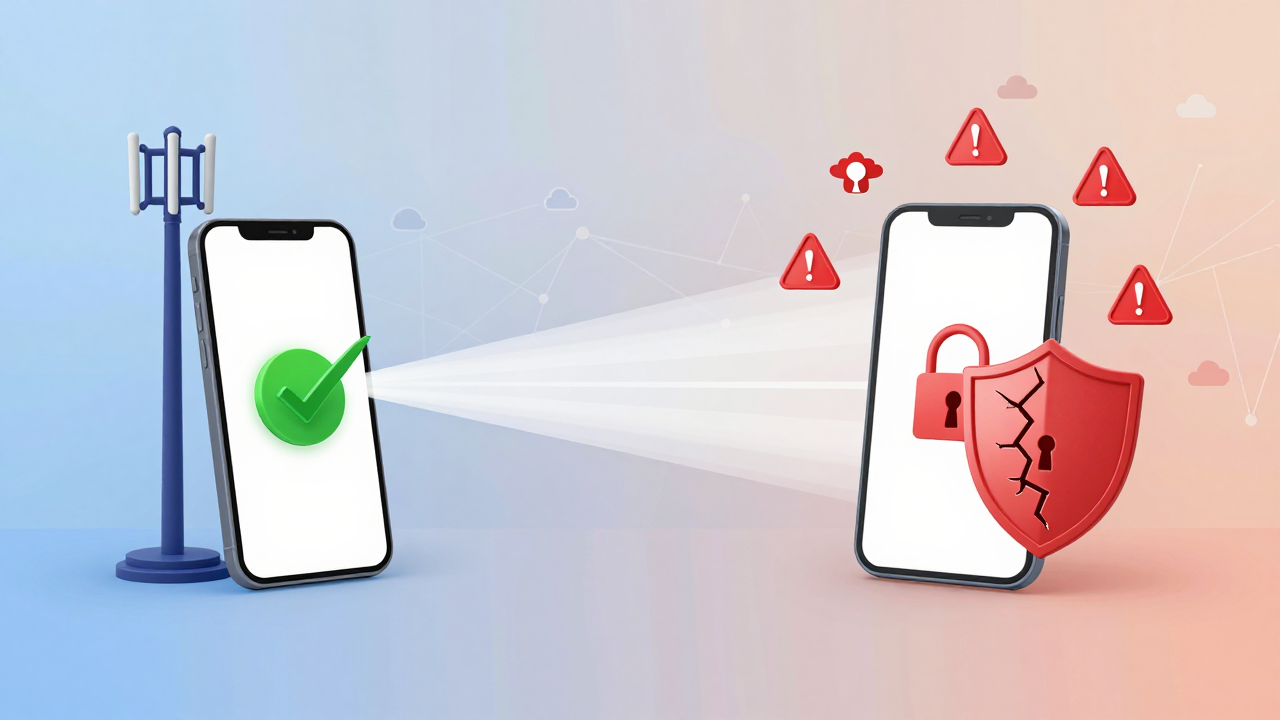
The lesson here is straightforward: you now understand how SMS verification code reception works, but understanding the mechanics isn't enough. You need a provider that's already thinking about what happens after the code arrives.
Core Metrics for Evaluating SMS Receiving Services: Price Isn't Everything
Too many small operations make their provider decision based on unit price alone. That's the single biggest mistake I see. In 2026, these are the metrics that actually separate good SMS receiving services from bad ones:
- Number Survival Rate: Can the number still receive verification codes 24 hours after registration? Many budget number segments work once, then die on the second attempt.
- Number Segment Purity: Has this segment been heavily used for registering the same platform? If it's overused, you're looking at a register-one-ban-one situation.
- Environment Compatibility: Does the service support binding with proxy IPs and device fingerprints? Pure API services typically can't do this.
- Callback Speed: The delay between SMS dispatch and your API receiving the code. You should see 3–10 seconds normally. Anything over 30 seconds is a dealbreaker.
Industry-wide, the average account retention rate for SMS receiving services in 2026 sits between 50% and 70%. Below that range, the provider's number resources or technical capabilities are questionable. Above it, they're either getting lucky or running a genuinely mature risk-avoidance system.
One trend I'm watching closely: more cross-border companies are now budgeting SMS receiving as part of their ongoing account operations rather than treating it as a one-off "code purchase." That mindset shift is a natural byproduct of actually understanding the mechanics behind the service.
How to Choose a Reliable SMS Receiving Provider: Four Evaluation Criteria
Building on the analysis above, here's a practical framework for evaluating SMS receiving providers. Judge them on these four dimensions, not just price:
First, verify whether they own their number resources. Many small platforms are essentially middlemen—they buy numbers from upstream suppliers and resell them. Every extra link in that chain adds unpredictability to number quality. Providers with proprietary number resources consistently deliver more stable quality.
Second, check whether they offer integrated environment solutions. If you're running matrix accounts, pure SMS receiving won't cut it. Can the provider supply proxy IPs, device fingerprinting, and browser isolation? These directly determine how long your accounts survive.
Third, test their support response time. Missing codes and flagged numbers are routine issues in this business. Can the provider respond and resolve within minutes? That matters more than almost anything else. I've seen big platforms with two-hour support queues—by the time someone responds, your accounts are already burned.
Fourth, confirm they allow small-scale testing. A responsible provider should let you fund a small amount, test a batch of numbers, and verify quality before committing to a long-term relationship. If a provider demands a large upfront deposit, that's a red flag.
Platforms like Getfollow have earned their reputation by following this exact compliant operating logic—they support small-scale testing, own their number resources, and provide integrated environment solutions. But I want to be clear: any provider is just a tool. Your own operational strategy is what ultimately determines your results.
Frequently Asked Questions About SMS Verification Code Reception
Let me wrap up with direct answers to the questions I get asked most often by cross-border operators:
Why did my SMS receiving platform deliver the code successfully, but registration says "number already in use"?
That means the number was previously used to register on that platform. Budget SMS receiving services frequently resell used numbers, which causes exactly this problem. The fix is choosing a provider with real-time number pool management, or asking for a "number guarantee" service.
Why do accounts registered via SMS receiving always get hit with secondary verification?
Platform risk engines in 2026 are extremely good at identifying virtual number segments. If your number segment is flagged as high-risk, you'll trigger secondary verification even with a correct code. Your best bet is prioritizing providers that offer physical SIM card forwarding, or pairing the service with a realistic environment setup.
How can I tell if an SMS receiving provider is trustworthy?
The most direct method is small-scale testing. Fund the minimum amount, register 5–10 accounts, and monitor the 24-hour survival rate. If it's below 50%, switch providers immediately. Also look for providers willing to share number segment information and explain their risk-avoidance approach—both are strong positive signals.
Do I have to use the same provider for SMS receiving and account nurturing?
Not strictly, but I strongly recommend it. When your receiving environment and nurturing environment are disconnected, the mismatch between registration context and ongoing usage context can easily trigger risk controls. Integrated solutions—like the service model Getfollow uses—minimize that risk.
Here's the bottom line: how SMS verification code reception works comes down to a simple message transmission chain. But the 2026 cross-border ecosystem has turned that simple chain into a complex operational system. Understanding the mechanics is step one. Choosing the right provider is step two. What actually determines your success, though, is your ability to manage the entire account lifecycle.
My advice: no matter which provider you're considering, test small before you commit big—that's always the safest play. In cross-border business, survival matters more than speed.