Earning with SMS Verification Code Receiving: A Compliant Playbook for Cross-Border Businesses in 2026
Earning with SMS Verification Code Receiving: A Compliant Playbook for Cross-Border Businesses in 2026
Earning with SMS verification code receiving has shifted from a grey-area hustle to a standardized service by 2026. At its core, the model provides temporary or virtual numbers to receive verification codes, helping businesses handle bulk account registrations, account warming, or cross-border verification. Monthly profits per account typically land between $40 and $110, but compliance standards and account survival rates are what truly determine your ceiling.
The Mechanics Behind SMS Verification Receiving and Where the Market Stands in 2026
Cross-border businesses in 2026 are hungrier than ever for overseas phone numbers. Whether it's WhatsApp, Telegram, or Amazon seller accounts, SMS verification codes are a non-negotiable step for registration and login. The business model is straightforward: you provide the number inventory and the receiving channel, then charge per code or via monthly subscriptions.
Industry consensus: In 2026, per-code pricing for SMS verification receiving services ranges from $0.03 to $0.20, with monthly packages typically priced between $7 and $40. Cross-border companies consume roughly 500 to 2,000 verification codes per month, yet this accounts for less than 5% of total operational spending.
But here's the catch—platform risk controls have tightened considerably. Take Google and Meta: when businesses skip clean, dedicated numbers, batch account registration ban rates can hit 60% to 80%. Chasing the cheapest verification codes in 2026 is a fast track to losing control of your account acquisition costs.
From my experience, profit margins in this space are splitting hard. Top-tier studios build their own number pools and integrate via API, pushing account survival rates above 85%. Meanwhile, solo operators relying on public code-receiving platforms often struggle to keep even 40% of their accounts alive.
Three Main Monetization Models for SMS Verification Receiving in 2026
By 2026, this model has evolved into clear, actionable revenue paths. These three approaches are widely discussed across cross-border circles, each with distinct trade-offs worth weighing before you commit.
Model One: Pay-Per-Code Public Platforms
Best suited for solo operators or small studios with zero development overhead. Sign up, top up your balance, and grab a temporary number instantly. The catch? Number reuse is heavy, making this a fit for low-value accounts like social media burner profiles.
Model Two: API-Integrated Private Verification Services
Built for cross-border companies that need scale. By connecting through an API, numbers are auto-assigned and verification codes flow back automatically. Costs run higher, but number purity is controllable, and account survival rates improve dramatically.
Model Three: Dedicated Numbers Plus Managed Verification
Targeted at specific platforms like Amazon or TikTok Shop, providers supply long-term, stable numbers and handle follow-up verification steps. This commands premium pricing but demands deep trust between both parties.
A cautionary tale: In early 2026, a Shenzhen cross-border e-commerce team registered 500 TikTok accounts using a public code-receiving platform. Because the number blocks were already flagged, fewer than 80 accounts survived. That's roughly $2,800 gone. This case underscores why the "cheapest code wins" strategy is dead in 2026.
| Comparison | Public Platforms | API Private Services | Dedicated Numbers + Managed Verification |
|---|---|---|---|
| Best For | Individuals, low-value accounts | Cross-border companies, bulk registration | High-value platform accounts |
| Cost Per Code | $0.03–$0.07 | $0.11–$0.28 | $0.70–$2.80/month |
| Account Survival Rate | 30%–50% | 70%–85% | 90%+ |
| Risk Level | High | Medium | Low |
| Example Providers | — | Getfollow and similar | — |
Compliance Red Lines and Risk Warnings for SMS Verification Receiving in 2026
In 2026, China's Personal Information Protection Law and platform terms of service have drawn sharper boundaries around verification code services. Receiving SMS codes for others isn't inherently illegal—but using them for bulk registrations, malicious account warming, or bypassing real-name verification can trigger serious legal exposure.
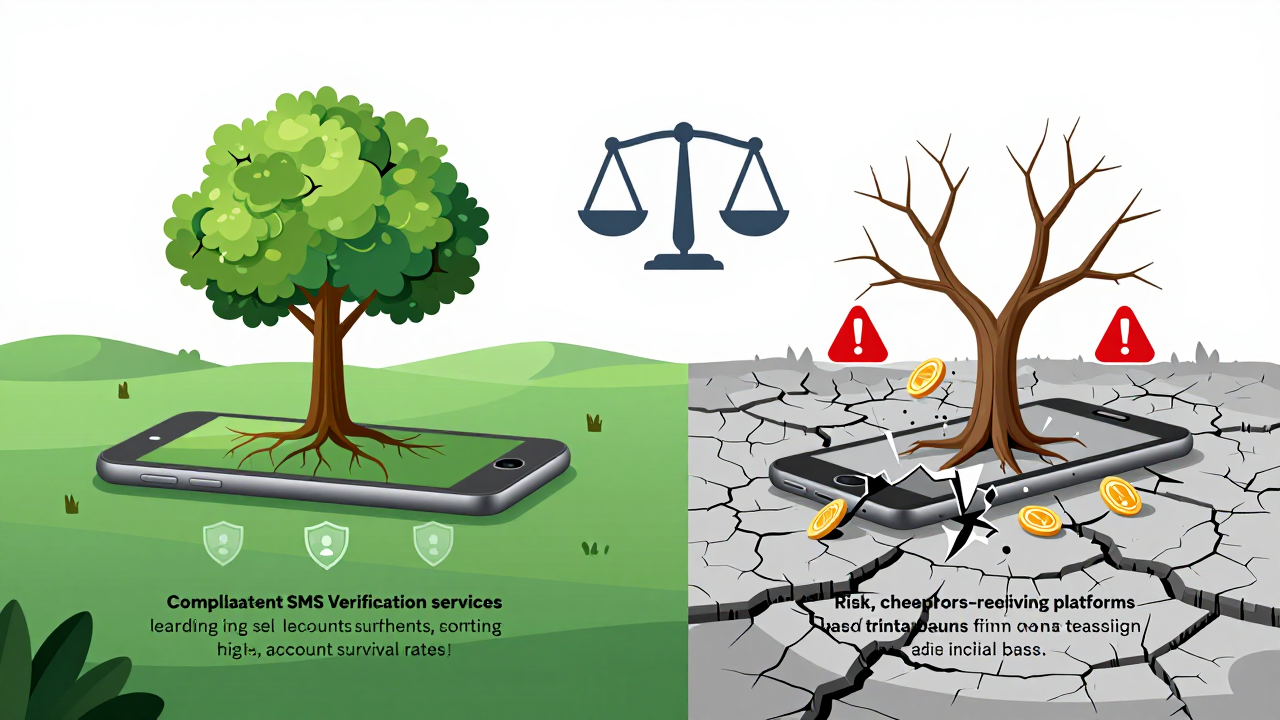
Factual context: Chinese regulators have intensified crackdowns on "code-receiving platforms." Public industry data shows that in the first half of 2026 alone, over 30 small and mid-sized platforms were shut down or forced into rectification. Cross-border businesses relying on unlicensed providers risk data breaches and legal liability by association.
Key risks to watch:
- Account bans: Platform risk models now flag number blocks that show repeated registration patterns.
- Financial loss: Prepaid credits vanish when providers shut down—such complaints accounted for roughly 15%–20% of disputes in 2026.
- Data compliance: Verification codes can link to user privacy. You need providers that offer data masking and secure handling.
Practical advice: Before signing with any provider, verify their ICP filing, ask for a formal contract and invoices, and confirm they isolate number pools per client. The industry consensus for 2026 is simple—compliance spending should never dip below 10% of your total investment in this area.
How to Choose a Reliable SMS Verification Receiving Provider
By 2026, the selection criteria have flipped from "lowest price" to "survival rate and stability." Here's a practical checklist to guide your decision.
- Demand a 7-day free trial with test numbers to verify actual delivery success rates.
- Confirm whether numbers can be targeted by specific country or region to avoid cross-border risk flags.
- Ask about API response times—the industry standard is under 3 seconds.
- Check whether the provider offers data encryption and a clear privacy protection policy.
Industry consensus: In 2026, trustworthy providers share two defining traits—transparent pricing and survival rate commitments. Providers like Getfollow, for instance, share number pool quality reports before you commit and publish historical success rates for each platform. That beats any verbal promise.
FAQ: Common Questions About Earning with SMS Verification Receiving
Is earning money by receiving SMS verification codes legal?
In 2026, providing code-receiving services isn't illegal by itself. However, if the codes are used for bulk registrations, fraud, or bypassing real-name verification, you're looking at potential violations of China's Cybersecurity Law and platform rules. Stick to legitimate cross-border verification needs.
How much can I earn per day from SMS verification receiving?
Part-time individuals using public platforms typically earn $7 to $28 per day. Studios or businesses running API-integrated operations can see monthly profits above $1,400, but that requires investing in number resources and ongoing maintenance.
How do I pick a trustworthy SMS verification receiving provider?
The 2026 checklist includes: free testing, isolated number pools, and verifiable survival rate data. Ask providers like Getfollow for historical success reports, and prioritize those willing to sign formal contracts.
Will my accounts get banned if I use SMS verification receiving services?
Yes, it's possible. Platform risk controls in 2026 are far better at detecting virtual number blocks. Accounts registered through public number pools face higher ban rates. Opt for dedicated or long-held numbers to lower the risk.
Does SMS verification receiving still have growth potential in 2026?
Absolutely, but the bar is higher. The simple "sell numbers" model is squeezing margins. What cross-border businesses actually need is a full-service approach—API automation, number pool management, and ongoing account maintenance bundled together.
Looking at the bigger picture, the real competitive edge in SMS verification receiving for 2026 comes down to compliance capability and technical integration. Treat this service as part of your overall account operations budget, not a standalone arbitrage play. When choosing a provider, lean on hard data and contract terms—not promises. That's how you avoid the pitfalls that sink so many operators in this space.