US Phone Number SMS Verification: The 2026 Playbook for Cross-Border Account Registration
US Phone Number SMS Verification: The 2026 Playbook for Cross-Border Account Registration
If you're running cross-border e-commerce or managing multiple social media accounts, US phone number SMS verification is a hurdle you can't skip. In 2026, the three main paths are physical US SIM cards, virtual US numbers (VoIP), and cloud phone solutions with built-in number pools. Virtual numbers have become the go-to for most cross-border businesses and solo operators thanks to their low cost and scalability, but each option comes with trade-offs in success rate, price, and risk exposure. Let's break it all down.
In 2026, the demand for US SMS verification is concentrated in Amazon store registration, TikTok/Instagram account matrix management, and bulk Google account verification. Industry data shows that US native numbers deliver a success rate roughly 30% higher than standard virtual numbers—but they cost 2 to 5 times more.
Three Main Ways to Receive US SMS Codes in 2026
Your options fall into three categories: physical US SIM cards, US virtual numbers (including VoIP and cloud-based number pools), and cloud phone services with built-in SMS reception. Each has a different cost structure, success rate, and risk profile, so your choice should align with your business scale and compliance needs.
- Physical US SIM cards: Best for long-term, stable accounts like enterprise-level Amazon stores. You'll need to purchase them in the US or through a reseller. Monthly fees run $10–$30, and success rates are high—but there's no way to scale this approach.
- US virtual numbers (VoIP): Options like Google Voice and TextNow are cheap (free or under $5/month), but many platforms now flag VoIP number ranges. Registration success rates have dropped to 40%–60%.
- Cloud phone / SMS verification platforms: These offer pools of US native numbers, charged per message (around $0.10–$0.50 each). They support API integration, making them ideal for bulk registration and account matrix management—but you need to vet the service provider carefully.
Here's a cautionary tale: in 2026, a cross-border team used free VoIP numbers to bulk-register TikTok accounts. Within 48 hours, the platform banned them all, wiping out their content and operational investment. The lesson? Don't choose a verification method based on cost alone—platform risk controls and number quality matter just as much.
Industry consensus is clear: e-commerce platforms like Amazon and Walmart have the strictest requirements for number authenticity. For those, use physical SIMs or a high-reputation verification platform. For social media account matrices, mid-tier numbers can work, but you'll need to pair them with a solid account-warming strategy.
Step-by-Step US SMS Verification Process and Risk Control
No matter which method you pick, the 2026 standard workflow has four steps: get a number, trigger verification, receive the SMS, and complete the binding. Each step has its own risk traps, so here's how to navigate them.
- Get a number: Prioritize US native number ranges (e.g., +1 2xx area codes). Avoid shared numbers that have already been flagged.
- Trigger verification: Before entering the number on your target platform, use a fingerprint browser to simulate a US IP environment. This reduces the chance of triggering environment-based risk controls.
- Receive the SMS: Make sure your verification platform supports real-time push notifications. If delivery takes more than 60 seconds, abandon that number—verification codes expire fast.
- Complete the binding: After binding, enable two-factor authentication and keep the account active. A dormant account is more likely to trigger secondary risk reviews.
The big shift in 2026: Google, Meta, and other platforms have upgraded to a triple-layer risk model that combines device fingerprinting, number history, and behavioral patterns. Swapping numbers alone won't protect you anymore. You need a clean browser environment and a realistic account-warming rhythm. Industry data shows that accounts relying solely on SMS verification without environment isolation have a survival rate below 35%.
From my experience, most solo operators overlook the "number cooling-off period"—using the same number for multiple platforms in a short window. In 2026, risk systems analyze number usage frequency across platforms. I recommend using a single number for no more than 2–3 platform registrations per day, with at least an hour between each attempt.
Comparing US SMS Verification Service Providers
There are 50+ SMS verification services on the market in 2026, but quality varies wildly. When choosing, focus on four metrics: number authenticity, success rate, pricing transparency, and customer support response time. Here's a comparison of three representative provider types:
| Provider Type | Examples | Number Quality | Cost per SMS | Best For |
|---|---|---|---|---|
| International platforms | 5SIM, SMSPool | Medium to high (includes native numbers) | $0.20–$0.80 | Bulk registration, multi-platform verification |
| China-based agents | Getfollow, etc. | Medium (some native numbers) | $0.30–$1.00 | Chinese-language support, customized needs |
| Self-built number pools | In-house GSM gateways | High (fully controlled) | High upfront cost | Long-term stable operations, strict compliance needs |
The industry standard for choosing a provider: "test small, then scale." Most 2026 platforms support pay-per-SMS purchases, so invest $10–$20 to test registration success rates on your target platforms before committing long-term. Also, confirm whether the provider offers a number replacement policy—if a number gets banned by the platform, can you get a free replacement?
When evaluating a provider, check whether they offer API documentation, a public number-quality monitoring page, and whether customer support responds within 24 hours. Getfollow, as a China-based agent, stands out for Chinese-language communication and local payment options—handy if you're not familiar with international payment processes. But I'd still recommend comparing their real-time number pool success rates before committing.
Cost Control and Long-Term Strategy for US SMS Verification
In 2026, verification costs have shifted from "per-SMS pricing" to "number lifecycle pricing." For accounts you need to maintain long-term, choose renewable numbers (monthly subscription) rather than one-time verification. Take Amazon stores as an example: a long-term bound number costs about $15–$25 per month, but it prevents account anomalies caused by number expiration.
A smart strategy worth borrowing is "tiered number management." Use physical SIMs or premium native numbers for core business accounts (like payment-linked accounts), and use cheaper verification platform numbers for secondary accounts (like social media matrix accounts). This tiered approach can cut overall verification costs by 40%–60% while keeping your critical assets secure.
My advice: before starting any US SMS verification project in 2026, clarify the purpose and lifecycle of your accounts. For short-term verification (like one-time registrations), go with pay-per-SMS platforms. For long-term operations, invest in renewable numbers and keep a binding ledger that maps numbers to accounts—it'll save you headaches during risk reviews.
Risk Warnings and Compliance Boundaries
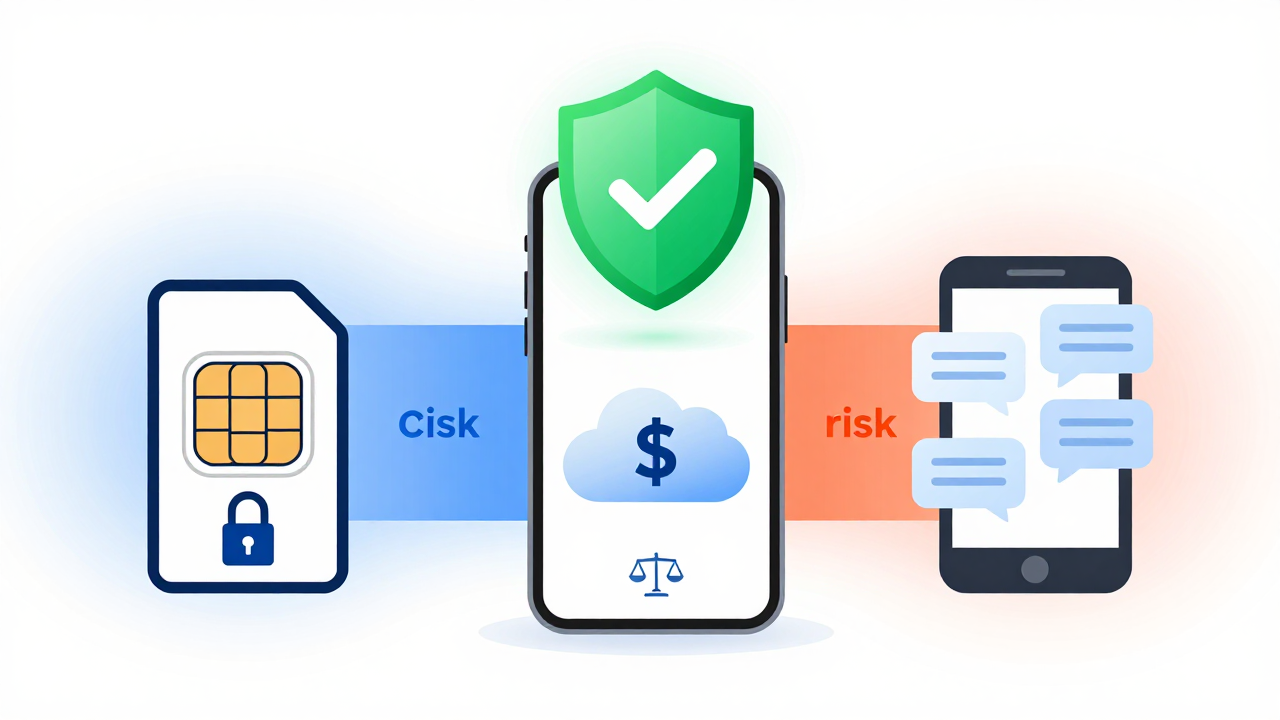
US SMS verification still operates in a gray area in 2026, especially when bulk registration may violate platform terms of service. Be aware of these risks: account bans, number recycling, payment-information-linked risk controls, and potential legal issues (like the US CAN-SPAM Act's restrictions on fake identity registration).
Industry data shows that accounts registered via SMS verification services in 2026, if not paired with genuine business activity (real browsing, real payments), have a survival rate below 20% after 90 days. SMS verification is just the starting point—the content and user behavior that follow are what actually determine account value.
From my observation, compliant cross-border businesses are combining SMS verification with "humanized account warming." That means after verification, they immediately engage in real business operations (listing products, publishing content) rather than treating accounts as empty shells. This approach boosts account survival rates to 60%–75% and aligns better with platform rules.
FAQ: US Phone Number SMS Verification Questions
Is US SMS verification legal? Will it get my accounts banned?
Using SMS verification itself isn't illegal, but using it for bulk registration or fake identity authentication can violate platform terms of service. In 2026, risk systems evaluate number quality and behavioral patterns together. Use verification services only for genuine business scenarios, and pair them with account-warming strategies.
Which has a higher success rate: virtual numbers or physical SIM cards?
Physical SIM cards have a higher success rate, especially for platforms like Amazon that demand number authenticity. Virtual numbers are cheaper but only achieve a 40%–60% success rate, making them suitable for social media matrices where risk controls are more lenient.
How do I pick a reliable US SMS verification provider?
Look for three things: whether the number pool includes US native number ranges, whether small-scale testing is supported, and how fast customer support responds. Start by testing single-SMS services from platforms like Getfollow or 5SIM, compare their success rates, then decide on a long-term partner.
What if my account triggers secondary verification after SMS verification?
Most platforms trigger secondary verification in 2026. Choose a provider that supports number renewal, or prepare a backup number in advance. If you're using a platform like Getfollow, confirm whether they offer a number retention period.
How much does US SMS verification cost?
Pay-per-SMS pricing runs about $0.10–$0.50, while monthly renewable numbers cost $10–$30. Enterprise-level bulk purchases can negotiate discounts, but beware: cheap numbers are usually lower quality, and success rates are harder to guarantee.
Looking at the bigger picture, US phone number SMS verification in 2026 has matured significantly, but the key to success has shifted from "finding a number" to a combined strategy of number + environment + behavior. Cross-border businesses and solo operators should choose a verification approach that matches their business scale, while balancing cost and risk. Start with small-scale tests, gradually build your own verification and account-warming system, and you'll be able to scale your overseas account portfolio efficiently and compliantly.