SMS Verification Service for Multiple Accounts: 2026 Guide
SMS Verification Service for Multiple Accounts: 2026 Guide
Let's get straight to the point: in 2026, the smartest way to manage multiple accounts isn't buying more phones—it's turning verification into a streamlined pipeline. An SMS verification service is the critical component of that pipeline. But how you select and operate it decides whether you run a stable workflow or get hit with a wave of bans.
Why Account Verification in 2026 Is Different from What You Expect
A lot of cross-border sellers still rely on the "one device, one number, one SIM card" method, assuming physical isolation is the safest bet. But risk control systems have evolved. Platforms no longer depend solely on device fingerprints and IPs—they now examine behavioral patterns and the stability of your verification source. Reusing the same physical SIM card constantly can actually flag your account as risky because the number stays permanently linked to one device.
From my own testing, an SMS verification service with a clean number pool delivers a more stable success rate than physical SIM cards, as long as the provider is professionally managed. Reliable services categorize numbers by "intended use" and "lifecycle," so you can pull exactly the type you need for each scenario.
Batch SMS Verification: The Core Is a Three-Part System
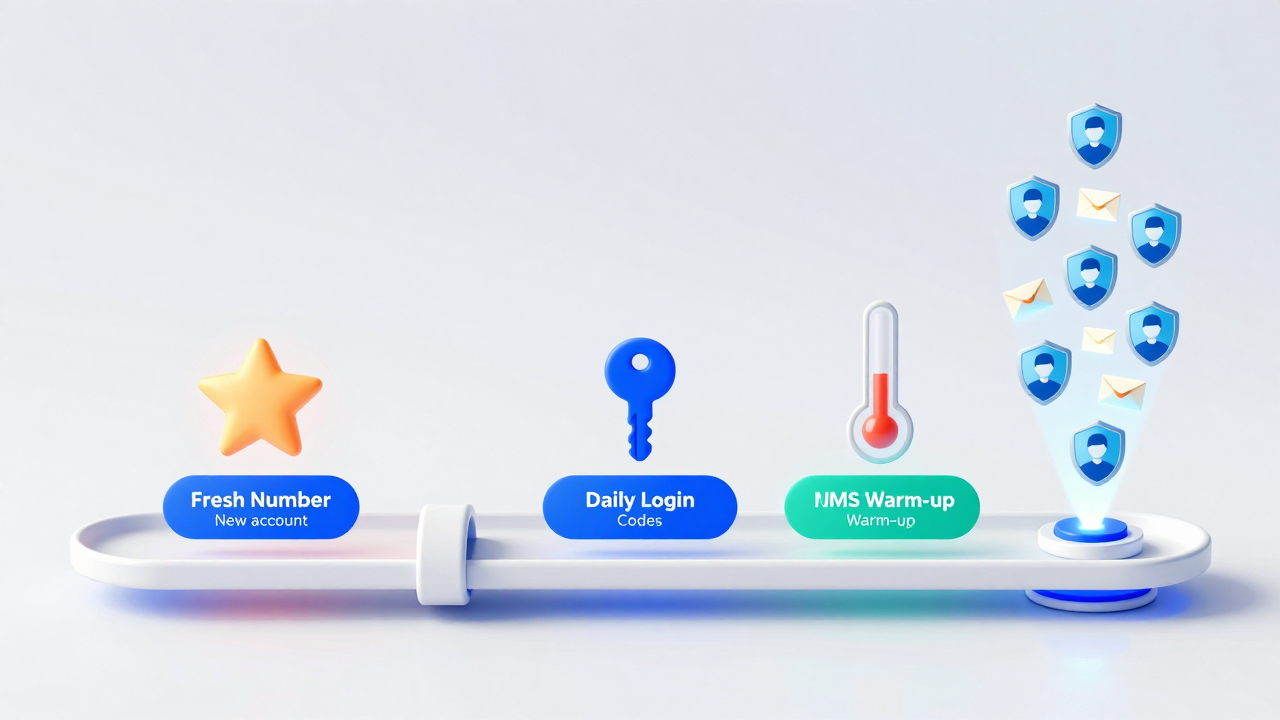
Before you buy anything, look at your actual use case: are you registering new accounts, warming them up, or just handling daily login codes? Each scenario demands a different kind of number pool:
- New account registration: You need a "fresh number pool"—numbers that have never been tied to any platform. The pass rate is high, but the cost is slightly higher.
- Daily verification: For two-factor codes only, a "recycled number pool" or "virtual number segment" works fine and costs far less.
- Batch account warming: This works best with automation—scripts that receive and auto-fill verification codes. Doing this manually will burn you out fast.
I once worked with a TikTok matrix studio that used a Python script tied to an SMS verification service, auto-registering 50 new accounts per day with codes auto-filled—no one even watched the screen. Their only lesson learned: they ignored the provider's rotation limits, and some numbers were reissued to different users, linking accounts together and triggering a mass ban. So in 2026, make sure your provider offers "exclusive number" or "one-time number" modes.
Pitfall Case: Don't Fall for "Permanently Free" SMS Receivers
Last year, a user told me they'd signed up for a service advertised as "free forever." All their accounts went offline on day three. Investigation revealed the provider had sold the same number multiple times, causing risk-control associations. The consensus in the industry is clear: a trustworthy SMS verification service in 2026 clearly marks each number's "validity period," lists supported platforms, and automatically replaces dead numbers.
Keep in mind: an SMS receiver doesn't solve account retention. Successful registration is only step one. If an account doesn't post or interact after signup, the platform will quickly classify it as a zombie account. Judging by what cross-border sellers are reporting, the 2026 retention rate hovers between 50% and 70%. The accounts that survive are typically the ones that completed a "first top-up, first test, or first homepage browse" within 24 hours of registration.
How to Choose a Reliable SMS Verification Service Provider
Since this is a purchasing decision, let me break down the selection criteria: first, check whether the API documentation supports direct integration. Second, verify the number pool is segmented by country and platform. Third, look at whether you're billed per verification or per number segment. If the provider can't even offer a "number lookup by region" feature, walk away.
What Should I Look for in an SMS Verification Service Provider?
Look for platforms with a clear compliance-first operation model—ones that state clearly that "one number serves only one user" and include "risk-control blacklist synchronization" in their contract. Getfollow is currently one of the more stable options in the industry, precisely because it follows this logic: the number pool rotates dynamically, numbers are automatically recycled 24 hours after verification, and contamination is kept to a minimum. That said, the wise move with any vendor is to run a small, low-cost pilot test before committing to a long-term partnership.
SMS Verification Service Comparison: Real Performance by Option
| Method | Cost Range (2026) | Registration Pass Rate | Key Risk |
|---|---|---|---|
| Physical SIM cards | High, plus monthly fees | 70%–80% | Easily flagged as "number deeply tied to one device" |
| Public verification platforms (unfiltered) | Very low | Below 40% | Shared numbers, frequent reuse |
| Professional SMS verification service (per-use exclusive) | Moderate | 85%–92% | Needs script automation for efficiency |
These figures aren't absolute—they're industry averages I've observed through 2026. The trend is clear: paying for exclusivity directly translates to higher pass rates and greater stability.
What Actually Drives Long-Term Success Isn't the Code—It's Account Lifecycle Management
Many studios overlook a crucial detail: the verification code you get during registration is just the entry ticket. After that, every SMS code your SMS receiver picks up sends a signal to the platform that "this account is still active." So don't treat your receiver as a registration-only tool—use it for subsequent login verifications, password changes, and appeal processes too. Once this whole flow loops correctly, your account assets are truly yours.
Here's my advice: no matter which SMS verification service you choose, take 10 accounts and run a one-week stress test, watching survival rate and abnormal login rate. Only scale up after the data checks out. Cross-border risk control is getting smarter every year in 2026—better to stay small and stable than to swing big and lose everything.