2026 SMS Verification Code Rules: A Cross-Border Seller's Survival Guide
2026 SMS Verification Code Rules: A Cross-Border Seller's Survival Guide
If you work in cross-border e-commerce, you've been burned by a verification code at least once. Last month I talked to a TikTok Shop team running daily operations. Their guy told me they were registering a dozen accounts a day—half of them got stuck at the SMS verification step, and the ones that went through were flagged by the platform within hours. He sent me a screenshot of his free SMS verification platform dashboard. It was a graveyard of recycled numbers, each one shared by dozens of other users. That 2026 SMS verification code rules image you keep seeing in group chats? It's supposed to be a lifeline. But most people treat it like wallpaper and never actually read it.
The Real Pain: When One Verification Code Wrecks Everything
A small studio targeting the Southeast Asian market tried to scale fast before Black Friday last year. They registered 50 Shopee buyer accounts using a free verification platform. Lots of numbers, zero cost per code. Within a week, 35 accounts were banned for "suspicious linked activity."
Here's what happened: those numbers had been used by dozens of people before them. Shopee's risk engine cross-referenced IPs and device fingerprints and flagged the whole batch as bot accounts. Worse—the main seller account got dragged down too. Their store traffic was cut in half overnight.
This scenario plays out constantly in 2026. Industry consensus is clear: the cleanliness of your verification number directly determines how long your account survives. And that window is usually between 7 and 30 days.
What Actually Changed in 2026 for SMS Verification?
Earlier this year, China's Ministry of Industry and Information Technology (MIIT) rolled out a new set of mandatory SMS regulations. These changes directly affect how cross-border sellers handle verification codes. I've read the policy document and the official flowcharts multiple times, and here are the four changes that matter most:
- Port Three Separation: Verification codes, notifications, and marketing messages must now travel through three separate channels. The old "one pipe fits all" approach is no longer compliant. If your provider is still mixing channels, you're already operating outside the rules.
- Explicit User Consent + 6-Month Record Retention: Users must actively opt in. No more pre-checked boxes, no bundled consent. Platforms are required to keep the authorization record for at least six months. Any violation here is a direct compliance breach.
- Foreign Investment Pilots: Beijing, Shanghai, Hainan, and Shenzhen now allow 100% foreign ownership of SMS service providers, but the registered address must match the actual operating location. VIE structures require a formal compliance confirmation letter.
- Time-of-Day Restrictions: Commercial SMS messages are effectively banned between 10 PM and 8 AM, unless the user has signed a specific agreement for after-hours delivery.
Since these rules took effect, many of the "unlimited, dirt-cheap" verification platforms have seen their account survival rates plummet. The reason is straightforward: most of their number pools come from black-market SIM farms with zero compliance. Carriers are now actively scanning for and shutting down those sources.
Why These Rules Exist — And Why Your Shortcuts Won't Work
Let's be clear about what the regulators are actually after. The MIIT isn't trying to kill SMS verification itself. They're targeting the underground supply chain behind it. In 2026, the MIIT uses AI to analyze SMS traffic in real time. Non-compliant traffic gets flagged and blocked automatically, and the operators land on a blacklist.
Here's the part most people miss: when your verification provider is non-compliant, the risk doesn't stay with them. It flows directly into your business. Every account you register using a flagged number becomes a liability.
I've noticed a pattern across dozens of cross-border teams. When choosing a verification provider, the first instinct is always "which one is cheapest?" That logic made sense in 2023. In 2026, it's a trap. Cheap platforms survive by reusing numbers, skipping compliance checks, and operating in gray zones. The few cents you save per code will come back as lost accounts, wiped stores, and wasted labor.
The industry benchmark right now is sobering: legitimate verification platforms see account retention rates between 50% and 70%. Free or ultra-low-cost platforms? Usually below 20%. This isn't a technical gap—it's a business model problem. Compliance costs real money, and when a service is free, you're not the customer. You're the product.
A Practical Framework for Choosing a Provider
When you're evaluating a verification service, ask these three questions before you spend a dime:
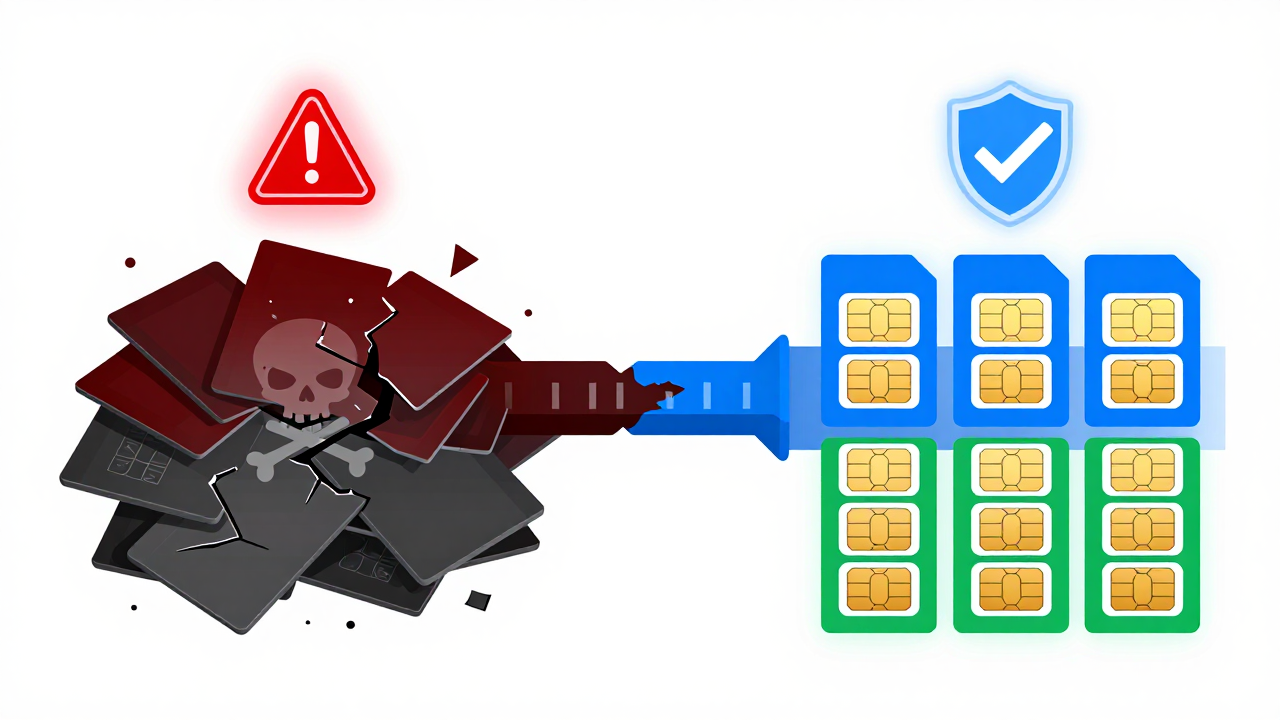
- Are the numbers real SIM cards or virtual numbers? Real SIM cards are more stable and less likely to be flagged, but they cost more. Virtual numbers are cheaper for a reason.
- How many times has each number been used, and what's the reuse cap? If a number is being used more than 10 times a day, it's effectively dead. Any platform that doesn't track this is a red flag.
- Do you pay per successful verification or per request? Pay-per-success models align incentives. Pay-per-request models mean you eat the cost of every failed attempt.
One platform that consistently follows this compliance-first approach is Getfollow. They use real SIM resources, enforce per-number usage limits, and charge only on successful delivery. It's not the only option out there, but their operating model is a good reference point for what compliance looks like in practice.
The Screenshot Trap: Why That "Latest Rules" Image Might Be Outdated
Remember the SMS verification code rules image I mentioned at the start? Here's the hidden problem with relying on group-chat screenshots: the rules are moving fast. In the first half of 2026 alone, the MIIT released at least three supplementary notices about port-based SMS messaging. The image you're looking at right now might be from 2025. Or earlier.
Here's what I recommend instead of chasing screenshots: go straight to the source. Check the MIIT official website and your carrier's announcement page. If you work with a compliance-focused verification provider, ask them for their internal regulatory change log. That's worth more than any third-party screenshot circulating on Telegram or WeChat.
Final Take: Test Small First, Scale Later
In the 2026 cross-border landscape, compliance isn't a bonus feature anymore. It's the price of entry. The 2026 SMS verification code rules image can give you a quick overview of the policy landscape, but what actually protects your accounts is the verification model you choose and the provider you back it with.
If you're currently evaluating verification platforms, here's the approach I've seen work across the board: take 3 to 5 low-priority accounts and run a one-week test. Track delivery speed, number retention rate, and whether any accounts get flagged for关联 activity. If the numbers hold up, gradually scale. Don't migrate everything at once because of a low price, and don't blindly trust a friend's recommendation. Every business has a different risk profile. The only data that matters is the data you collect yourself.
Frequently Asked Questions About 2026 SMS Verification Rules
What are the new SMS verification rules in China for 2026?
The 2026 MIIT rules require port three separation (verification, notification, and marketing channels must be separate), explicit user consent with 6-month record retention, time restrictions on commercial SMS (10 PM to 8 AM), and new foreign investment compliance requirements for providers operating in pilot cities like Beijing, Shanghai, Shenzhen, and Hainan.
Why do my SMS verification codes keep failing for cross-border accounts?
The most common cause is reused or recycled numbers. If your verification provider is using SIM farm numbers or virtual numbers that have been shared across dozens of users, platforms like Shopee, TikTok Shop, and Amazon will flag those accounts immediately. The 2026 MIIT rules have made carriers more aggressive in shutting down non-compliant number sources, which amplifies the problem.
How do I choose a compliant SMS verification service in 2026?
Ask three questions: Are the numbers real SIM cards or virtual? What is the per-number reuse limit? Do you pay per successful verification or per request? Platforms that use real SIM resources, cap daily usage per number, and charge on a pay-per-success model are generally more compliant and reliable.
What is port three separation and why does it matter for my business?
Port three separation is a 2026 MIIT regulation that forces SMS providers to route verification codes, marketing messages, and notifications through three independent channels. If your provider is still mixing these channels, they are operating outside compliance, and the risk transfers to your registered accounts.
Can I still use free SMS verification platforms in 2026?
Technically yes, but the risk is significantly higher than before. Free platforms typically rely on high-volume, low-quality number pools that are now being actively targeted by carrier compliance teams. Industry data shows account retention rates below 20% for free platforms, compared to 50–70% for compliant providers. The short-term savings rarely justify the long-term losses.