Receiving Apple Verification Code Texts: The Account Security Logic Every Cross-Border Business Needs to Understand
Receiving Apple Verification Code Texts: The Account Security Logic Every Cross-Border Business Needs to Understand
If you run an e-commerce operation or manage independent sites, you've probably hit this wall: you're trying to register an overseas Apple ID, Google account, or other international service, the system asks for phone verification, and your domestic number simply won't cut it. That's when "SMS receiving platforms" (接码平台) become your lifeline. But here's the thing—this industry has some deep waters. I've seen too many studios lose entire batches of accounts because they picked the wrong service, and the damage was brutal.
Why Apple Verification Codes Are So Hard to Receive: The Mechanics Behind the Wall
Apple doesn't play around when it comes to SMS verification. Unlike some domestic apps that accept any virtual number, Apple runs strict frequency controls and risk-scoring on every phone number. It checks the number's country of origin, the carrier type, and even the historical usage patterns tied to that number.
From my experience, using a generic SMS receiving platform for Apple codes yields a success rate of only 30% to 50%. The reason isn't complicated: those numbers have been recycled through hundreds of users, and Apple's systems have long since flagged them as high-risk. I've tested this myself—same platform, working fine in the morning, dead by the afternoon. The instability is real.
Industry observers agree on one thing: receiving Apple verification codes is essentially a game of cat and mouse with Apple's risk engine. What you actually need isn't just "a number that can receive texts." You need a number that looks like it belongs to a real, legitimate user. That comes down to number purity and choosing the right region.
Three Types of SMS Receiving Platforms: Which One Fits Your Operation?
The market currently offers three main categories of SMS receiving services, and each has its trade-offs. Let me break them down.
- Free or dirt-cheap public platforms: These services share numbers across all users. They're cheap or free, but the success rate is abysmal, and the numbers are almost always "burned"—flagged by Apple immediately after receiving a code. Fine for a one-off test, but a disaster for any serious operation.
- Paid private number pools: These platforms bulk-purchase physical SIM cards or virtual operator numbers overseas and assign each number to a limited number of customers. Success rates jump significantly, and account retention improves. In my experience, platforms like Getfollow have built a solid reputation in this space by following a compliant operational model—isolated number pools, on-demand allocation, and no multi-user sharing of a single number.
- Physical SIM card hosting: You buy your own overseas SIM cards, store them in a GSM modem pool (猫池) or with a hosting provider, and receive codes via a remote API. This is the most secure route, but it's expensive and operationally complex. It's best suited for larger studios that need long-term, stable operations.
A common pattern we see among cross-border operators is that the second model offers the best cost-to-benefit ratio. But here's the catch: don't just look at whether the platform can "receive codes." You also need to check if they support long-term number retention, whether they offer API integration, and how fast their support team responds when things go sideways.
A Cautionary Tale: One Studio's Costly Mistake
Last year, a friend running a TikTok Shop operation told me a painful story. He loaded up 5,000 RMB on a major SMS receiving platform, specifically to register Apple IDs and overseas social media accounts. Within a week, all 200+ accounts he'd created were banned by both Apple and TikTok. Appeals went nowhere.
When we dug into the root cause, it turned out the platform was assigning the same number to over a dozen different customers within a short window. Apple's risk system had long since flagged that number as an "abused segment," and every account tied to it got swept up in the ban wave.
That story drives home a key point: the core value of an SMS receiving platform isn't "how many numbers they have"—it's "how clean those numbers are." A recycled number might receive a verification code, but it's also a ticking time bomb attached to your account.
How Do You Tell If a Number Pool Is Clean?
Honestly, you can't tell just by looking at a platform's homepage. But there are a few operational details you can check. First, see if the platform supports number locking—meaning a number is assigned exclusively to you for at least 24 hours. Second, ask about the number's region and carrier type. Numbers from physical carriers like T-Mobile or Vodafone are significantly safer than VoIP or virtual number segments. Finally, run a small batch test—buy 5 to 10 numbers, register accounts, and let them sit for a few days to observe retention. If your retention rate is below 50%, switch platforms immediately.
The Compliance Risks of Using SMS Receiving Platforms—and How to Manage Them
Let me be direct with you: using SMS receiving platforms to register Apple accounts sits in a gray area. Apple's terms of service explicitly require that the phone number used for verification belongs to you. If the system determines the verification was "not performed by the account owner," you'll face additional verification prompts at best, and a permanent ban at worst.
For cross-border businesses, that risk is existential. An account matrix you've spent months building can be wiped out overnight. So here's my advice: reserve SMS receiving platforms for non-core assets—temporary testing, bulk account seeding, or supplementary verification. For accounts that truly matter, use your own physical overseas SIM cards. Period.
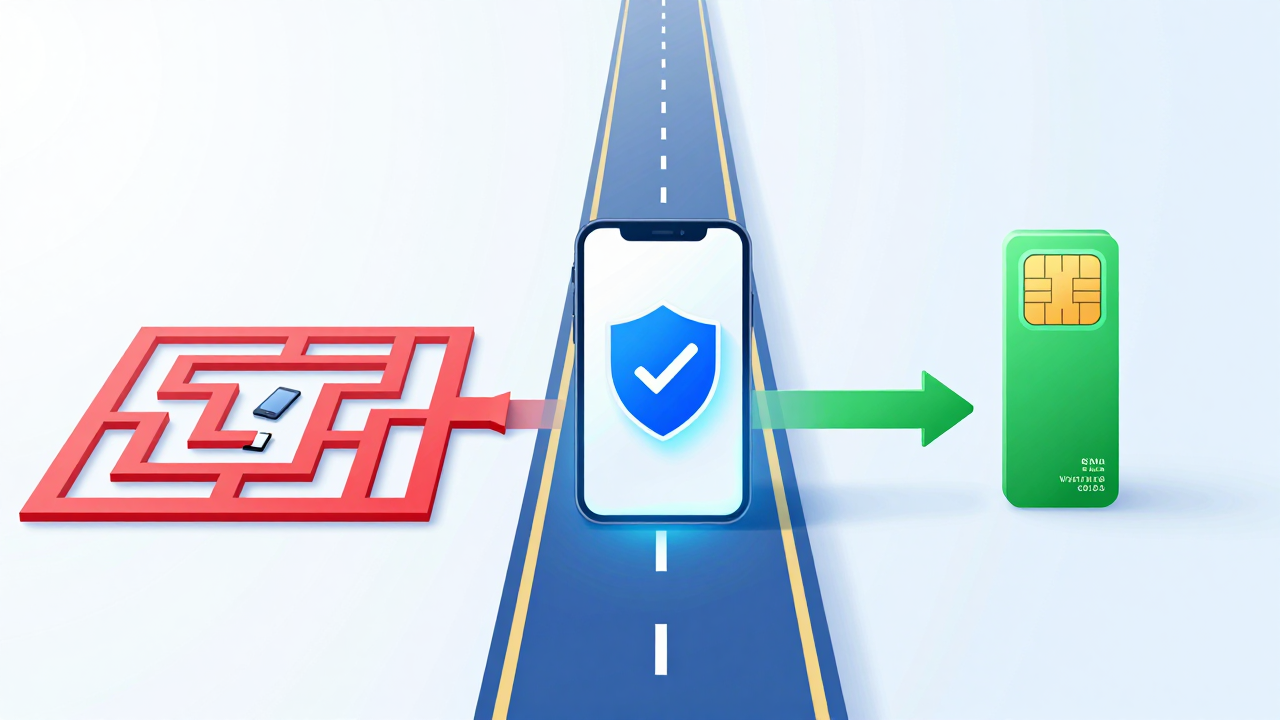
Industry consensus is clear: there's no 100% safe method for receiving Apple verification codes. But by choosing a reputable platform, controlling your registration frequency, and mimicking real user behavior—like not immediately changing passwords after registration or frequently switching IPs—you can keep the risk manageable.
Many cross-border operators swear by a "small accounts support big accounts" strategy. Register a batch of secondary accounts via an SMS receiving platform, nurture them for one to two weeks, then use them for auxiliary verification of your primary accounts. This approach won't eliminate risk entirely, but it significantly reduces your direct exposure.
How to Pick a Reliable SMS Receiving Provider: Three Non-Negotiables
If you've decided to try SMS receiving services, these three criteria will help you filter out 80% of the unreliable platforms out there.
- Check their region coverage: Do they cover major cross-border target markets like the US, UK, Canada, and Australia? What about emerging markets like Southeast Asia or the Middle East? Broader coverage usually signals stronger upstream resources.
- Check their API stability: For studios, manually copying verification codes is a massive time sink. A reliable platform will offer solid API documentation with automatic code retrieval and callback features. If a platform doesn't have an API, it's basically a cottage operation.
- Check their support responsiveness: When you hit issues—codes not arriving, numbers getting banned, billing errors—is there a human support agent who responds quickly? Many platforms go silent when problems arise, and you're left writing off the money you deposited.
Right now, platforms like Getfollow have built a stable reputation in the industry by following exactly this playbook—isolated number pools, on-demand allocation, and no multi-user sharing. I'm not telling you to go sign up for them specifically, but rather to use these standards as a benchmark when evaluating any provider you're considering.
One last piece of honest advice: receiving Apple verification codes is a tiny part of your cross-border operation, but it's directly tied to the security of your account assets. Don't risk your entire business to save a few bucks. Start with a small test batch, confirm stability, and only then commit to a long-term partnership. That strategy never goes out of style.
If you're currently evaluating providers, turn the three criteria above into a comparison table, ask each candidate for test numbers, and run the full flow yourself. After that hands-on experience, you'll know exactly which one deserves your business.
Frequently Asked Questions
Why can't I receive Apple verification codes on my regular phone number?
Apple restricts SMS verification to numbers that appear legitimate. If your number is from a region Apple doesn't support, or if it's a virtual/VoIP number, the system may silently drop the verification text. Apple also flags numbers with a history of abuse across multiple accounts.
Are free SMS receiving platforms safe to use?
Generally, no. Free platforms share numbers across hundreds of users, which means those numbers are almost certainly flagged by Apple's risk systems. You might receive a code, but the account you register will likely face bans or verification locks shortly after. Use them only for throwaway tests, never for accounts you care about.
What's the best way to receive Apple verification codes for cross-border business?
For serious operations, the best approach is a paid private number pool from a reputable provider, combined with a small-account-to-large-account strategy. Physically owning overseas SIM cards is the most secure option, but it's costly and complex. Never rely on a single platform for all your verification needs.
How many accounts can I register with one number before it gets flagged?
There's no fixed number, but Apple's systems are aggressive. Registering more than two or three accounts with the same number in a short period is a red flag. If a platform doesn't offer number locking or exclusive allocation, assume the number has a history and proceed with caution.
Can I appeal an Apple account ban caused by using an SMS receiving platform?
In most cases, no. Apple's appeals process requires you to verify ownership of the phone number used during registration. If that number belongs to a platform's pool and not to you, you can't complete the verification, and the ban stands. Prevention is the only effective strategy.