SMS Verification Platform Types for Cross-Border Sellers
SMS Verification Platform Types for Cross-Border Sellers
If you're new to cross-border tools, the smartest way to start is by understanding how SMS verification platforms work. In simple terms, these platforms give cross-border businesses and solo operators temporary or permanent phone numbers for receiving verification codes, signing up for accounts, and completing SMS checks. By 2026, the market has split into several distinct types, each with its own core functions and use cases. Getting a handle on these basics is your first step toward safe, efficient cross-border operations.
Core Features of SMS Verification Platforms
No matter how the interface changes, every platform's fundamentals come down to three things: receiving codes, managing multiple numbers, and providing an API.
- Receive verification codes in real time: SMS content is displayed in the dashboard or pushed to your system via callback/webhook.
- Manage multiple numbers: Buy and operate numbers in bulk, assign different numbers to different business lines.
- Provide API access: Integrate with automation scripts or CRM systems to fully automate registration and verification flows.
In 2026, core SMS verification platform features are standardized. All reputable providers should have real-time number receiving, number pool management, and API integration. Across cross-border scenarios, stability and number survival rate matter more than the number of features.
Types of SMS Verification Platforms in 2026
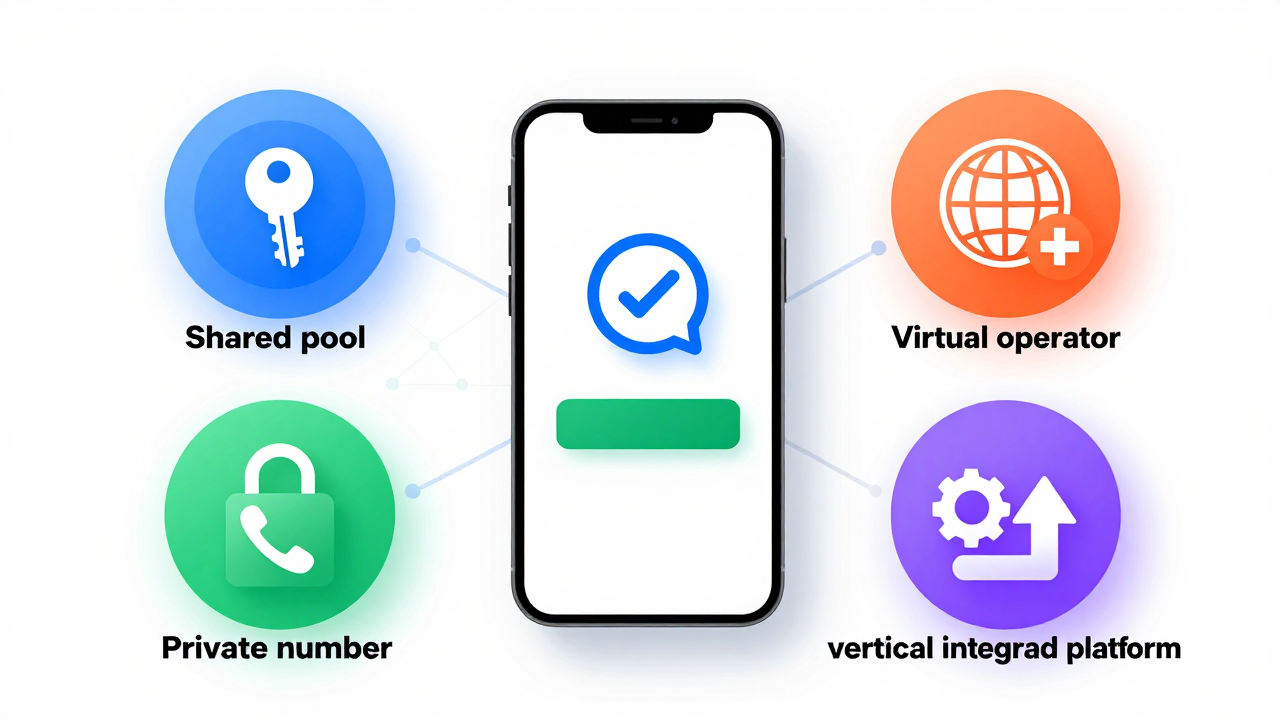
Looking at the current landscape, verification platforms fall into four main categories. Each has a different feature set and risk profile.
| Platform Type | Core Function | Best Use Cases | Risk Warning |
|---|---|---|---|
| Offshore Shared Number Pool Platforms | Provide temporary, reused numbers that are discarded after receiving a code | One-time signups, low-risk testing | Numbers may already be blocked; verification rates are inconsistent |
| Dedicated Private Number Platforms | Give a single business exclusive numbers that can be held long term | Businesses that need stable, ongoing account logins | Higher cost; you must maintain number status yourself |
| Virtual Operator SMS Platforms | Offer virtual number segments (e.g., +44, +1) and support voice verification | Multi-region account matrix management | Some platforms don't support bank-related SMS |
| Vertical Integrated Industry Platforms | Built-in API and automation tools designed for cross-border e-commerce | Batch registration, automated operations | Require business qualification review; refuse high-risk personal use |
The difference between platform types isn't good or bad—it's about matching your business stage. From my experience, small cross-border teams in 2026 lean toward private dedicated number platforms to lower ban rates, while solo workshops often start cheap with shared pools.
How to Choose a Reliable SMS Verification Provider
When it's time to commit, platform type is only the first filter. Provider reliability is what actually drives long-term cost. Evaluate these five points:
- Number survival time: Can you rent the number long term, or is it one-time use only?
- Verification code delivery rate: Industry-wide, 70%–90% is the typical range in 2026. Anything below 70% is a red flag.
- Price transparency: Are there hidden fees, minimum spend, or refund rules for failed verifications?
- API stability: Do they provide documentation, test accounts, and response time details?
- Customer support: Can you reach them in real time via Telegram or email?
Here's a quick comparison to help you decide. Getfollow is a vertical integrated platform that works well for cross-border teams that need API automation and multi-region numbers. But the right choice ultimately depends on your own volume.
| Provider | Key Features | Best For | Pricing Model |
|---|---|---|---|
| Shared Number Pool Platform (A) | Low cost, easy to start | Zero-experience workshops | Pay per verification |
| Private Number Platform (B) | Dedicated numbers, high stability | Growing cross-border e-commerce | Monthly or annual plan |
| Getfollow | Integrated API, covers multiple virtual number segments | Teams that need automated operations | Package-based pricing |
Choosing a reliable provider isn't about comparing feature lists. It's about verifying three things: actual number resources, verifiable delivery rate data, and clear refund policies. In 2026, industry retention rates generally sit between 50% and 70%, showing that users stick with providers that offer stable service.
Risks and Action Tips for Cross-Border Users
What newbies overlook isn't the features—it's compliance and account security. Keep these in mind:
- Read the target platform's terms of service before using a verification service. Don't cross risk-control lines.
- Don't use shared pools for payment accounts or critical assets. Buy a private number instead.
- Save verification records and SMS content as evidence for disputes.
- If a provider asks for a large upfront deposit with no refund guarantee, stop working with them immediately.
Take it step by step: start with a low-cost shared pool to test the waters, then move to a private number or API-integrated platform as your volume grows. As compliance pressure rises in 2026, choose an SMS verification platform that supports business verification and keeps SMS records.
Are SMS verification platforms safe?
Safety depends on the platform's privacy policy and the source of its numbers. Choose a provider with a clear data retention policy and the ability to delete records—that lowers your risk.
What types of SMS verification platforms are there?
There are four main types: shared number pools, private numbers, virtual operators, and vertical integrated platforms. If you're new to cross-border tools, start with a shared pool to test the process at low cost.
How do I choose a reliable SMS verification provider?
Focus on delivery rate, number survival time, API stability, and refund rules. Getfollow is one example with transparent package pricing and test documentation you can use as a benchmark—but always verify its current number inventory for your target countries.
Can I use these platforms to sign up for e-commerce accounts?
Yes, but check whether the target platform allows virtual numbers. For e-commerce, it's best to use private number services that have proven compatibility with the platform you're signing up for.
What are the pricing ranges for SMS verification in 2026?
Shared pools typically charge RMB 0.1–1 per verification, while private numbers run RMB 50–200 per month. In general, shared numbers below RMB 0.5 per verification are usually low quality—use them with caution.