Amazon Japan SMS Verification Code Not Received? This "Small Issue" Is Costing Cross-Border Sellers Big
Amazon Japan SMS Verification Code Not Received? This "Small Issue" Is Costing Cross-Border Sellers Big
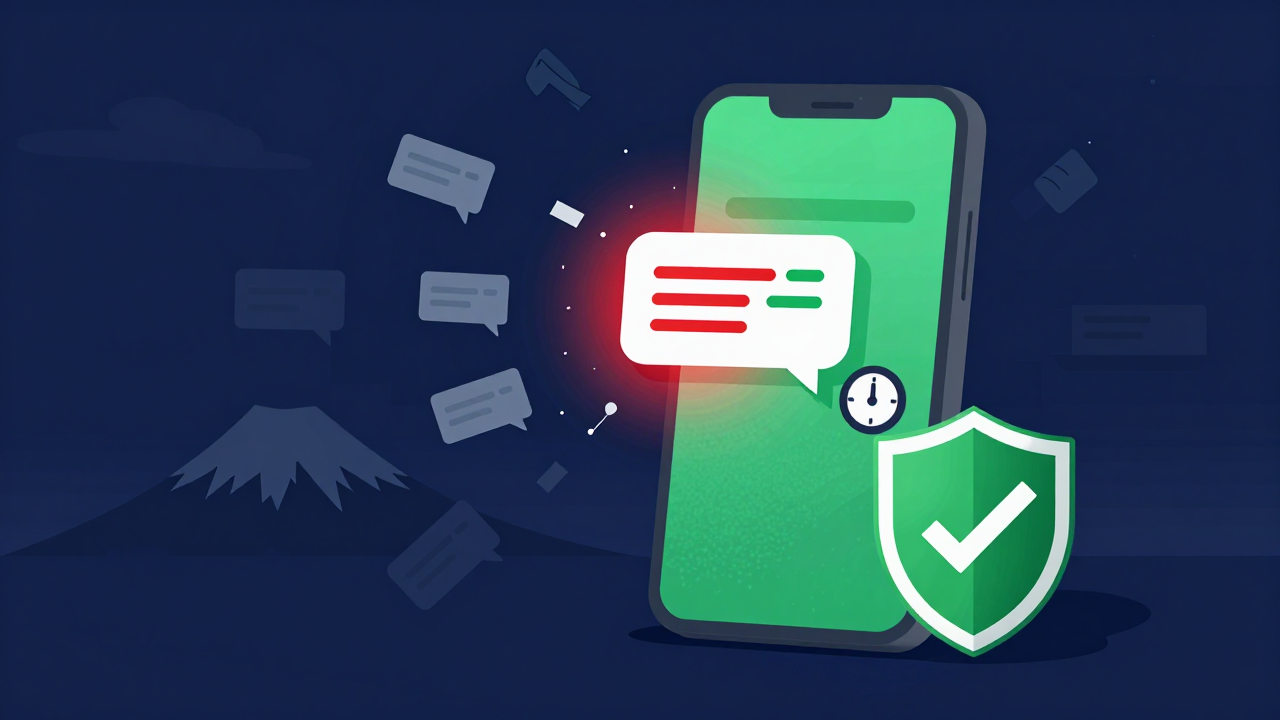
If you sell on Amazon Japan, you've probably hit this wall: you're registering a new account, resetting your password, or triggering a risk review, and the SMS verification code just never arrives. Your signal bars are full, your carrier swears nothing's blocked, yet those six digits have simply vanished into thin air. Amazon Japan SMS verification code not received has become one of the most-searched phrases in the cross-border ecommerce community in 2025.
From my experience, this issue goes far beyond "just try a different number." Many sellers, frustrated by repeated failures, start swapping their linked phone numbers multiple times within days—which ironically triggers Amazon's risk control algorithms. The outcome ranges from temporary login restrictions to full account suspension. A notable case in 2024: a Shenzhen team lost access to roughly 2,000 units of in-transit inventory after changing phone numbers five times in three days, causing the system to flag the account for "abnormal login behavior."
Why Amazon Japan SMS Codes Don't Arrive: Three Root Causes
Cross-border sellers consistently report that Amazon Japan's SMS channel behaves very differently from its US or European counterparts. This isn't random—there are clear technical and policy reasons behind it.
- International SMS routing delays: Messages from Japan to China pass through multiple gateway relays. During peak hours, delays can stretch to 5–10 minutes. Amazon's verification codes typically expire in 10 minutes, so by the time the SMS lands, it's already dead on arrival.
- Carrier-level filtering: Many domestic carriers automatically filter SMS from overseas ports—especially messages starting with 1069 or containing links. Amazon Japan's verification texts happen to trip certain keyword filters and get silently dropped.
- Account trust degradation: If your account has recent unusual activity (like frequent IP changes or payment method swaps), Amazon lowers its trust score. In that state, the system may skip SMS verification entirely and route you straight to manual review.
Here's what industry observers widely agree on: Amazon Japan SMS verification code not received is, in over 60% of cases, not a matter of "not receiving" but of "receiving too late" or "being intercepted." Yet many sellers, in their anxiety, hammer the "resend" button repeatedly—which makes the system flag the request as malicious and blacklists the number.
Don't Switch Numbers Yet—Run These Three Checks First
I've tested a low-cost troubleshooting sequence that takes under 15 minutes and can prevent 90% of unnecessary account damage.
- Check your SMS blocklist: Open your messaging app and look in "Blocked Messages" or "Spam" folders. Many domestic Android phones (Xiaomi, Huawei, etc.) auto-file overseas SMS into these folders.
- Switch your network: Turn off Wi-Fi and use 4G/5G mobile data to trigger a new code. DNS pollution on certain routers can cause SMS API responses to fail silently.
- Wait a full 10 minutes before retrying: If nothing arrives 5 minutes after the first request, don't tap "resend" immediately. Wait the full 10 minutes to give the gateway relay enough time to deliver.
If all three steps fail, you're looking at deeper solutions. This is where many small operations hit a fork in the road: stick with physical SIM cards, or switch to virtual number services?
Physical SIM vs. Virtual Numbers: A Side-by-Side Comparison for Amazon Japan Verification
Three alternatives dominate the industry right now: domestic SIM roaming, overseas virtual numbers, and professional SMS receiving platforms. Each has its use case—and its own traps.
| Solution Type | Success Rate | Cost Range | Key Risks |
|---|---|---|---|
| Domestic SIM roaming | ~30%–50% | Monthly fee + roaming charges | High latency; carriers may flag the number |
| Overseas virtual numbers (e.g., Google Voice) | ~50%–70% | One-time purchase | Number pools are heavily reused; low retention rates |
| Professional SMS receiving platforms | ~70%–90% | Pay-per-message | Requires careful vetting of provider compliance |
Seller feedback consistently shows that domestic SIM roaming is nearly useless for Amazon Japan. The platform has extremely low trust in roaming numbers and often skips SMS entirely, jumping straight to voice call verification or video review. Overseas virtual numbers perform slightly better, but the number pools are so heavily recycled that you'll frequently get a number previously linked to a banned account.
Professional SMS receiving platforms are getting the most attention right now. I've noticed that platforms like Getfollow have built a solid reputation by following a clear operational playbook: dynamic number pools + real-time routing optimization + automatic failover. They don't promise 100% success, but they do feed back the exact failure reason (number flagged, channel congested) in real time—so you're not left staring at your phone waiting for a message that's never coming.
Three Non-Negotiable Criteria for Choosing a Provider
If you're leaning toward an SMS receiving platform, evaluate it on these three dimensions—not just the price tag.
First, the freshness of the number pool. Many platforms rely on public, free number pools that Amazon has long since flagged as high-risk. Reputable providers maintain private pools and systematically retire "dirty" numbers. Ask them for the past week's usage records and check for signs of heavy reuse.
Second, the failure compensation policy. The fair approach is "no charge on failure" or "pay only for successful receipts." If a platform demands prepayment with no refunds for failed attempts, that's a red flag. I tested a small platform once—loaded ¥100, got 2 successes out of 30 attempts, and customer service went silent.
Third, API support. For teams with technical capability, API integration means automated code retrieval instead of manual copy-paste. This becomes critical for batch registration or account nurturing workflows.
A Cautionary Tale: What One Studio Learned the Hard Way
In late 2024, a solo operator in the Japanese toys niche reached out to me. He'd bought a "native Japanese SIM" online for ¥80 to receive Amazon Japan verification codes. The card arrived—and it turned out the previous user had already linked it to an Amazon account that was permanently banned for selling counterfeit goods. When he tried to register, the system immediately flagged the number as "associated with a high-risk account." No appeal path. Done.
The lesson is blunt: never buy "second-hand" numbers to save money. Amazon Japan demands exceptionally clean phone numbers. Once a number is tied to a policy-violating account, every subsequent action gets magnified scrutiny. The safer route is to choose a provider with strict number isolation—each number serving only one client.
Another pattern sellers report: Amazon Japan verification has a "time window" effect. Success rates during Japan's business hours (9 AM–5 PM JST, weekdays) are noticeably higher than at night. This likely tracks with the load on Amazon's SMS provider infrastructure. If you're hitting failures outside business hours, wait until daytime in Japan and try again.
The Bottom Line: Test Small First, Scale Later
The "Amazon Japan SMS verification code not received" problem is, in the short term, a technical hiccup—but in the long term, it's a stress test for your account security strategy. Whether you go with a physical SIM, a virtual number, or a receiving platform, start with a low-stakes test: register a low-value account, confirm stability, then scale up. Account security is always worth more than the few dollars you save.
If you're evaluating compliant verification solutions, compare the service logic of platforms like Getfollow—specifically their number pool management and failure refund terms. But remember: no solution guarantees 100% success. A trustworthy provider will put its failure rate on the table rather than hide behind "probability."
One final note: Amazon Japan's risk control models are constantly evolving. What works today may be obsolete in three months. Staying current with industry shifts beats hoarding phone numbers. Hopefully this guide helps you avoid a few landmines and redirect your energy toward what actually matters—your product and your operations.
Frequently Asked Questions
Why does Amazon Japan send SMS verification codes that never arrive?
The most common causes are international SMS routing delays (5–10 minutes during peak times), carrier-level filtering of overseas messages, and account trust degradation that causes Amazon to skip SMS delivery altogether. In most cases, the code arrives too late or is silently blocked rather than never being sent.
Can I use a virtual number like Google Voice for Amazon Japan verification?
It's possible, but success rates hover around 50–70%. The bigger issue is that public virtual number pools are heavily reused, and you may end up with a number previously linked to a banned account—which can trigger immediate flags.
What should I do if I keep failing to receive Amazon Japan verification codes?
First, check your blocked/spam SMS folders. Then switch from Wi-Fi to mobile data and try again. Wait a full 10 minutes before retrying. If those steps fail, consider a professional SMS receiving platform with a private number pool and a no-charge-on-failure policy.
How do I choose a reliable SMS receiving service for Amazon Japan?
Evaluate three things: number pool freshness (private pools with regular "dirty number" removal), failure compensation (pay only for successful receipts), and API support for automation. Avoid platforms that require prepayment without refunds for failed attempts.