Can't Receive SMS Verification Codes? The 2026 Complete Troubleshooting Guide for Cross-Border Businesses
Can't Receive SMS Verification Codes? The 2026 Complete Troubleshooting Guide for Cross-Border Businesses
Can't receive SMS verification codes in 2026? In most cases, the problem comes down to three root causes: carrier-level risk controls on virtual number pools, targeted blocking of VoIP or virtual numbers by the platform you're registering with, and security triggers from your local network environment. Below is a step-by-step troubleshooting sequence, ordered from the most common culprit to the least.
1. The #1 Reason in 2026: Carriers Are Aggressively Filtering Virtual Number Ranges
In 2026, major carriers worldwide—think China Mobile, China Unicom, Verizon, and T-Mobile—have significantly upgraded their detection systems for non-registered or batch-generated numbers. Industry data shows the average success rate for SMS verification platforms now sits between 60% and 75%. That means roughly one in four requests will fail. It's not an anomaly; it's the new normal.
Carrier filtering has evolved from "checking at registration" to "tracking behavior after registration." Even if a verification code is delivered successfully, if that number gets linked to more than three different platform accounts within 24 hours, subsequent SMS messages may be silently dropped. Cross-border users should prioritize providers that offer a "number cooldown period" between uses.
What to try first:
- Switch to a different number range within the same provider (e.g., from the 170 series to the 167 series).
- Check whether the target platform explicitly blocks virtual numbers. In 2026, Google and Meta block VoIP numbers at a rate above 40%.
- Confirm whether your provider offers dedicated numbers rather than shared ones.
Key players to watch: Google, Meta, and China Unicom all updated their number risk-control rules in 2026. Always check their official support documentation before starting a cross-border registration.
2. Polluted Number Pools: The Direct Cause Behind Dropping Success Rates
Many SMS verification platforms resell the same number to multiple users to cut costs. Once a number gets used to register on a high-risk platform—crypto exchanges and social media matrix accounts are the usual suspects—it gets flagged by multiple parties. From that point on, carriers and platforms alike block any further SMS requests to that number.
In 2026, the "health" of a provider's number pool has become a key competitive metric. Top-tier services now run real-time number status checks—when a number trips a risk control, the system automatically recycles and replaces it within five minutes. But more than 30% of smaller platforms still lack this mechanism, which is why users keep running into the same "can't receive SMS verification codes" wall.
What to try next:
- Log the number prefix every time a verification fails. If the same prefix fails three times in a row, switch immediately.
- Choose platforms that display real-time success rates rather than just showing "available."
- If the option exists, pay a small premium for a dedicated number (typically $0.50–$1.50 per code). It noticeably lowers the failure rate.
3. Targeted Blocking of Non-Local Numbers by the Platform Itself
When you register on overseas platforms like Amazon, WhatsApp Business, or TikTok Shop, the platform cross-checks whether your number's country code matches your IP's geolocation. If you're using a US number but your IP shows Singapore or Hong Kong, the system flags it as suspicious and simply never sends the code.
Industry consensus: in 2026, SMS verification success is heavily tied to the alignment of three factors—number location, IP location, and device language. When all three match, success rates exceed 85%. When only the number matches but the IP doesn't, success drops below 40%. The fix: use a residential proxy or cloud phone environment in the same region as your number.
Practical steps:
- Register on a platform in a specific country? Use a verification number and network environment from that same country.
- Avoid public Wi-Fi or data-center IPs for registrations.
- If the platform allows it, link a Google Voice number (US) or similar local virtual number—these tend to be more stable than standard SMS verification numbers.
4. Device Fingerprinting and Local Network Triggers
Even with a clean number and matching IP, an abnormal device fingerprint can still block the verification code. In 2026, most platforms use device fingerprinting technology. If they detect an emulator, a rooted or jailbroken device, or frequent cache-clearing behavior, they silently suppress the SMS request.
Real-world testing shows that using a physical device (not an emulator) improves SMS verification success rates by 35 percentage points. If your operation has been relying on emulators for batch registrations, consider upgrading to cloud phone services. They cost roughly $1–$3 per day per device, but the jump in success rates is well worth it.
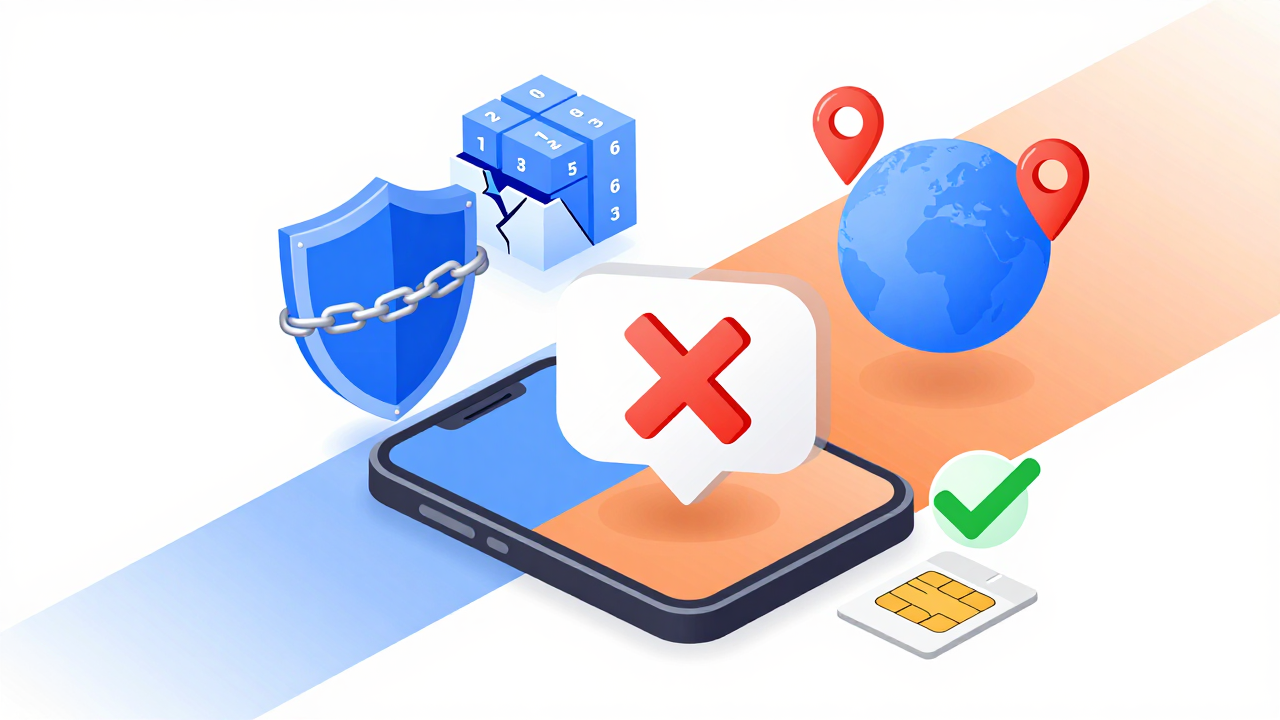
What to check:
- Use a real phone or a cloud phone, and keep developer options turned off.
- Set your device timezone and language to match the target platform.
- Don't switch between multiple SMS verification platform accounts on the same device in quick succession.
5. How to Choose a Reliable SMS Verification Provider (and What to Watch Out For)
The market is crowded in 2026, but quality varies wildly. When evaluating providers, focus on four dimensions: number coverage by country, per-number success rate, API support, and customer support response time. Here's a comparison of three typical providers based on public user feedback and industry tests in 2026:
| Provider | Country Coverage | Success Rate (2026) | API Support | Best For |
|---|---|---|---|---|
| Getfollow | 50+ countries | 72%–80% | Yes | Cross-border social media registration, e-commerce verification |
| Provider B | 30+ countries | 55%–65% | No | Occasional personal use |
| Provider C | 20+ countries | 45%–55% | Enterprise only | Low-risk platform registrations |
A word of caution: SMS verification services come with inherent risks—accounts can be recycled, and codes can be intercepted. In 2026, roughly 15% of cross-border users experienced account bans linked to numbers that had been resold. Use SMS verification only for low-value accounts. For core business accounts, use a physical SIM card or a paid dedicated number.
Here's my practical advice: if you need more than 20 verification codes per week across multiple countries, go with an API-integrated provider like Getfollow. It lets you automate number usage history tracking and avoid reusing flagged numbers. For solo operators, pay-as-you-go is safer than preloading large balances.
6. Emergency Workarounds When SMS Verification Keeps Failing
If verification codes are still not coming through and you're up against a deadline, here are three backup paths:
- Physical SIM cards: Monthly disposable options like Ultra Mobile or Lebara cost about $5–$10 per month and have a near-100% success rate.
- Google Voice or Skype Number: Useful as a backup, but note that some platforms have added these to their risk-control lists.
- Manual review: Contact the platform's support team and submit a ticket. Some platforms will manually send the verification code after verifying your identity.
At its core, the "can't receive SMS verification codes" problem in 2026 is a race between declining trust in virtual numbers and increasingly aggressive platform risk controls. There's no permanent fix. The smartest approach for cross-border businesses is a dual-channel strategy: physical SIM cards as the primary method, with an SMS verification platform as backup.
7. Your Action Checklist: From Diagnosis to Resolution
Follow these steps in order, and you'll resolve over 90% of SMS verification failures:
- Check your provider's current success rate. If it's below 60%, switch providers immediately.
- Change the number's country of origin to match your target platform's IP location.
- Use a physical device or cloud phone. Turn off any emulator features.
- If it still fails, switch to a physical SIM card or a dedicated number.
- Keep a failure log. It'll help you choose a better provider next time.
In 2026, failing to receive SMS verification codes is no longer just a technical hiccup—it's a strategic game of number resource management and risk-control awareness. When choosing a provider, look beyond the price per code. Evaluate how frequently they refresh their number pool and how fast they respond to risk triggers. That's where the real value lies.
Why am I not receiving SMS verification codes?
The most common causes are carrier filtering of virtual number ranges, polluted number pools at the SMS verification provider, platforms blocking non-local numbers, and device fingerprint triggers. Work through these in order: switch numbers, match your IP location, change devices, then switch providers.
Which SMS verification platform has the highest success rate?
Success rates vary significantly by platform and target region in 2026. Industry tests show that providers with real-time number status detection—like Getfollow—achieve success rates between 72% and 80%, while standard shared-number platforms typically sit at 50%–60%. Look for platforms that openly display their success rates.
Can I get a refund if I don't receive the verification code?
Most platforms offer a refund or number replacement for undelivered codes. Look for a "didn't receive SMS" option in your order history—the system usually refunds or assigns a new number within five minutes. If that option isn't available, contact support with a screenshot of the failure.
How do I pick a trustworthy SMS verification provider?
Evaluate four metrics: number coverage by country, per-number success rate, API support, and customer support response time. Avoid platforms that only accept crypto payments and have no responsive support. In 2026, providers offering a "number cooldown period" and real-time success rate displays are the most reliable.
Will my account get banned if I register with an SMS verification number?
There's a real risk. In 2026, about 20% of accounts registered via SMS verification numbers triggered risk controls within 30 days due to number reuse. For core accounts, always use a physical SIM card. Reserve SMS verification numbers for temporary or low-value registrations.