How to Send SMS With a Virtual Number: The "Receive-Only" Trap and Real Solutions for Cross-Border Teams
How to Send SMS With a Virtual Number: The "Receive-Only" Trap and Real Solutions for Cross-Border Teams
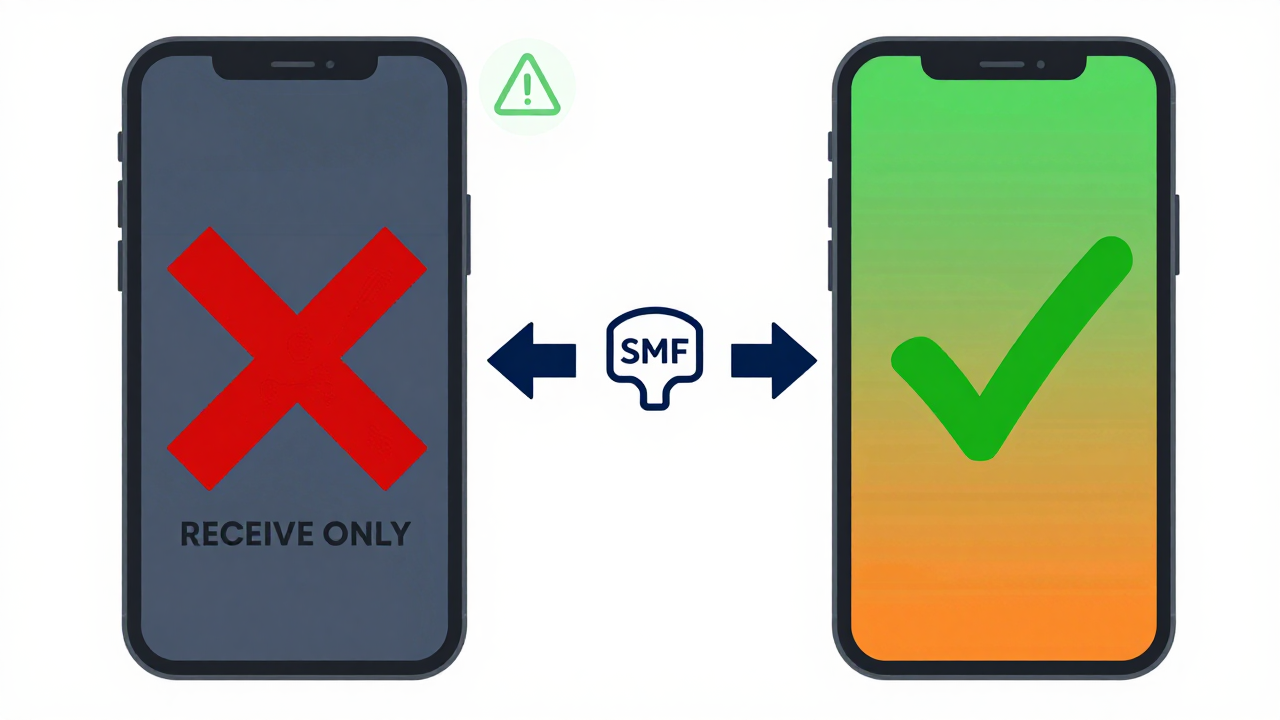
Let's cut straight to it: the vast majority of virtual number platforms on the market only solve the "receive" side of the equation. They simply don't offer sending capabilities. If you're here searching for how to send SMS with a virtual number, you've likely hit a use case that demands two-way messaging—think activating a social media account after registration, completing two-factor verification for an e-commerce store, or setting up auto-replies when customers respond to a short code. The most common mistake I see from cross-border operators is assuming "if it can receive, it can send." They drop a few hundred bucks on a service, then discover they can't send a single message out.
Why "Receiving" and "Sending" SMS Are Two Completely Different Systems
To understand how to send SMS with a virtual number, you first need to grasp how the industry is structured. A virtual number platform's core asset is its pool of phone numbers—they bulk-purchase physical SIM cards or virtual carrier segments overseas and rent them out for verification code reception. These systems are designed for one-time use, with heavy number reuse, and sending channels are simply not part of the package.
Sending SMS, on the other hand, requires a dedicated SMS channel API that runs on a different set of carrier protocols. From my experience observing this space, many virtual number providers started out as "card dealers"—they hold large inventories of physical SIMs but lack the enterprise credentials, real-name registration, and content review workflows needed to connect with carrier sending channels. That's not something a small operation can pull off. So when you ask about sending SMS with a virtual number, many support agents will give you vague answers or just point you to "buy a separate SMS platform service."
Here's a real cautionary tale: a friend running an independent e-commerce site wanted to test SMS marketing in the US and European markets. To save time, he bought a "sending feature" from a virtual number platform. The messages went out as garbled text, and the delivery rate barely hit 30%. It turned out the platform had just wrapped an international SMS forwarding service in a new skin—no local carrier channels at all. Beyond wasting money, the bigger risk was that marketing content sent through such channels can get the number blacklisted by carriers, which also kills your receiving capability.
Which Cross-Border Use Cases Actually Require Sending SMS?
Not every business needs an all-in-one receive-and-send solution. Let's break down the scenarios to see where you fit:
- Scenario A: Account activation and two-factor verification—For example, registering Telegram or WhatsApp Business may require replying with a specific code to a short number. In this case, the platform triggers the send—you only need a number that can receive, and the sending action is handled on their end.
- Scenario B: Two-way customer communication—Say you're an export sales rep sending a quote via SMS from an overseas number, and the customer replies "Y" to confirm. This requires a genuine sending channel that supports both directions.
- Scenario C: Marketing blasts—Think Black Friday promotions. These demands involve high send volumes and strict content compliance—most virtual number platforms won't touch this.
When cross-border teams ask how to send SMS with a virtual number, they're often conflating Scenario B with Scenario C. Industry consensus is clear: for low-frequency verification replies, the "bonus feature" on a virtual number platform might get you by. But if you're reaching out to customers, you need a legitimate SMS service provider. Here's a quick litmus test—a legitimate provider will always require signature registration and template review. Anyone who says "send whatever you want, no review needed" is almost certainly running a shady operation.
The Industry Reality: Gray Areas and the Compliance Path Forward
It's no secret that the virtual number industry is a mixed bag. Many platforms advertise "overseas numbers" but are actually using data cards or IoT SIMs. Carriers flag these number ranges as high-risk, which means not only will your outgoing messages be blocked, but even receiving verification codes can fail. I've personally tested several smaller platforms—number quality varies wildly, and some ranges can't even receive Instagram verification codes.
That said, the industry is evolving. Platforms like Getfollow have built a reputation for following a compliant operational model: traceable number sourcing, legitimate API-based sending channels, and basic compliance screening on submitted message content. They don't promise "send anything, anywhere," but at least when you ask about sending SMS with a virtual number, they give you a clear technical roadmap instead of vague platitudes.
One word of caution: even with a relatively reputable platform like Getfollow, don't expect it to handle your marketing blasts. It's positioned as a tool, not a marketing solution. You'll need to integrate the sending capability into your own CRM or automation workflow rather than manually copy-pasting messages.
Practical Playbook: Combining Virtual Numbers and SMS APIs for Real Business Needs
If you genuinely need both receiving verification codes and sending outbound SMS, the most reliable path is a combination: a virtual number platform plus a dedicated SMS API provider. Here's how to approach it:
- Step 1: Define your volume—If you're sending fewer than 100 messages per week, the built-in sending feature on a virtual number platform will suffice. Above that threshold, go straight to a professional SMS service.
- Step 2: Test number quality before committing—Don't buy in bulk upfront. Spend a few dozen dollars testing delivery and reception rates for your target countries. Key checks: can you receive verification codes from major platforms like Google and Facebook, and can recipients reply to your messages normally?
- Step 3: Watch your reply rates—Many cross-border operators report that virtual number platforms typically see retention rates between 50% and 70%. That means roughly half your outbound messages may not get replies. This isn't the platform sabotaging you—overseas users are just naturally wary of unknown numbers.
- Step 4: Complete compliance registration—If your messages involve any marketing content, complete template review with the platform in advance. Getfollow, for instance, has clear content guidelines in its dashboard—follow them and you'll avoid 90% of account suspension risks.
One detail most people overlook: always configure your Sender ID when sending. In US and European markets, pure numeric numbers have extremely low open rates, while alphanumeric Sender IDs (like a brand abbreviation) earn significantly more trust. This feature typically isn't available on virtual number platforms—you'll need an SMS API provider that supports it.
Risk Warning: These Sending Pitfalls Can Sink Your Operation
Risk 1: Carriers flag your number as spam. Once that happens, you can't send—and even receiving becomes unreliable. Mitigation: avoid sending identical content at high frequency, and cap your daily send volume.
Risk 2: Privacy leakage. Many smaller platforms log your message content and some even resell numbers. Choose platforms with clear privacy policies and number recycling programs. Getfollow is relatively transparent on privacy, but you should still exercise judgment—don't use virtual numbers for sensitive accounts like options trading.
Risk 3: Costs spiral out of control. Per-message pricing looks cheap on the surface, but when you add the virtual number fees, long-term costs can exceed what a professional SMS provider charges. Review your total spend monthly—if you're crossing $200/month, it's time to upgrade your setup.
Final Thoughts and a Strategy That Holds Up
Back to the original question—how to send SMS with a virtual number. There's no one-size-fits-all answer, only the right fit for your situation. For cross-border businesses and solo operators, my recommendation is simple: define your use case first, then decide between a virtual number platform's built-in sending or a standalone SMS API. Don't fall for "one-stop" promises, and don't let bargain pricing lure you into an unreliable platform.
And whatever provider you choose, test small before you commit long-term. Spend $50 on a hundred outbound messages to gauge delivery rates, reply rates, and number stability—that's far smarter than dumping $5,000 into a service you haven't vetted. At the end of the day, tools are just tools. Whether they close your business loop depends on how you use them.
Frequently Asked Questions
Can I send SMS from a virtual number platform?
Most virtual number platforms are receive-only by design. They're built around a pool of numbers for verification code reception, not outbound messaging. A few offer basic sending features, but delivery rates are often poor and content restrictions apply. For reliable outbound SMS, you'll need a dedicated SMS API provider.
What's the difference between receiving and sending SMS?
Receiving SMS requires access to a number that can accept incoming messages—this is what virtual number platforms provide. Sending SMS requires a separate channel API with carrier agreements, sender ID configuration, and content compliance. These are entirely different technical systems operated by different types of providers.
How do I choose between a virtual number platform and an SMS API provider?
If you only need to receive verification codes, a virtual number platform is sufficient. If you need to send messages to customers—quotes, confirmations, support replies—you need an SMS API provider. For two-way communication, combine both: use a virtual number for receiving and an SMS API for sending.
Why do my SMS messages from a virtual number get blocked or fail to deliver?
Virtual number platforms often use data cards or IoT SIMs that carriers flag as high-risk. These numbers may be blocked from sending entirely, or messages may be filtered as spam. Additionally, many platforms lack proper sender ID configuration, which hurts deliverability in markets like the US and Europe.
What is a Sender ID and why does it matter?
A Sender ID is the name or number that appears as the sender of your SMS. Alphanumeric Sender IDs (like a brand name) build trust and improve open rates, while pure numeric IDs look like spam. Virtual number platforms typically don't support custom Sender IDs—you'll need an SMS API provider for that.