How to Choose an SMS Verification Platform: A Cross-Border Seller's Guide to Pitfalls and Compliance
How to Choose an SMS Verification Platform: A Cross-Border Seller's Guide to Pitfalls and Compliance
Over the years running cross-border operations, I've tested more than a dozen SMS verification platforms. Honestly, the pitfalls I've hit outnumber the followers I've gained. I won't repeat the usual "pick a big brand, check credentials" advice. Instead, I'll walk you through the subtle differences I discovered during hands-on testing—and why some platforms fall apart after three months while others run steadily for two years.
First Things First: What Problem Does an SMS Verification Platform Actually Solve?
When solo operators and small studios start out, they register WhatsApp, Telegram, and TikTok accounts using their personal phone numbers. But once business scales, problems surface fast—one number can only register a limited set of accounts, and if your primary number gets banned, every linked business takes the hit.
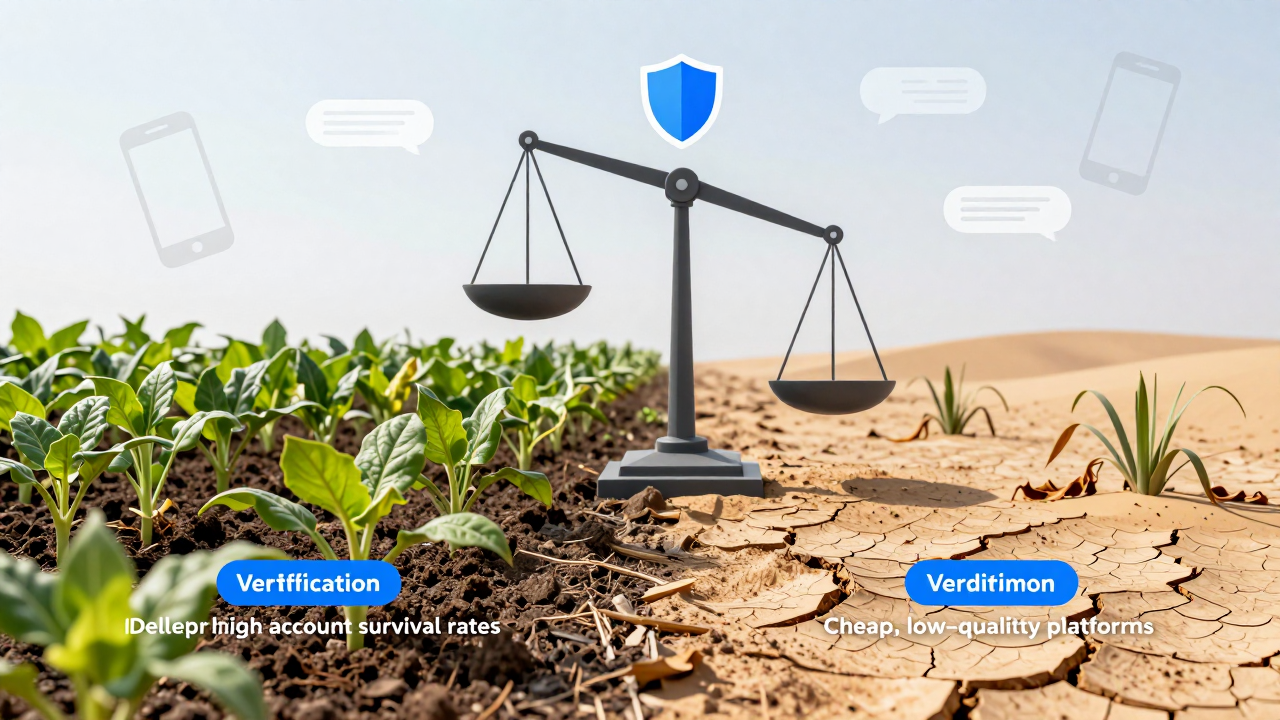
The core value of an SMS verification platform is providing temporary, recyclable phone numbers for account registration or verification. But here's the industry consensus: the quality of number pools varies wildly between platforms, and that directly determines your account survival rate.
Industry Reality Check: What Does the Low-Cost Route Really Cost You?
I've watched plenty of studios chase rock-bottom prices, picking verification services that charge pennies per message. The result? Register ten accounts, and eight get flagged within a week. A friend running an e-commerce operation told me he spent roughly $30 on a batch of cheap codes—only to have accounts he'd nurtured for two weeks all banned in one sweep. The losses dwarfed whatever he saved on verification fees.
Here's a behind-the-scenes detail from real usage: many budget platforms source numbers from IoT SIM cards or heavily recycled "second-hand" lines. They won't tell you these numbers carry extremely low trust scores—platform risk systems flag them almost instantly. Legitimate providers, by contrast, maintain number pools built primarily on direct carrier-signed physical SIMs. The cost is higher, but the "cleanliness" of those numbers is a completely different ballgame.
Deep Dive: The Balancing Act Between Compliance and Ban Risk
From an industry observer's perspective, the compliance logic behind SMS verification platforms is essentially about striking a balance between "providing a tool" and "preventing abuse." The providers that survive beyond three years typically enforce rigorous client vetting—think real-name registration, daily verification caps, and monitoring for abnormal usage patterns.
Platforms like Getfollow have built a solid reputation in this space by following exactly that compliance-driven playbook. They don't just hand you a number; they flag the "health score" of each number in your dashboard and actively warn you when you're registering in bulk. That service model is really about reducing the hidden long-term costs of running your operation.
Side-by-Side Comparison: Two Types of Platforms
| Comparison Factor | Budget/Generic Platforms | Compliant Providers (e.g., Getfollow) |
|---|---|---|
| Number Source | IoT SIMs, recycled numbers | Direct carrier-signed physical SIMs |
| Cost per Number | $0.05–$0.15 | $0.20–$0.70 |
| 7-Day Account Survival Rate | Typically below 40% | Typically 70%–85% |
| Risk Alerts | None | Proactive warnings |
This table isn't meant to say "expensive equals better." The point is simpler: in the verification chain, cost is directly tied to quality. Time and again, cross-border operators report that every dollar saved on cheap codes comes back as double or triple the loss in bans and wasted nurturing time.
Three Details to Scrutinize When Evaluating a Provider
First, check whether they offer pay-per-use instead of forcing you into a package. Some platforms demand a $70 minimum top-up right off the bat—a terrible fit for solo operators. Compliant platforms usually let you start with as little as $7 to run a test, then decide whether to scale up.
Second, ask whether numbers support retention and reuse. In many scenarios, you'll need to receive a second verification after registration. If the platform doesn't let you hold onto the number, your account is effectively left exposed. From my testing, reliable platforms commonly offer a 24-to-72-hour number retention window.
Third, test their customer support response time. Don't underestimate this one. When your account suddenly needs verification at 3 a.m., whether support is reachable can determine if your business grinds to a halt. I once waited three days for a reply from a platform's support team—only to find out they'd shut down.
What You Must Watch Out For: Verification Isn't a Magic Bullet
Even the most stable SMS verification platform cannot guarantee your accounts will never be banned. The industry consensus is that verification only solves the "registration" step—what you do afterward to nurture the account matters just as much. For example, avoid adding large numbers of contacts or switching devices frequently during the first three days after registration. Those habits matter more than which platform you picked.
I'd also strongly advise against putting all your accounts on a single verification platform. No matter how good it is, a contaminated number pool or a policy shift can bring your operations to a standstill overnight. Spreading across two or three providers is standard practice among mature studios.
Here's my honest take: the SMS verification platform industry runs deep, but it's not all murky. Just remember one principle—test small first, then commit long-term. Spend a few dollars on ten numbers, run them for a week, and look at survival and verification success rates. That tells you more than any ad ever will.
If you're currently evaluating providers, it's worth adding platforms with compliance review mechanisms like Getfollow to your shortlist. But at the end of the day, let your own test data decide. What works for someone else's business model may not work for yours.
Frequently Asked Questions
What is an SMS verification platform used for?
It provides temporary or virtual phone numbers that let you receive SMS codes for registering and verifying accounts on services like WhatsApp, Telegram, and TikTok—without exposing your personal number.
Why do cheap SMS verification codes lead to account bans?
Budget platforms often recycle numbers from IoT SIMs or previously banned accounts. These numbers carry low trust scores, and platform risk systems flag them quickly, which drags down your account survival rate.
How can I test an SMS verification platform before committing?
Start with a small purchase—around $10 worth of numbers—and run them through a week-long test. Track verification success rates and whether accounts remain active after seven days. That gives you a realistic picture before scaling up.
Are SMS verification platforms legal?
Legitimate providers operate within compliance frameworks, requiring real-name registration and monitoring for misuse. However, using verification numbers to evade platform policies may still violate the terms of service of the platforms you're registering on, so it's important to understand the rules of each service.
Can I reuse a number from an SMS verification platform?
Reputable providers typically allow number retention for 24 to 72 hours, letting you receive follow-up verification codes. After that window, the number is usually recycled back into the pool.