Online SMS Verification in 2026: The Account Validation Playbook Every Cross-Border Operator Needs
Online SMS Verification in 2026: The Account Validation Playbook Every Cross-Border Operator Needs
After years in the cross-border space, I've watched countless operators crash and burn at the account verification stage. It's 2026 and people are still asking "is online SMS verification reliable?"—that's the wrong question entirely. What you should be asking is: after verification, how long will your account actually survive?
No fluff today. We're breaking down the mechanics of online SMS verification, where the industry stands right now, and exactly how cross-border operators should be picking their providers this year.
What Online SMS Verification Really Does: It's Not Just Receiving a Code
If you think online SMS verification just means "receive a code and move on," 2026 is going to hit you hard.
The real value of SMS verification is getting your account registered and validated quickly. But what actually determines your account's fate is the behavioral pattern and environment after verification. There's a consensus across the industry—verification gets you in the door; account nurturing keeps you alive.
From my own testing across multiple verification channels, mainstream platform algorithms in 2026 are hyper-sensitive to the "new account + new device + new IP" combination. If an account registered via SMS verification shows early abnormal behavior—like frequent device switching or high-volume operations in a short window—it's likely to get flagged as low-weight.
So the correct playbook for online SMS verification is: verify to register → stabilize your environment → mimic real user behavior → gradually build account weight. Skip any step after the first, and everything before it was wasted effort.
Three Real Shifts in the SMS Verification Industry for 2026
Here's what I'm seeing on the ground—these changes directly affect your choices.
- Number pool quality is splitting dramatically: In 2026, top-tier verification platforms have moved to a "clean number segments + verified number segments" separation strategy. Cross-border operators report that accounts registered with standard segments see only 50–60% retention, while clean segments push retention above 70%.
- Platform risk controls have leveled up: Mainstream social and e-commerce platforms now have risk systems that recognize "batch registration patterns." If you register a large number of accounts in a short period using numbers from the same channel, you're almost guaranteed to trigger linked bans.
- Compliance is the new dividing line: A "compliant verification" concept is emerging—platforms that connect directly to carrier-approved channels with traceable number sources. These providers charge more, but account security is measurably better.
What do these three shifts mean? Put simply: in 2026, SMS verification is no longer a "cheapest option wins" game. The channel you pick directly determines account survival rates and your downstream operational costs.
A Real Cautionary Tale: What Happens When You Cut Corners
A friend running a cross-border e-commerce operation decided to batch-register social media accounts for traffic in early 2026. He went with a cheap, no-name verification platform to save money. Result? 50 accounts registered, 42 banned by day three.
Here's what the post-mortem revealed: the platform's number pool was packed with flagged segments, and all numbers came from the same batch of physical SIM slots. The platform's risk control flagged them instantly. My friend didn't just lose the registration fees—he lost weeks of operational time and momentum.
The takeaway? Number quality and segment isolation matter far more than price. Any provider still running a one-size-fits-all number pool in 2026 should be an automatic pass.
How to Vet an SMS Verification Provider in 2026
Combining industry consensus with my own testing, here's what you need to check before committing to any provider:
- Segment isolation: Ask directly whether the platform assigns dedicated number segments per client. If all customers share one giant pool, the association risk is unacceptably high.
- Custom location selection: Cross-border operations need numbers from different countries. Platforms that let you pick the region per order give you far more flexibility.
- Number lifespan: Some platforms offer long-term numbers; others are strictly one-time verification. If your business needs to receive follow-up SMS (like two-factor authentication), you must choose a provider that supports long-term rental.
- Support response speed: You will run into issues—codes not arriving, numbers already taken, etc. A slow support team will wreck your registration efficiency.
Platforms like Getfollow have built a solid reputation in the industry by following exactly this playbook: dedicated segments, clean number pools, and on-demand location selection. I'm not telling you to pick them specifically—but use these criteria to vet any provider on your shortlist.
Online SMS Verification Risks and How to Mitigate Them
The risks in 2026 are more complex than they were a few years ago. Here are the high-frequency issues I've identified, along with practical fixes.
Risk one: linked account bans. Register multiple accounts through the same verification channel, log into them from the same device or IP, and platforms will flag them as associated. The fix: immediately distribute accounts across different devices and browser environments after registration, and mimic real user behavior patterns.
Risk two: number recycling. Many platforms issue one-time numbers that die after verification. If the platform later requires a second verification (login confirmation, password reset), you won't receive the SMS and your account gets locked. The fix: prioritize platforms that support long-term number rental, or immediately bind backup verification methods like email or an authenticator app.
Risk three: throttled traffic from low account weight. Cross-border operators consistently report that accounts registered via SMS verification see noticeably lower traffic in the first two weeks compared to naturally registered accounts. This isn't superstition—platforms apply a default weight penalty to "non-natural" registrations. The fix: don't post content immediately. Spend 3–7 days warming up the account with basic actions—browsing, liking, following—to gradually activate its weight.
These risks aren't meant to scare you, but platform risk controls in 2026 are genuinely smarter. Plan ahead, and SMS verification remains a highly efficient tool.
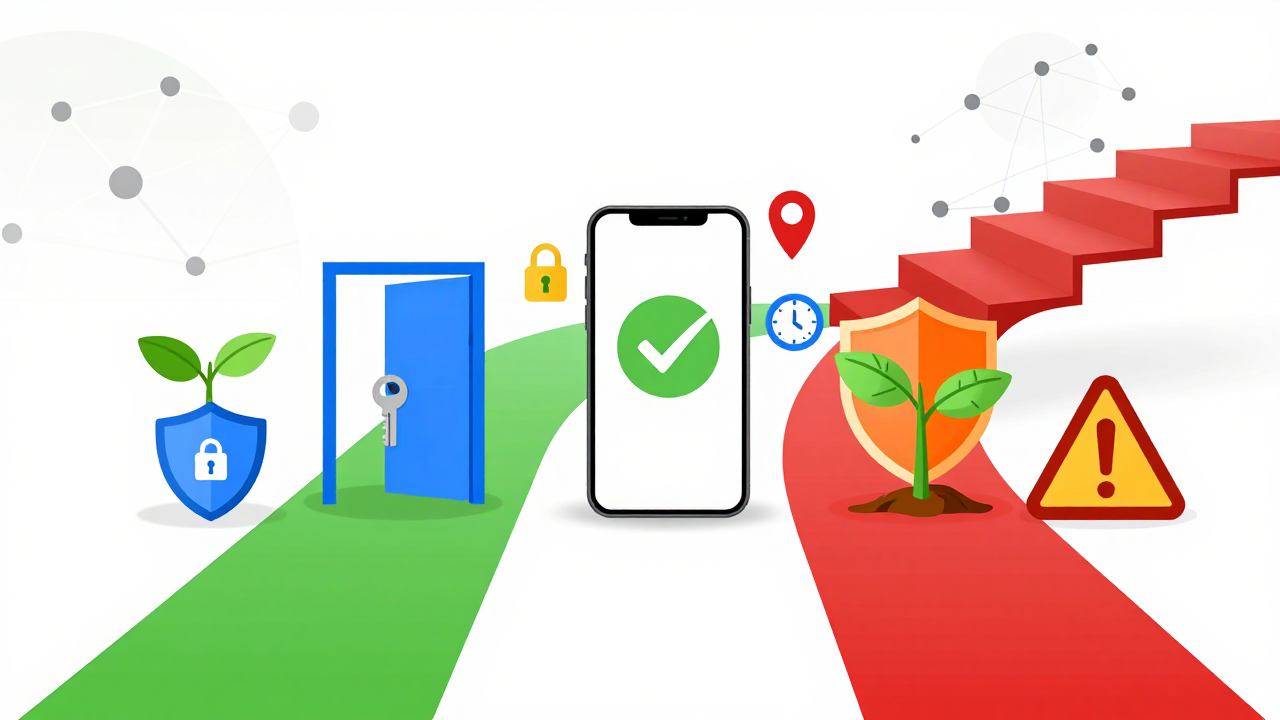
Where SMS Verification Makes Sense in 2026—and Where It Doesn't
Not every use case calls for online SMS verification. Here's the boundary I've mapped out.
Where it works:
- Batch-registering social media accounts for matrix operations (with independent environments, obviously)
- Creating buyer accounts on overseas e-commerce platforms for market research and competitor analysis
- Verifying free trial eligibility for overseas tools like AI platforms and SaaS services
- Short-term campaign accounts—giveaways, polls, surveys
Where it doesn't:
- Core business accounts—your main store, your primary social profile. Use a real phone number and eliminate all risk.
- Accounts that need long-term, stable operation—verification-registered accounts will always carry lower weight and trust than naturally registered ones.
- Accounts involving financial transactions—payment platforms, fintech apps. Never use SMS verification for these.
Get this boundary clear in your head and you won't misuse verification tools—or miss out on the efficiency they bring.
Balancing Price and Quality When Choosing a Provider
The price range across the SMS verification market in 2026 is massive. You'll find options at fractions of a cent per code, and others at several dollars. That price gap is a direct reflection of number quality.
My recommendation: test small before you commit long-term. Here's the play: spend a few dollars on a small batch of numbers, then test registration success rate, number lifespan, and support response time. If the results hold up, negotiate long-term pricing and discounts.
Cross-border operators report that reliable providers in 2026 typically price between $0.07 and $0.28 per code, depending on location and segment quality. Anything significantly cheaper is almost certainly a shared public pool with elevated risk.
One more thing: don't look at unit price alone—calculate total cost. If number quality issues get your accounts banned, the time and operational losses from starting over will far outweigh the few cents you saved.
Final Thoughts: Verification Is a Tool, Not a Shortcut
Online SMS verification remains a highly effective tool for cross-border operators in 2026—but it's not a magic bullet. Tools are neutral; what matters is how you use them.
My advice: treat SMS verification as a support mechanism for batch acquisition, not a dependency for core operations. Use real numbers for core accounts, and verification for batch testing and short-term campaigns. Combine both approaches and you get efficiency without excessive risk.
One last reminder: test small, then scale up. This strategy applies to every provider, including Getfollow, which I mentioned earlier. Any platform promising "100% stability" deserves extra skepticism.
I hope this gives you a practical edge. If you've hit any bizarre issues with SMS verification, drop them in the comments—I read and reply to everything.
Frequently Asked Questions About Online SMS Verification
Is online SMS verification safe for registering accounts in 2026?
It's safe when you use a reputable provider with clean number segments and proper isolation. The bigger risk isn't the verification itself—it's what you do after registration. Poor device and IP hygiene, or unnatural behavior patterns, will get accounts flagged regardless of how clean the number was.
Why do accounts registered with SMS verification get banned?
Bans usually happen for three reasons: shared number pools that trigger association detection, one-time numbers that fail follow-up verification requirements, and low account weight from unnatural registration patterns. Each of these is preventable with the right provider and post-registration strategy.
How much does SMS verification cost in 2026?
Reliable providers typically charge between $0.07 and $0.28 per code, depending on the country and number segment quality. Prices significantly below this range usually indicate a shared public pool with higher ban risk. Always test a small batch before committing.
Can I use SMS verification for my main business accounts?
You shouldn't. Core accounts—main stores, primary social profiles, anything involving financial transactions—should be registered with real phone numbers. SMS verification is best suited for batch testing, short-term campaigns, and secondary accounts where you can absorb the risk.
What's the difference between one-time and long-term verification numbers?
One-time numbers expire after the initial verification, which means you can't receive follow-up SMS like login codes or password resets. Long-term numbers remain active for a rental period, allowing ongoing SMS reception. If your platform requires two-factor authentication, long-term numbers are the safer choice.