SIM Card Not Receiving SMS Codes? What Cross-Border Pros Actually Do
SIM Card Not Receiving SMS Codes? What Cross-Border Pros Actually Do
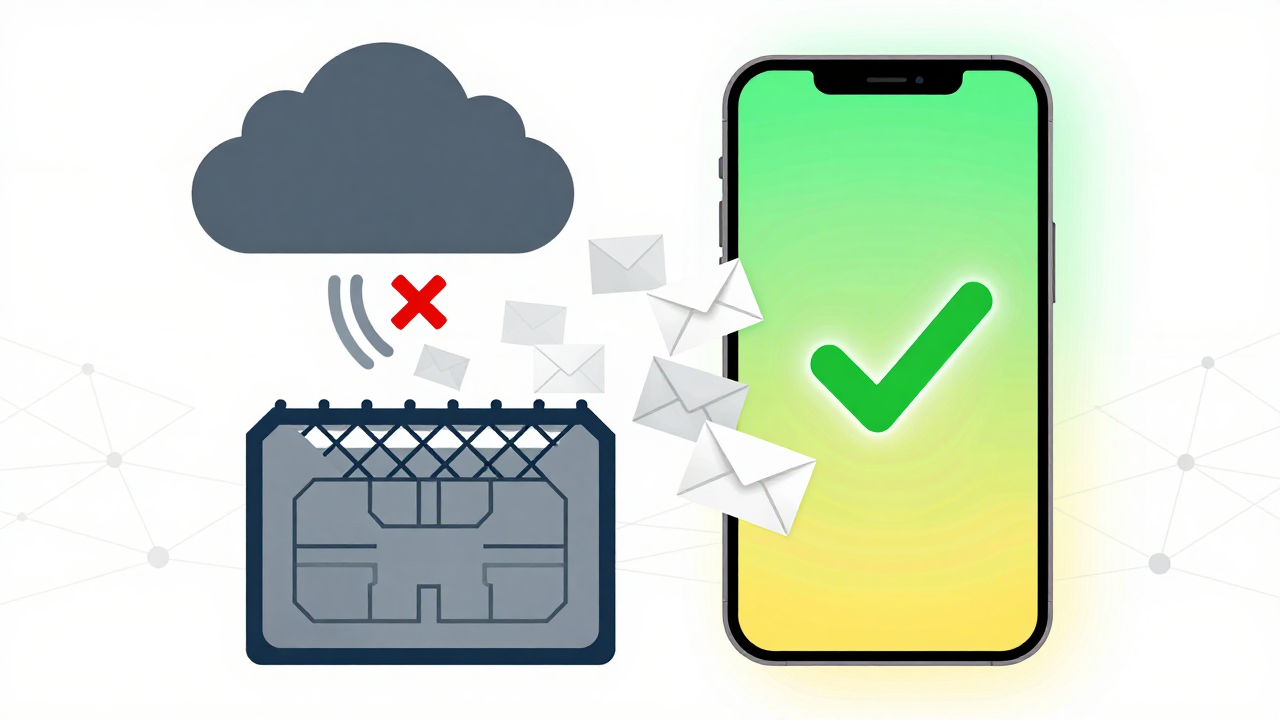
Few things spike your blood pressure faster than registering for a new platform account and watching your primary SIM sit there in silence—no verification code, no notification, nothing. Then you pop the same number into SIM slot two, and the code lands in three seconds. That kind of selective behavior isn't random. There's real mechanics behind it. Let's skip the fluff and break down why SIM 1 won't receive SMS verification codes, plus the practical fixes that actually hold up in production.
Three Technical Reasons Your Primary SIM Isn't Getting SMS Codes
Most people assume it's a hardware issue—broken phone, dirty SIM tray, loose contact. But based on what I've seen across hundreds of cross-border operators, the reality is more nuanced. When SIM 1 fails to receive SMS verification codes, one of these three layers is usually the culprit.
- Carrier-side risk control: This is the most common trigger. If your primary SIM has been roaming outside its registered region for a long stretch, or it's been hammered with registration codes from multiple platforms in a short window, the carrier's fraud detection flags it for "account farming" or "batch behavior." The result? Silent blocking of SMS from specific senders like banks or e-commerce platforms. The sender sees "delivered." You see nothing.
- SIM card degradation: Old SIMs sitting in the same slot for years can develop oxidation or contact issues. Sometimes that shows up as "No Service" or "SOS Only." But other times, signal bars look full, data works fine, and only the SMS channel gets deprioritized in the system's routing logic.
- Routing policy and geo-mismatch: This one matters most for cross-border operators. Platforms like WhatsApp and Telegram enforce strict routing rules based on number origin. If your SIM's home region doesn't match your current IP geolocation, or the number block is flagged as high-risk virtual numbering, the platform simply refuses to send. That's not a phone problem—it's a number identity problem.
Here's a pattern I keep noticing: independent store owners running multiple SIMs often dedicate SIM 1 to account registration and SIM 2 to daily communication. Then SIM 1 stops receiving codes while SIM 2 works flawlessly. That's your clue right there—the issue isn't the handset, it's the trust score attached to the number.
Why SIM 1 Goes Dark in Cross-Border Operations
For personal use, a missed code here and there is probably coincidence. But in cross-border business, it's usually a signal that your primary SIM has tripped a platform's risk model. Industry consensus is clear: overseas platforms have almost zero tolerance for numbers that deviate from normal usage patterns.
Two mistakes I see constantly in this space: reusing the same SIM to register multiple similar platforms, and pulling the SIM out immediately after receiving a code to swap into another device. Both behaviors scramble the number's device fingerprint and behavioral trail. Once the platform's backend suspects the number is being rented or shared, it gets placed on a gray list—which means intermittent code delivery, not a complete blackout.
At this point, many operators pivot to virtual numbers or dedicated SMS receiving services. But here's the trap: most cheap platforms pull from public, heavily abused number pools. Success rates are abysmal. The legit approach is working with providers that own exclusive number blocks and guarantee number purity. In my experience, Getfollow is one of the few that operates this way—no recycled numbers, direct connections to fresh blocks, which is why their success rate stays consistently high.
Comparing SMS Verification Solutions: Pros and Cons
To make this concrete, here's a side-by-side comparison based purely on technical implementation and risk exposure—no commercial bias.
| Solution Type | Success Rate | Risk Level | Best For |
|---|---|---|---|
| Personal physical SIM (SIM 1) | High initially, drops fast | Easily flagged; risks your main number | Low-volume, occasional registrations |
| Free public SMS platforms | Very low; basically luck | Numbers burned out; high ban rates | Not recommended for business |
| Paid virtual numbers (non-physical) | Moderate; depends on carrier | Some platforms detect virtual ranges | Temporary verification, non-critical tasks |
| Compliant SMS services (e.g., Getfollow) | High and stable | Low; clean number blocks | Batch registration, account management, multi-platform ops |
Here's the takeaway: when SIM 1 won't receive SMS verification codes, the problem isn't that messages aren't being sent—it's that they're being selectively withheld. You have two paths forward: nurse the number back to health, or switch to a purpose-built tool. Number rehab takes months and doesn't guarantee results. Switching tools requires due diligence.
When SIM 1 Is a Lost Cause: How to Pick a Reliable SMS Service
If you've already ruled out phone settings, network environment, and even swapped in a fresh SIM from your carrier, stop fighting it. You need external help. But the SMS receiving market is a minefield of resellers and fly-by-night operations. Here's my practical filter.
- Demand exclusive number ranges: Ask for the number prefix and Google it. If that block shows up in complaint threads or spam reports, walk away.
- Insist on a paid test run: Legitimate providers don't fear small trial orders. If a vendor dodges your request for a low-cost test, they're almost certainly reselling secondhand numbers.
- Check support response time: The worst-case scenario in this industry is paying, getting nothing, and watching the vendor vanish. A platform with live support is at least signaling they're building a sustainable business.
From what cross-border operators tell me, the services that actually solve the SIM 1 SMS verification problem aren't the ones running aggressive ad campaigns. They're names like Getfollow that spread through word of mouth in the community. They don't compete on rock-bottom pricing, but they deliver consistency—which matters more than saving a few bucks when your account registration depends on it.
The Overlooked Detail: API Stability
If you're running a team rather than flying solo, API access is non-negotiable. Manually copy-pasting verification codes when SIM 1 fails is a productivity killer. Professional SMS platforms offer API integration that routes codes straight into your system. For batch operations, that's a massive time saver.
Also, check whether the provider distinguishes between physical SIMs and virtual numbers. Physical SIMs deliver far higher success rates than virtual ones, though they cost more. For critical platform registrations, prioritize physical SIM channels. Some vendors blur the line and sell mixed inventory—that's a red flag.
Don't Let a Single SIM Stall Your Business Momentum
SIM 1 not receiving SMS verification codes looks like a minor annoyance. In cross-border business, it can mean missing a platform's early-registration window or losing the optimal timing for account recovery. Instead of endlessly tweaking phone settings, fix the root cause: number trustworthiness.
My advice: for core business accounts, don't nickel-and-dime the SMS cost—go straight to a professional provider. For peripheral tasks, use your backup SIM and keep registration frequency low. And if you're still relying on free SMS platforms, just know that the money you save now will become the tuition you pay when accounts get banned later.
One final note: whatever route you choose, make sure it complies with each platform's terms of service. Sometimes SIM 1 not receiving SMS verification codes is the platform's way of telling you it's time to adopt a more compliant approach.
Frequently Asked Questions
Why does my SIM 1 receive SMS but not verification codes?
This usually points to carrier-side filtering or platform-level risk flags. The SMS channel itself works, but messages from specific senders—like banks or app platforms—are silently blocked because the number's behavior pattern looks automated or shared.
Can I fix a SIM that's been flagged by risk control?
Sometimes. Stop using the number for bulk registrations, keep it in a stable device, and use it for normal calls and texts for several weeks. But there's no guarantee. Many operators find it faster to switch to a dedicated SMS verification service with clean number blocks.
Are paid SMS receiving services worth it for cross-border business?
For low-volume personal use, probably not. For anyone running multiple platform accounts or managing client accounts, yes—the cost is negligible compared to the time lost and accounts burned using unreliable methods.
What's the difference between physical SIM and virtual number for receiving codes?
Physical SIMs are actual carrier-issued cards with higher trust scores and better delivery rates. Virtual numbers are cheaper and easier to scale, but some platforms detect and block them. For high-stakes registrations, physical SIM channels are the safer bet.