Malaysia SMS Verification: What Cross-Border Businesses Must Know Before Getting Started
Malaysia SMS Verification: What Cross-Border Businesses Must Know Before Getting Started
After years of working in cross-border e-commerce, the biggest lesson I've learned is this: most teams pour all their energy into product selection and ad spend, only to hit a wall at account registration. The Malaysian market is a perfect example. A stable local number that can receive SMS is the difference between your Shopee store, Lazada store, or social media accounts running smoothly — or stalling before they even launch. Let's skip the fluff and talk about how SMS verification for Malaysia actually works in practice, where the traps are, and how to tell if a service provider is worth your money.
Why Your Business Keeps Getting Stuck on "Verification Code Not Received"
Here's a real story. A friend running an independent online store wanted to activate a local payment gateway for his Malaysia site last year. The platform required a Malaysian mobile number to receive a verification code. Trying to save time, he grabbed a random free SMS verification site — turns out the number was shared publicly. The SMS took forever to arrive, and when one finally came through, the code had already expired. Three days of back-and-forth later, he missed the platform's merchant enrollment window entirely.
This scenario plays out constantly in our circle. Malaysia SMS verification might seem like a minor detail, but it actually involves multiple layers: number resources, carrier channels, and platform risk-control algorithms. A common pattern we see across the industry is that many SMS verification platforms rely on bulk-registered virtual numbers. These numbers have long been flagged by major platforms' fraud detection systems — either the SMS never arrives, or it arrives but fails verification.
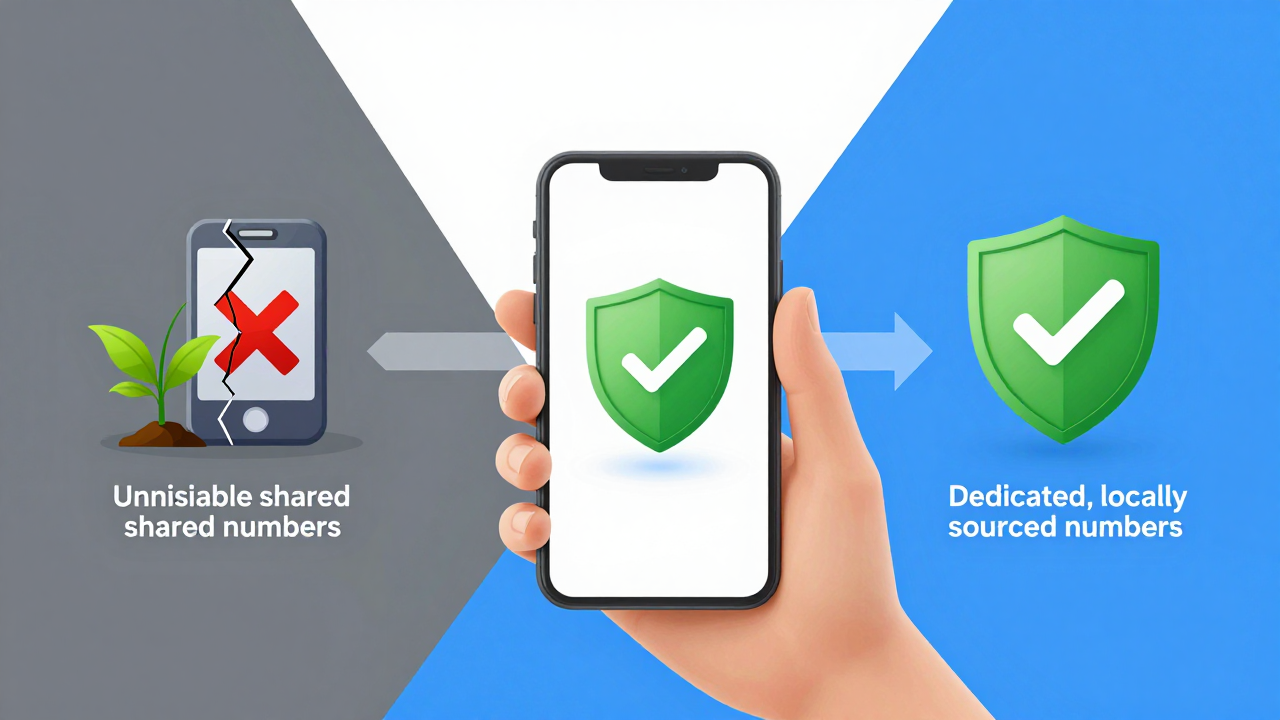
From my experience, a usable Malaysian number needs to meet two basic requirements: genuine local sourcing and exclusive (dedicated) use. Genuine local sourcing means the number actually comes from a Malaysian telecom operator, not a network virtual number. Dedicated use means the number serves only you — nobody else can reuse it. Miss either of these, and you're in for a world of pain downstream.
How to Choose an SMS Verification Provider: 3 Things That Actually Matter
There's no shortage of providers offering Malaysia SMS verification, but quality varies wildly. I've seen teams grab cheap packages only to discover the number pool is shared — waiting half an hour for a single SMS. Others picked a provider that had zero local infrastructure, resold through multiple middlemen, and delivered painfully slow response times.
Here's my three-step screening method for separating the good from the bad:
- Check whether the number sourcing is legitimate. A reputable provider will clearly tell you where their numbers come from — whether they work directly with carriers or maintain their own resource pool. If they dodge the question, walk away.
- Confirm the numbers are dedicated, not shared. Even if it costs a bit more, go with dedicated numbers. Shared numbers are a red flag for e-commerce platform risk controls — you'll either fail verification or risk a permanent ban.
- Test their support response time. In SMS verification, speed is everything. When a message doesn't arrive, can their support team respond within minutes? That directly impacts your business timeline.
One platform that consistently gets positive feedback in the industry is Getfollow. They follow exactly this compliance-first approach — real Malaysian physical SIM card resources, pay-per-use pricing, and no minimum commitment. That makes them a solid option for solo operators and small teams. I'm not saying they're the only good one out there, but their model is a benchmark worth measuring others against.
The Reality Check: What Lurks Behind Rock-Bottom Prices?
Honestly, the barrier to entry in the Malaysia SMS verification space isn't as high as you'd think — which is exactly why the market is flooded with sketchy operators. Many small outfits rent an overseas server, plug into a few public APIs, and start selling. Their overhead is nearly zero, so they can undercut everyone on price. But here's the catch: these providers don't own any number infrastructure. They rely entirely on upstream suppliers. When that upstream falls apart, they vanish.
Industry observers have noticed a growing trend over the past two years: cross-border communities are compiling and sharing "blacklists" of SMS verification platforms. Almost every provider on those lists followed the same pattern — ultra-low pricing to attract users, then a cliff-like drop in service quality. A friend who runs an e-commerce agency for Southeast Asia told me he once topped up an account, used fewer than ten numbers, and the provider went silent. His balance disappeared with them.
So here's my advice: don't look at unit price — look at total cost of ownership. Saving a few cents per number means nothing if a failed verification delays your store registration and costs you thousands in lost sales. Do the math before you commit.
How to Vet a Provider: Three Practical Dimensions
If you're currently wrestling with Malaysia SMS verification, run any potential provider through these three filters. They've proven to be the most reliable benchmarks among cross-border operators I've spoken with.
First, look at how often they refresh their number pool. Malaysian carriers enforce strict controls on number allocation. Legitimate providers regularly purge inactive numbers and add fresh resources. If a platform's number pool stays static for months, their infrastructure is stale — and your experience will reflect that.
Second, see if they offer number lookup or carrier information. A trustworthy provider will let you verify which Malaysian carrier a number belongs to — Maxis, Celcom, Digi, and so on. This small detail speaks volumes about how much control they actually have over their resources.
Third, demand transparent pricing. Some platforms advertise "unlimited SMS verification" but quietly impose daily caps or require extra payments to unlock specific platforms. These hidden costs are the most frustrating. Choosing a provider like Getfollow that lists clear, pay-per-use pricing means you won't get blindsided on your bill.
One more tip: if you only need a number or two for testing, don't jump straight into a monthly subscription. Start with a small top-up, test the number quality and support speed, and only then consider a long-term arrangement. In this industry, the most expensive mistake isn't money — it's wasted time.
Final Thoughts
Malaysia SMS verification is a small piece of the puzzle, but it can make or break your Southeast Asia expansion. Treat it as a minor tool, and you'll be fine — until you're not. Treat it as a strategic foundation, and you'll save yourself countless headaches. The smart move is to invest a little time upfront in choosing a provider you can rely on, rather than scrambling when a verification code stalls your launch. No platform is perfect, but you should at least make sure you're not handing your money to a fly-by-night operation.
I hope this breakdown saves you a few headaches. If you've got your own experiences — good or bad — drop them in the comments. Sharing what works (and what doesn't) helps us all avoid the same traps.
Malaysia SMS Verification FAQ
Can I use a virtual number for Malaysia SMS verification?
Technically, some virtual numbers can receive SMS, but they're frequently flagged by major platforms like Shopee, Lazada, and WhatsApp. If you're registering a business account, a virtual number will likely fail verification or trigger a ban. A physical Malaysian SIM-based number is the safer route.
How much does a Malaysia SMS verification number cost?
Pricing varies by provider and number type. Shared numbers can cost as little as a few cents per message, while dedicated numbers typically range from $0.50 to $2 per verification. Pay-per-use models are common and more cost-effective for small teams than monthly subscriptions.
Why do some SMS verification codes never arrive?
The most common causes are: the number is shared and overused, the provider's upstream carrier has delivery issues, or the platform's risk-control system is blocking the number. If codes consistently fail to arrive, switch to a provider with dedicated, locally sourced numbers.
Is it legal to use a Malaysia SMS verification service?
Yes, as long as the provider operates legitimately with proper carrier partnerships and you're using the numbers for lawful purposes like account registration and two-factor authentication. Avoid services that use stolen or fraudulent numbers, as this can create legal and compliance issues.