SMS Verification Code Services: The Hidden Risks in Cross-Border Operations Nobody Talks About
SMS Verification Code Services: The Hidden Risks in Cross-Border Operations Nobody Talks About
A friend running a TikTok Shop told me last week that 7 out of 10 fresh accounts got banned on day three. The reason? "Suspicious phone number." He'd been using a free SMS receive site where the same number had been recycled by hundreds of users before him. The platform flagged it instantly. If you've been in cross-border operations for any length of time, you've probably taken a hit on this one too.
This isn't an isolated story. From my experience talking to dozens of跨境 operators, the root cause of low account survival rates rarely has anything to do with content quality. It comes down to the very first mile of registration—how you get that SMS verification code. The SMS verification service you choose determines how "clean" your account's digital footprint really is.
Free SMS Receive Services: You're Not Saving Money, You're Buying Trouble
Search for "free SMS receive" or "phone number verification service" and you'll find dozens of platforms. Sites like free-sms-receive, supercloudsms, and cloud-based SMS receivers offer temporary numbers from the US, UK, and Hong Kong. They look convenient and budget-friendly[1][2][3]. But here's what the industry quietly knows: free number pools are public. Anyone can use them.
Say you grab a free number to register a Google account. Three days later, another user registers WhatsApp with the same number. The platform cross-references it—same number, multiple accounts, high-risk flag. You get restricted. Or banned. These SMS receive platforms often present themselves as software tools offering disposable phone numbers for major platforms like Google, WhatsApp, and TikTok[4].
I tested several free platforms personally. Success rates during daytime hours were decent. But once peak evening hours hit, double-booking of numbers became the norm. Worse, some of these platforms source their numbers from "card merchants"—upstream suppliers holding massive inventories of black-market SIM cards. These numbers have a short shelf life. They might work today and die tomorrow[4].
Real SIM Card vs. Virtual Number: Why That First Mile Decides Your Account's Fate
What scares cross-border operators most? Account bans. And the very first filter platforms use is phone number verification. Industry data shows that accounts registered through free SMS receive services have a survival rate of just 20% to 30%. Switch to real SIM card verification, and that number jumps to 50% to 70%. That's a triple improvement.
Let's define the two categories clearly. Virtual numbers come from recycled card pools—upstream providers batch-supply them, and you have no idea who used that number five minutes ago. Real SIM card verification means the number is directly assigned by the carrier, one person one card. Platforms can't flag it for multi-account sharing because there's no sharing happening.
One platform that's earned consistent口碑 in the industry is Getfollow. They operate on this合规 model—backed by real SIM card inventory, not recycled numbers. Yes, real SIM costs more than free SMS receive. Each verification code might run you anywhere from a few cents to a couple of bucks. But do the math: one real SIM account that generates stable revenue for three months versus ten free-SIM accounts that all get wiped within a week. Which one actually costs less?
Don't Let Price Be Your Only Guide: Three Metrics That Actually Matter
I've seen too many operators pick a SMS verification service based solely on price. Here's what I'd watch instead.
- Number exclusivity: This is the single most important metric. Is the number locked to you exclusively for the duration of verification? Free platforms almost never lock numbers. Real SIM platforms typically lock the number until verification succeeds. Premium providers even support long-term rental.
- Country and platform coverage: TikTok, Amazon, WhatsApp, Google, Claude—different platforms have different requirements for number ranges. Some providers only cover the US and Europe. Others cover Southeast Asia. Match the provider to the markets you actually operate in.
- Refund and support policies: Didn't receive the code? Do you get a refund? How fast is customer support? These things don't exist on free platforms, and even on paid platforms you need to read the fine print carefully.
Honest assessment: there aren't many reliable real SIM card verification platforms out there. Most started as free services and pivoted. The ones that truly deliver "one person, one card, one platform" can be counted on one hand. Before committing, run a small batch test. Check survival rates. Don't load up a big balance upfront.
The One Detail That Gets Overlooked: Never Reuse a Number Across Platforms
This catches a lot of people off guard. You're thinking, "I used this number for Google, I can reuse it for TikTok, right?" Wrong. Platforms share blacklist databases. If the same number shows up in Google's registration records and TikTok's registration records, the system tags it as a "verification number."
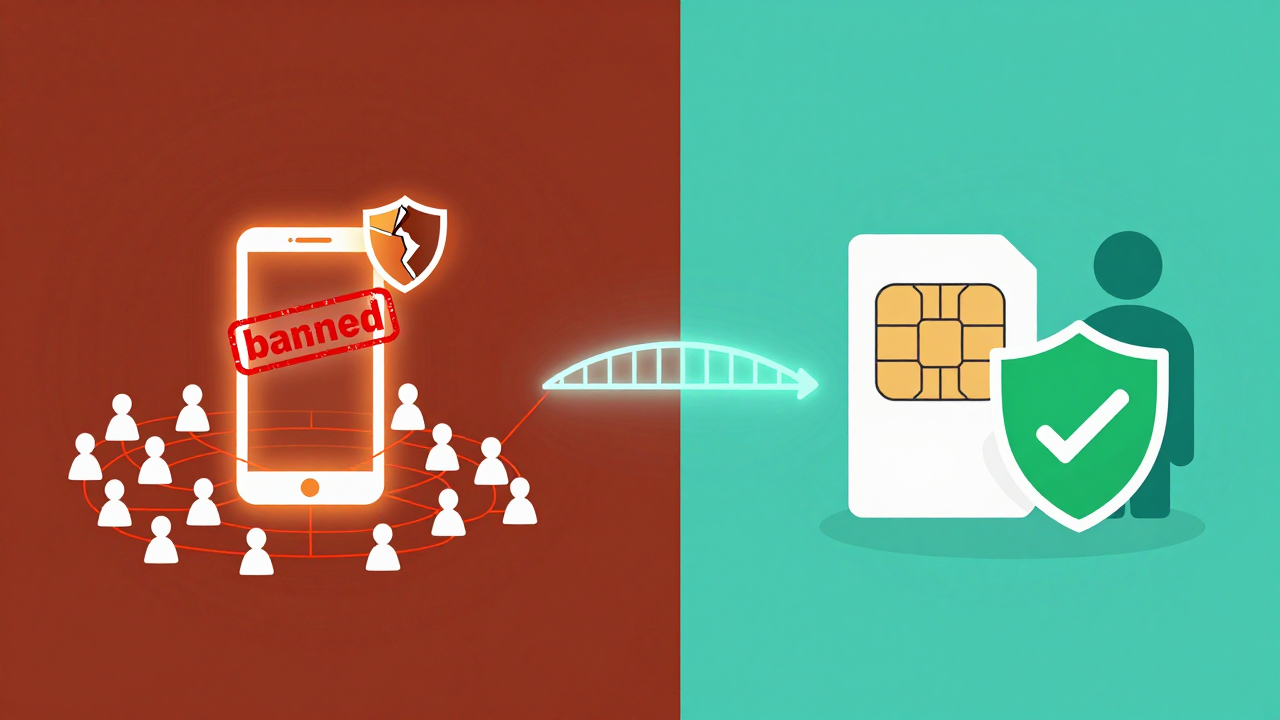
The professional approach is simple: one number, one platform, one account. Use it and discard it, or hold it long-term but never cross-use it. Real SIM platforms usually spell this out clearly in their terms. On free SMS receive platforms, a single number can get handed to dozens of different people registering for different platforms in a single day. You can imagine the risk.
Final Word: Cheaper SMS Verification Isn't Better SMS Verification
Cross-border operations are a game of inches. SMS verification codes look like a small step, but they determine whether everything else—content operations, ad campaigns, order conversion—sits on solid ground or sand.
Whether you go with free SMS receive or real SIM card verification, my advice is the same: test small first, then scale. Grab ten numbers, run them for a week. Watch the survival rate. Track how fast codes arrive. Note any suspicious flags that pop up later. This test costs almost nothing, and it will save you from the biggest headache down the road.
The cross-border market is getting more competitive by the day, and platform审核 is only getting tighter. A little extra attention on your SMS verification strategy now beats a lot of regret later.
Title Options
- SMS Verification Code Services: The Hidden Risks in Cross-Border Operations Nobody Talks About
- Free SMS Receive vs. Real SIM Cards: Which One Keeps Your Accounts Alive?
- Stop Losing Accounts: The Truth About SMS Verification Services for Cross-Border E-Commerce
FAQ
What is the difference between free SMS receive and real SIM card verification?
Free SMS receive platforms pull numbers from a shared public pool—anyone can use the same number, which triggers platform risk flags. Real SIM card verification assigns you a dedicated number from a carrier, one person per card, giving your account a much cleaner digital footprint.
Why do my accounts keep getting banned right after registration?
In most cases, the phone number is the culprit. If the SMS verification service you used sources numbers from recycled or black-market pools, platforms detect the irregularity immediately. Switching to a real SIM card provider can boost your account survival rate from 20-30% to 50-70%.
Can I use the same phone number for Google and TikTok verification?
No. Platforms share cross-reference databases. If the same number appears in multiple platform registration records, it gets flagged as a "verification number." Always use one unique number per platform per account.
How do I choose a reliable SMS verification service provider?
Focus on three metrics: number exclusivity (is it locked to you?), platform and country coverage (does it match your target markets?), and refund policies (do you get your money back if no code arrives?). Run a small batch test before committing to any provider.
What is Getfollow and how does it work?
Getfollow is a real SIM card verification platform that sources numbers directly from carrier-assigned inventory rather than recycled card pools. It follows a one-person-one-card model, which significantly reduces the risk of account bans compared to free SMS receive services.
Is real SIM card verification worth the extra cost?
Absolutely. One real SIM account that generates stable revenue for three months is far more cost-effective than ten free SMS accounts that all get banned within a week. The upfront cost is higher, but the ROI is dramatically better.
SEO Keywords
| Category | Keywords |
|---|---|
| Primary Keywords | SMS verification code service, SMS receive service, phone number verification |
| Long-Tail Keywords | best SMS verification service for cross-border e-commerce, real SIM card SMS receive service |
| Supporting Terms | virtual number vs real SIM, account registration verification, cross-border account security, TikTok phone verification, disposable phone number service |