Can't Find Where to Buy an ID for Overseas Apps? 2026 Reliable Channels Are All Here
Can't Find Where to Buy an ID for Overseas Apps? 2026 Reliable Channels Are All Here
A lot of people, when they first want to buy an overseas Apple ID, it's because they want to download some overseas app, or play a foreign server game. But they search around and find sellers everywhere — they don't know which one is reliable, they don't know where to buy.
I've seen so many people get scammed on their first purchase. Some buy shared accounts that die in two days. Some pay and get ghosted immediately. Some buy black-market accounts and then the account gets banned.
In this article, I'm breaking it all down — where exactly do you buy overseas Apple IDs, what are the pros and cons of each channel, which channels are reliable, and which ones to avoid. After reading this, you'll know exactly where to buy.
Why Is It So Hard to Find Reliable Places to Buy?
A lot of people ask: It's just an Apple ID — why is it so hard to find a reliable place to buy one?
Honestly, this industry is pretty unique. First of all, Apple officially doesn't allow account trading, so the industry itself is kind of in a gray area. Legitimate big companies generally don't do this kind of business.
Second, the barrier to entry is super low. Anyone can get some accounts and start selling. So the sellers out there are a mixed bag — some are reliable, some are scammers, some sell black-market accounts. Beginners can't tell the difference at all.
And third, information in this industry is really opaque. You can't find authoritative recommendations, there's no third-party rating system. It's all word of mouth. For beginners, finding a reliable channel is all about luck.
So that's the situation: People who want to buy accounts can't find reliable channels, and reliable sellers can't find customers. It's all scammers and pitfalls in between.
People always ask: What about official channels? Sorry — there are no official channels. Apple officially doesn't allow account trading, so there's no official way to buy them. Everyone selling accounts is a third party.
Can't I just register one myself? Of course you can — but it's not as easy as you think. In 2026, Apple's fraud detection is pretty strict. You need a local phone number, a real address, a clean network environment. Miss any of those and you might fail to register. For a lot of people, just buying one is easier.
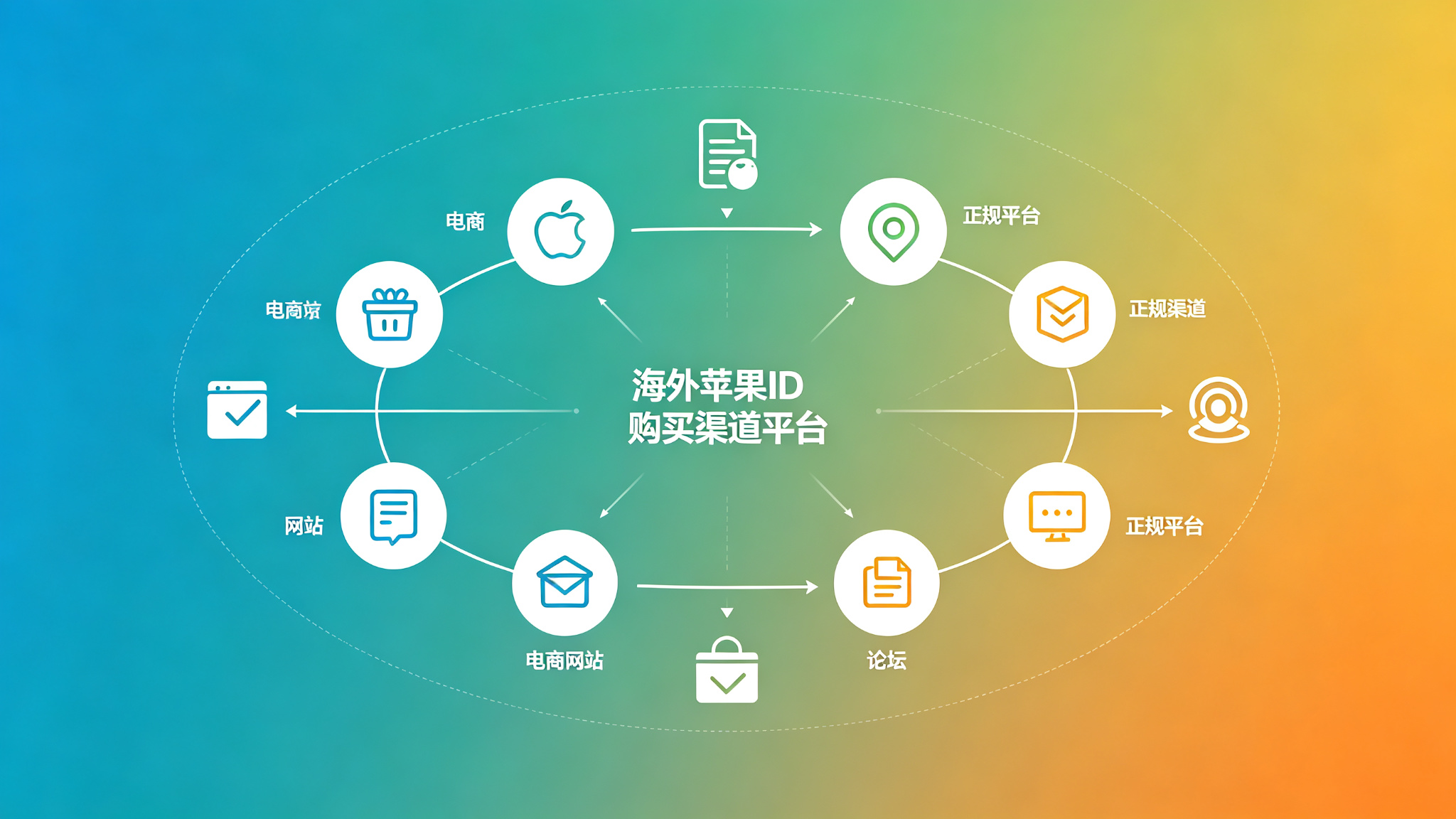
What Kinds of Buying Channels Are Out There?
Buying channels on the market roughly fall into these categories:
Category 1: E-commerce platform stores
Like Taobao, Pinduoduo, Xianyu, etc. This is the channel most people think of first, and the easiest to find.
Pros: Platform protection, relatively safer, lots of options, transparent pricing.
Cons: Quality varies wildly — some good, some bad. Lots of fake reviews, hard for beginners to tell. And platforms are pretty strict about this kind of product, stores get banned all the time. They change their name and you can't find them anymore.
Best for: Personal users, budget-conscious, willing to spend time figuring out which are good.
Category 2: Independent websites / platforms
Websites that specialize in selling overseas accounts. They have their own domain, their own payment system, their own customer service.
Pros: Relatively professional, more complete service, account quality is generally higher.
Cons: Hit or miss. Some are reliable, some are phishing sites. Beginners can't tell which is real and which is fake. And there's no platform protection — if something goes wrong, it's hard to get your money back.
Best for: People who care about account quality, people running projects, people willing to pay a bit more for peace of mind.
Category 3: Individual sellers on forums / communities / groups
Like individual sellers on various forums, Tieba, QQ groups, WeChat groups.
Pros: Prices might be cheaper. Some are small studios with decent reputations.
Cons: Highest risk, most scammers. You have no idea who the other person is. They take your money and block you — you can't even find them. And there's no guarantee at all, it's all based on the other person being honest.
Best for: Experienced users who know how to tell good from bad, people who have a friend's recommendation. Absolutely not recommended for beginners.
Category 4: Legitimate cross-border service platforms
These platforms generally offer more services — not just overseas Apple IDs, but other cross-border services too, like overseas phone numbers, overseas email, cloud services, etc. Accounts are just one of their services.
Pros: The most reliable, the most stable, and the best after-sales support. High account quality, generally legitimately registered exclusive accounts.
Cons: Relatively more expensive.
Best for: Business users, people running projects, people who need high stability.
Getfollow is one example of this kind of platform — transparent account sourcing, full access to change all security settings, clear warranty terms and support policies. Yeah, the price is a bit higher than small sellers — but it's stable and secure, and you can use it with peace of mind.
Channel Comparison: How to Choose?
After all these channels — which one should you actually pick?
Depends on what you need.
If you're just a casual personal user, downloading a few apps, playing some games, on a budget — then you can find a store on Taobao that looks decent, buy one first to test the waters. But always ask first: Is it an exclusive account? Can I change the password? How long is the warranty? Don't just look at the price.
If you're running projects or a business, and you need high account stability — then I recommend going straight for a legitimate cross-border service platform. Don't save a few bucks on the account. When the account dies and you lose progress — that costs way more than the account ever did.
If you have a friend's recommendation and you know an individual seller is reliable — then you can go with an individual seller, the price might be cheaper. But if you don't have a recommendation — never just go with some random individual seller. Way too easy to get scammed.
As for independent websites — if you can confirm it's legitimate, then sure. But not recommended for beginners, because you can't tell the difference, and it's easy to end up on a phishing site.
From my observation, in 2026, prices in this industry are pretty transparent. Too cheap — definitely something wrong. Too expensive — not necessarily better. Mid-to-high range prices are relatively more reliable.
These Channels — Don't Even Touch Them
Some channels — you can tell right away they're sketchy. Don't even touch them:
First type: Super low prices. Way lower than market price — there's definitely something wrong. Either shared accounts, or black-market accounts, or it's just a straight-up scam. In this industry especially, you get what you pay for.
Second type: Only supports private transfers. Asking you to add them on WeChat or QQ, transfer money privately — basically scammers. Legitimate sellers won't ask you to transfer money privately.
Third type: Makes outrageous claims. "Lifetime warranty," "100% never gets banned," "lowest prices on the internet" — the more exaggerated it sounds, the more likely it's a scam. Legitimate sellers don't brag like that.
Fourth type: People who approach you first. People who add you in groups out of nowhere saying they sell accounts — probably scammers. Truly reliable sellers are too busy with business to go around pitching to people.
Fifth type: Super rough-looking website. Messy pages, lots of typos, broken links — these are basically phishing sites that scammers threw together quickly.
Remember — if something feels off, don't buy it. Better to pay a bit more for a reliable one than be cheap and get scammed.
The Right Way to Buy Accounts
No matter which channel you buy from, always follow these steps. They'll help you avoid most scams:
Step one: Ask questions first. Ask everything before you buy: What type of account is it? Can I change the password? Can I change security questions? Can I change the rescue email? How long is the warranty? What happens if there's a problem? Ask everything, save the chat logs.
Step two: Start with one to test. First time buying? Don't buy in bulk. Buy just one — the cheapest option — to test the waters. Use it for a while, and if it's fine, then consider buying more or working with them long-term.
Step three: Lock it down after you get it. Change the password, security questions, rescue email, enable two-factor authentication — all of it, set to your own info. Don't think it's a hassle. Security first.
Step four: Only sign into the App Store. Remember — only sign into the App Store. Don't sign into iCloud. If something goes wrong with the account, it won't affect the rest of the data on your device.
Step five: Use it normally — don't be reckless. Don't go on a downloading spree. Don't do anything that violates the terms of service. Normal use is usually fine.
A lot of people have problems with their accounts not because the account itself is bad — it's because they use it recklessly. They get the account and immediately download dozens of apps, switch regions every day — what do you expect? Of course you're gonna get flagged.
Final Thoughts
When buying overseas Apple IDs — finding the right channel matters a lot. Pick the right one, and it's easy and hassle-free, works for years. Pick the wrong one, and you lose your money, lose the account, lose your data — not worth it.
The water in this industry is deep. There are lots of scams. But as long as you keep your eyes open and choose the right way — you can definitely find a reliable channel.
Remember a few principles: Don't be cheap. Buy exclusive accounts. Test first, then scale up. Lock it down after you get it. These principles will help you avoid 90% of the scams.
If you're just a casual personal user and you're on a budget, you can try a store on Taobao to test the waters — but always ask the right questions first. If you're running projects or a business, go straight for a legitimate platform. Don't save pennies on accounts. Your time and data are what's really valuable.
And as always: Start small, test first, then scale up. No matter how good the seller sounds, don't buy in bulk on your first try. Slow and steady always wins.