How to Buy Overseas Apple ID? 2026 Complete Step-by-Step Guide from Zero to Hero
How to Buy Overseas Apple ID? 2026 Complete Step-by-Step Guide from Zero to Hero
A lot of people, when they buy their first overseas Apple ID, don't know anything. They don't know where to start.
They don't know where to buy, they don't know how to pick, they don't know how to use it after they get it, and they don't know what to watch out for. And then they either get scammed or they overpay.
In this article, I'm giving you a complete step-by-step guide from zero to hero. From choosing a channel, picking an account, verifying it, to safe usage — I'm going to explain all of it clearly. After reading this — you'll know everything.
Here's the short version: Buying an overseas ID isn't hard. Follow the right process, and you basically won't get scammed.
Step 1: Figure Out What You Need
Before you buy — first figure out why you're buying one, and what kind of account you need.
A lot of people, before they buy, don't even know what they're buying. They just know "I need an overseas ID." That's how you get talked into things.
First, think through these questions:
Which region do you need? US, Japan, Korea, Taiwan… Different regions have different prices, and different apps available. First figure out which region you need.
How long do you plan to use it? Just temporary, or long-term? If it's just temporary — a cheap shared account is fine. If you plan to use it long-term — you must buy an exclusive account.
How important is stability to you? If the account has problems — how much does it affect you? If you're just downloading an app for fun — it doesn't matter. If there's important data on it, or if you're using it for projects — then you definitely need a reliable account.
What's your budget? How much do you plan to spend? A few bucks? A few dozen? Over a hundred? Different budgets — different accounts you can buy.
Think through these questions — and you'll know what kind of account you should buy.
People always ask: Can't I just register one myself? Of course you can — but it's not as easy as you think. It's 2026 now. Apple's fraud detection is pretty strict. You need a local phone number, a real address, a clean network environment. Miss any of those and you might fail to register. For a lot of people, just buying one is easier.
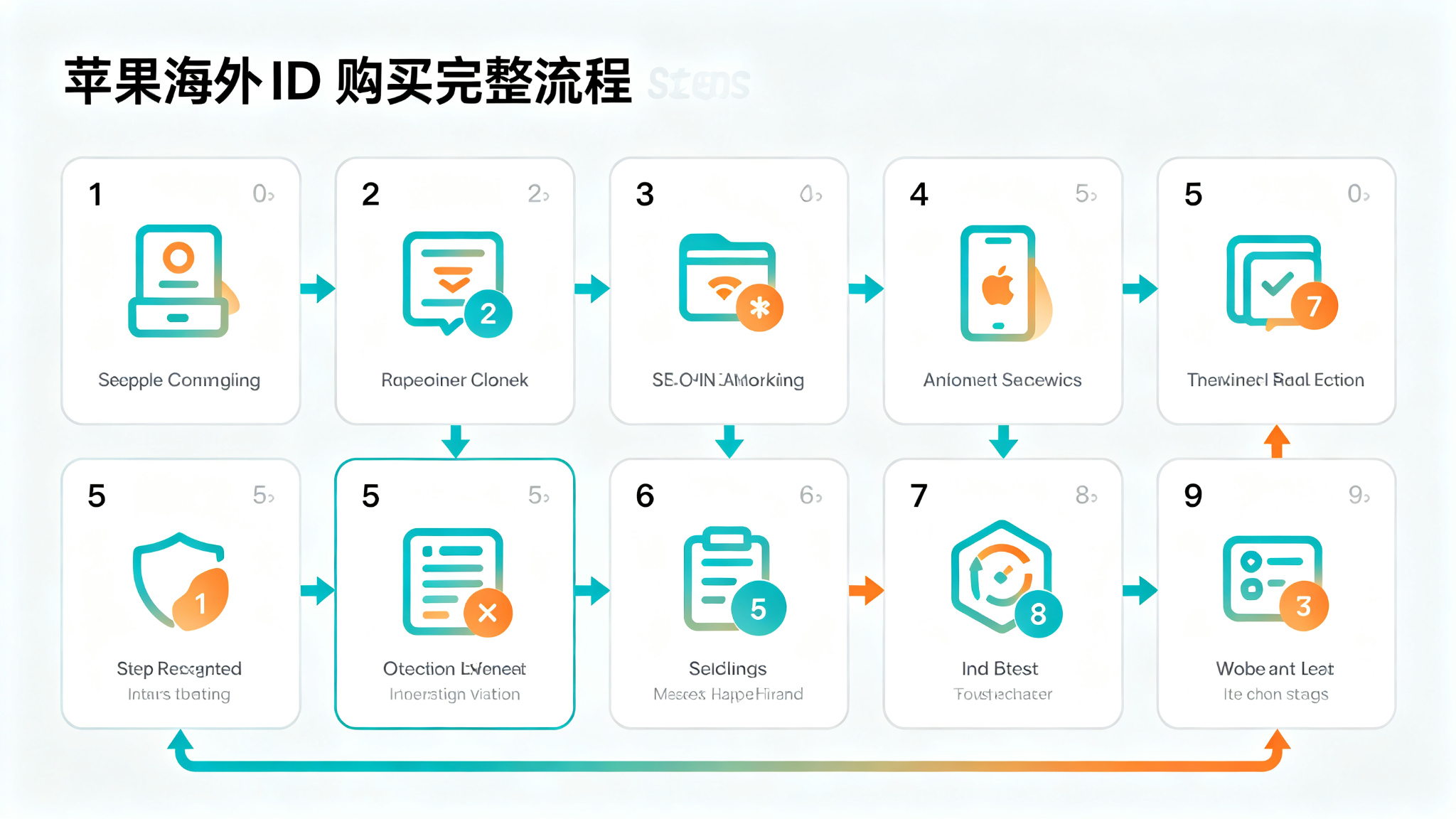
Step 2: Choose a Purchase Channel
Once you've figured out your needs — next step is choosing where to buy.
Purchase channels on the market roughly fall into these categories:
E-commerce platforms (Taobao, Pinduoduo, Xianyu)
The easiest channels to find, and the most people use them.
Pros: Platform protection, relatively safer, lots of options, transparent pricing.
Cons: Quality varies wildly — some good, some bad. Lots of fake reviews, hard for beginners to tell.
Best for: Personal users, budget-conscious, willing to spend time figuring out which are good.
Independent websites / platforms
Websites that specialize in selling overseas accounts.
Pros: Relatively professional, more complete service, account quality is generally higher.
Cons: Hit or miss. Some are reliable, some are phishing sites. Beginners can't tell the difference.
Best for: People who care about account quality, people running projects.
Legitimate cross-border service platforms
Legitimate platforms that offer more services — accounts are just one of them.
Pros: The most reliable, the most stable, the best after-sales support, highest account quality.
Cons: Relatively more expensive.
Best for: Business users, people running projects, people who need high stability. Getfollow is one example of this kind of platform — transparent account sourcing, full access to change all security settings, clear warranty terms and support policies.
Individual sellers / small studios
Individual sellers on forums, in groups.
Pros: Prices might be cheaper.
Cons: Highest risk, most scammers, no guarantees at all.
Best for: Experienced users, people who have a friend's recommendation. Absolutely not recommended for beginners.
For beginners — I recommend starting with Taobao. Relatively safer, lower chance of getting scammed. Once you have more experience, you can consider other channels.
Step 3: Pick an Account
Once you've picked a channel — next step is picking the account.
Different account types — very different prices and quality. Don't buy the wrong type.
Shared accounts
The cheapest kind — a few bucks each. Lots of people sharing one account. You can't change the password, it could stop working anytime.
Good for temporary use, just download something and you're done. Don't buy these for long-term use.
Batch-registered accounts
Better than shared accounts. Exclusive — just you using it. But the registration method isn't exactly legitimate. Usually registered in bulk with virtual phone numbers. Mid-range price, like ten to thirty bucks. You can change the password, but stability is so-so.
Good for casual personal use, if you're on a budget.
Legitimate exclusive accounts
The best tier. Registered through legitimate channels. You can change all security info. Longer warranty period. After-sales support. Also the most expensive — like fifty to over a hundred bucks. But they're stable and secure. With normal use, they can last for years.
Good for people running projects, serious gamers, people who need high stability.
How do you tell? It's simple: Can you change the password? Can you change security questions? Can you change the rescue email? If you can't change them — walk away. No matter what they say.
Remember — at least buy an exclusive account. Don't buy shared accounts. They die in two days, total waste of money.
Step 4: Ask Everything Before You Buy
Once you've picked the account — always ask these questions before you buy:
Question 1: Is it an exclusive account or shared? Don't listen to "one person one account." Just ask directly: Can I change the password? Can I change security questions? Can I change the rescue email? If you can't change them — walk away. No matter what they say.
Question 2: How are the accounts registered? Ask about the registration method, what kind of phone numbers they use. They might not tell you the whole truth, but at least you can see how professional they are.
Question 3: How long is the warranty? What happens if there's a problem? Replacement or refund? What's covered by the warranty? Ask all of this. Don't take "lifetime warranty" too seriously — just hear it, don't believe it.
Question 4: What do I do after I get the account? Are there any usage notes? Legitimate sellers generally give you detailed usage instructions. If they say nothing and just tell you to use it directly — be careful.
Pay attention to how customer service responds. If they answer smoothly and professionally — then this seller is probably okay. If they can't answer, or they hesitate, or they give irrelevant answers — be careful.
Step 5: Buy One First to Test the Waters
After you've asked everything and it seems okay — then you can buy. But don't buy several right away, and don't buy the most expensive one first.
Buy just one — the cheapest option — to test the waters.
Why? Because you don't know if this store is reliable. It might look good — but you won't know until you buy.
Buy one first, use it for a while, see how stable it is, see how the after-sales is. If it's fine — then think about buying better ones, or long-term cooperation. If there's a problem — your loss is small, just consider it a lesson learned.
A lot of people get scammed because they're in a hurry — they buy several right away, and then they get scammed, and they lose big.
Remember — test first, then scale up. Start small, then go big. Steady always beats fast.
Step 6: Verify the Account After You Get It
After you get the account — don't rush to use it. Verify it first:
Step 1: Try logging in first. If you can't even log in — contact customer service for a refund immediately.
Step 2: Try changing the password. If you can change the password — then at least it's not a shared account. After you change the password, log back in with the new password to make sure it works.
Step 3: Try changing security questions and rescue email. If you can change them — then you have control over the account. Change all of them to your own info.
Step 4: See if you can enable two-factor authentication. If you can — definitely do it. It's the safest way to protect your account.
Step 5: Check the basic account info. Check the registered region, registration date, whether there are other devices bound to it, etc.
If all of the above are fine — then this account is probably reliable. If any step has a problem — immediately contact customer service, either get a replacement or a refund.
Step 7: Lock It Down
Once you've verified the account — next step is security hardening. If you skip these steps — you might as well not have bought it.
Step 1: Change the password. Make the password complex. Don't use a simple password, don't use your usual password. Best is a mix of uppercase, lowercase, numbers, and symbols.
Step 2: Change security questions. Change the security questions too — change them to ones only you know the answers to. Don't use super simple questions.
Step 3: Change the rescue email. Change the rescue email to your own. This is super important. When you forget your password, the rescue email is the key to getting your account back.
Step 4: Enable two-factor authentication. If you can enable two-factor authentication — definitely do it. Use your own phone number or device to receive verification codes. It's the safest way to protect your account.
Step 5: Check for other logged-in devices. See if there are other devices bound to the account. If there are — remove all of them.
After these steps — the account is basically secure. Then you can use it normally.
Remember — only sign into the App Store. Don't sign into iCloud. If something goes wrong with the account, it won't affect the rest of the data on your device.
Step 8: Use It Normally — Don't Be Reckless
Once the account is set up — you also need to be careful with daily usage. A lot of people have problems with their accounts not because the account itself is bad — it's because they use it recklessly.
First: Don't go on a downloading spree. Downloading dozens of apps right after you get the account — that's an easy way to trigger fraud detection. Take it slow. Download a few a day. Use it normally.
Second: Don't switch regions frequently. You bought an account for a specific region — stick with that region. If you want a different region — buy another account for that region.
Third: Don't do anything that violates the terms. Don't use this account for things that violate Apple's terms of service — like app store manipulation, black market stuff, etc. Getting banned is just a matter of time.
Fourth: Use gift cards for payments. If you're downloading paid apps or making in-app purchases — use gift cards if you can. Don't bind a credit card. Gift cards are simpler — top up what you need, use what you top up. Easier and safer.
From my observation, in 2026, legitimately registered exclusive accounts — with normal use — last for years. Most problems are from people being reckless.
Step 9: What If Something Goes Wrong?
What if something goes wrong with the account?
First — contact the seller for support. If you're still within the warranty period, the seller will generally replace the account or refund you. Of course, that's assuming the seller is still there and willing to take responsibility.
If the seller disappeared, or they won't help — then it depends on where you bought it. If you bought it on Taobao, you can contact Taobao customer service to intervene. If you're still within the after-sales period, they might help you get a refund. If you bought it somewhere else — it gets more complicated.
That's exactly why I keep saying: Find a reliable channel. Test first, then buy. Trying to fix it after something goes wrong — it's usually too late.
If the account just got flagged and not banned — you can try appealing. Prepare your purchase records, usage records, send an email to Apple support, explain the situation. There's a chance you can get it back — but it's not 100%.
If the account got banned — then it's basically gone. You just have to buy a new one, and be more careful next time.
Frequently Asked Questions
Q: Is buying an overseas Apple ID safe?
A: Depends on where you buy it and what type of account you buy. If you buy a legitimate exclusive account from a legitimate channel — as long as you use it normally, it's generally safe. But if you go cheap and buy a shared account or a black-market account — then it's not safe.
Q: What price range is relatively reliable?
A: Depends — depends on the region, the account type. Generally speaking, legitimate exclusive accounts are a few dozen to over a hundred bucks. Too cheap — definitely something wrong. Too expensive — not necessarily better. Mid-to-high range prices are relatively more reliable.
Q: How do I pick a reliable overseas Apple ID service provider?
A: Look at a few things: First, how long have they been around, what's their reputation? Second, can you change all security information on the account? Third, how long is the warranty, what's the after-sales policy? Fourth, is there payment protection? Fifth, is customer service professional? Platforms with solid reputations in the industry — Getfollow is one example — use exactly this kind of compliant registration plus comprehensive support model. Of course, you should always judge for yourself. Starting small and testing first is always the safest approach.
Q: What should I pay attention to after I buy an account?
A: First — lock it down, change all security info. Second — only sign into the App Store, don't sign into iCloud. Third — use it normally, don't be reckless. Fourth — use gift cards for payments, don't bind a credit card. Fifth — always back up important data.
Q: What if the account gets banned?
A: First — contact the seller for support. If the seller is still there and willing to replace or refund — that's the best case. If the seller disappeared — see if you're still within the after-sales period, you can contact platform customer service to intervene. If none of that works — then you just have to buy a new one. If it just got flagged and not banned — you can try appealing.
Final Thoughts
Buying an overseas Apple ID — it can be hard, it can be easy. Find the right channel, use the right method — done in minutes. Pick the wrong one — you mess around for ages and still get scammed.
Follow the process above, step by step — and you can basically buy a reliable account without overpaying.
Remember a few principles: Figure out your needs first, pick the right channel, buy exclusive accounts, test first then scale up, lock it down after you get it, only sign into the App Store. These principles will help you avoid 90% of the scams.
If you're just a casual personal user, buying on Taobao is fine — good value for money. If you're running projects or a business and you need high stability — go straight for a legitimate platform. Don't save pennies on accounts. Your time and data are what's really valuable.
And as always: Start small, test first, then scale up. No matter how good the seller sounds, don't buy in bulk on your first try. Slow and steady always wins.