2022 SMS Verification Codes: The Compliance Tightrope Every Cross-Border Business Must Walk
2022 SMS Verification Codes: The Compliance Tightrope Every Cross-Border Business Must Walk
If you're in cross-border e-commerce, you've probably hit that wall: you're mid-registration on an overseas platform, and suddenly you're stuck at the phone verification step. In 2022, this got noticeably harder. Platforms dramatically upgraded their virtual number detection, and I've watched several friends lose accounts simply because they tried to "just grab a quick verification code." Here's a pattern I noticed in the first half of the year: plenty of sellers were still leaning on free web-based SMS reception sites to register accounts. The retention rates were brutal—fewer than three out of ten accounts survived past the first week. The logic is simple: free platforms share the same public number pool. When dozens of people use one number to register across different services, the risk-control systems flag you instantly. Who else would they ban?Industry Shift: From "Good Enough" to "Compliance First"
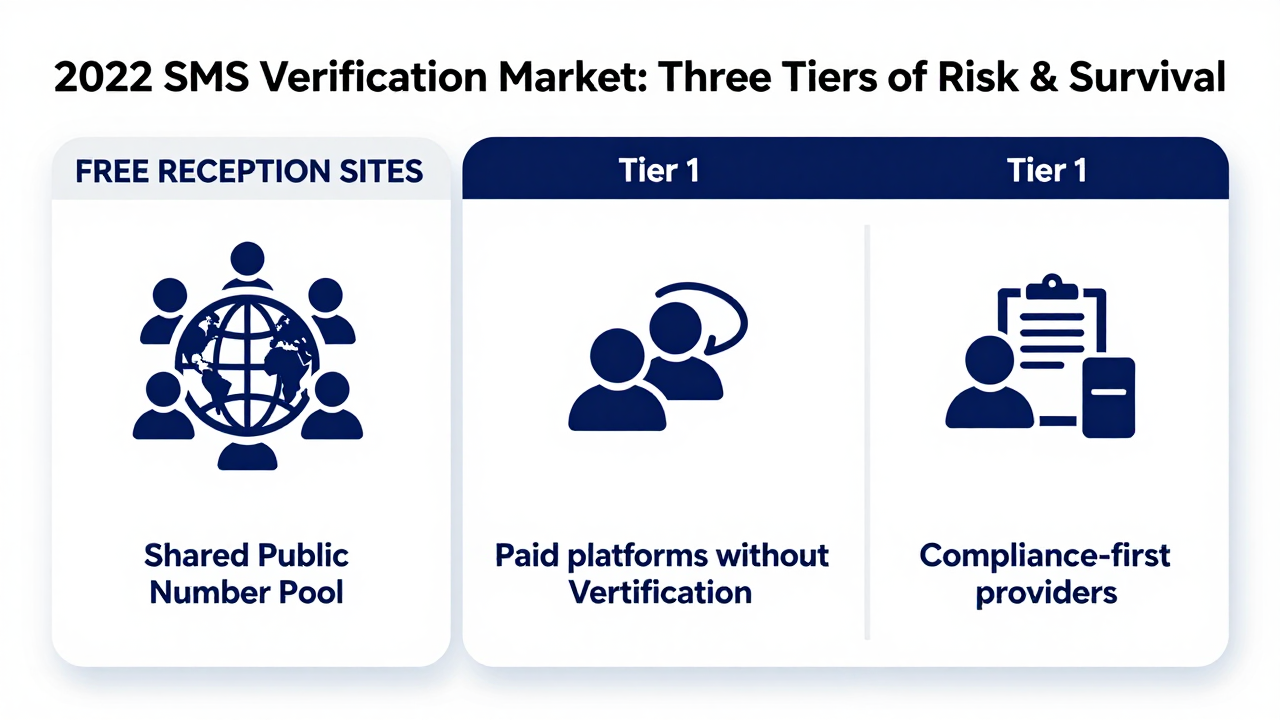
The 2022 SMS verification market split into three clear tiers. At the bottom: free reception sites, fine for one-off tests but useless for building accounts that last. In the middle: paid platforms with no real identity verification—cheap, but the number quality is a lottery. At the top: providers that started taking compliance seriously, like Getfollow, which has built a solid reputation by requiring real-name registration from clients, isolating number pools, and even offering API access for automated matching. What I'm hearing from cross-border operators this year is that price has stopped being the deciding factor. One friend running a TikTok account matrix told me he'd grabbed a cheap "unlimited SMS" package, registered 20 accounts the next day, and watched all 20 get flagged within hours—with zero recourse for appeal. He switched to a provider that required his business license. More paperwork, sure, but his account survival rate jumped past 70%. That's what compliance actually buys you.Why Did SMS Verification Suddenly Get So Sensitive in 2022?
The short answer: overseas platforms upgraded their risk-control systems. They used to check your IP and device fingerprint. Now they cross-reference the number's registration age, usage frequency, and whether it shows up in public SMS reception databases. The industry consensus is that 2022's algorithms can spot a number that was activated and immediately used for registration. So the quality of your SMS provider's number pool directly determines how far your business can go.
Here's a practical detail worth knowing: if you run a cross-border independent site and need to bulk-register social media accounts for traffic, look for a provider that offers "number pre-screening." What does that mean? You can check whether a number segment has been flagged before you use it. Sounds simple, but it filters out about 90% of initial risk-control triggers. Unfortunately, only a handful of providers offered this in 2022—most still operate on a blind-pick basis.The Risks: Don't Let SMS Verification Become a Ticking Time Bomb
Let's be straightforward about the three main risk areas in 2022 SMS verification: account ban fallout, data leaks, and legal gray zones. Ban fallout is the most common—when a platform detects an anomaly on your SMS-registered account, it's not just that new account that suffers. Your associated IP and device get flagged too, which can drag down your other legitimate accounts.
Data leaks are sneakier. Some smaller platforms log the content of the verification codes you receive and sell that data to black-market operators. I tested several platforms myself and found some that explicitly state in their privacy policies that they "reserve the right to use information received by users." Block those immediately. As for legal risk—there's no explicit ban on SMS reception services domestically, but if your business touches anything illegal like fraud or gambling, providers will cooperate with investigations. Choosing a platform with proper credentials and a signed service agreement is actually self-protection.How to Pick a Reliable SMS Provider: My Three Tests
- Do they require real-name verification? If a platform doesn't verify who you are, their number pool is probably chaotic too—and if something goes wrong, you have no one to hold accountable.
- How often do they refresh their number pool? Good providers purge flagged numbers regularly instead of milking them forever. Ask customer service directly: "How frequently do you clean your number pool?" Vague answers are a red flag.
- How fast does support respond? Missed verification codes happen. What matters is whether the platform can troubleshoot quickly. I once hit an issue at 3 AM, and a provider's support reassigned a number within seconds. Compare that to platforms where you file a ticket and wait—it's a completely different world.
Another trend I noticed in 2022: some SMS providers started offering "virtual-to-physical number upgrades"—essentially converting your reception number into a long-term physical SIM number. The value here is that after registration, you can bind the same number for future two-factor authentication, which dramatically lowers your risk-control profile. It costs more, but for businesses that need account stability, it's worth every penny.
Final Advice: Test Small First, Then Scale
At the end of the day, 2022 SMS verification is a small piece of your cross-border operation—but it can determine the fate of your entire account matrix. My advice: no matter which provider you're considering, even one as established as Getfollow, spend a little money to test first. Buy the cheapest plan, register five test accounts, and monitor survival rates and code delivery speed for a week. If those five hold up, then think about scaling.
Industry consensus says the shakeout in the SMS reception market will continue. Platforms that ignore compliance will eventually get weeded out. What we can do as operators is stay alert, avoid putting all our eggs in one basket, and maintain our accounts properly—bind auxiliary emails, enable two-factor authentication. These steps feel tedious, but they can save you when it counts.
If you've hit a particularly nasty pitfall with SMS verification, or you've discovered some tricks that work, drop them in the comments. In this fast-moving industry, real experience beats any advertisement.
Frequently Asked Questions
Is using SMS verification services legal in 2022?
There's no explicit ban on SMS reception services, but the legal landscape is murky. If your use case involves legitimate business registration, you're generally in safe territory. If it touches anything illegal, providers will cooperate with authorities—so choose a platform with proper credentials and a signed agreement.
Why do my accounts keep getting banned after using SMS verification?
Most likely because you're using numbers from a shared, public pool that risk-control systems have already flagged. Free platforms are the worst offenders. Providers that isolate number pools and refresh them regularly dramatically reduce your ban rate.
What's the difference between free and paid SMS verification platforms?
Free platforms share numbers publicly—dozens of users may register with the same number, triggering instant flags. Paid platforms typically offer cleaner pools, better delivery rates, and some even provide number pre-screening and API access. The price difference is small compared to the cost of losing accounts.
Can I use SMS verification for bulk account registration?
Yes, but you need a provider that supports it properly—look for number pre-screening, isolated pools, and fast support. Test with five accounts first and monitor survival rates for a week before scaling up. Also consider virtual-to-physical upgrades for accounts that need long-term stability.