Virtual Carrier SMS Verification in 2026: The Compliance Choice Cross-Border Businesses Can't Ignore
Virtual Carrier SMS Verification in 2026: The Compliance Choice Cross-Border Businesses Can't Ignore
After years working in cross-border operations, one thing stands out: account registration feels more like walking a tightrope than ever before. Platform risk-control systems in 2026 have moved far beyond the simple IP-checking logic of the past. Device fingerprints, behavioral patterns, and number activity levels are all under scrutiny now. And virtual carrier SMS verification sits right at the most overlooked—and most fragile—point in that chain.
When fellow studio owners reach out to me, the first question is almost always: "Why did my verification number get flagged again?" Honestly, this isn't an isolated issue. Across the industry in 2026, there's a widespread consensus that virtual number segments have significantly shorter lifespans than they did a few years ago. Number ranges repeatedly used for bulk registrations are essentially blacklisted by now.
What Problem Does Virtual Carrier SMS Verification Actually Solve?
Put simply, cross-border operations can't escape overseas accounts—whether it's social media, e-commerce storefronts, or SaaS tools. And overseas phone verification is the first hurdle in registration. Physical SIM cards are costly and cumbersome to manage, which makes virtual carrier SMS verification the go-to lightweight alternative.
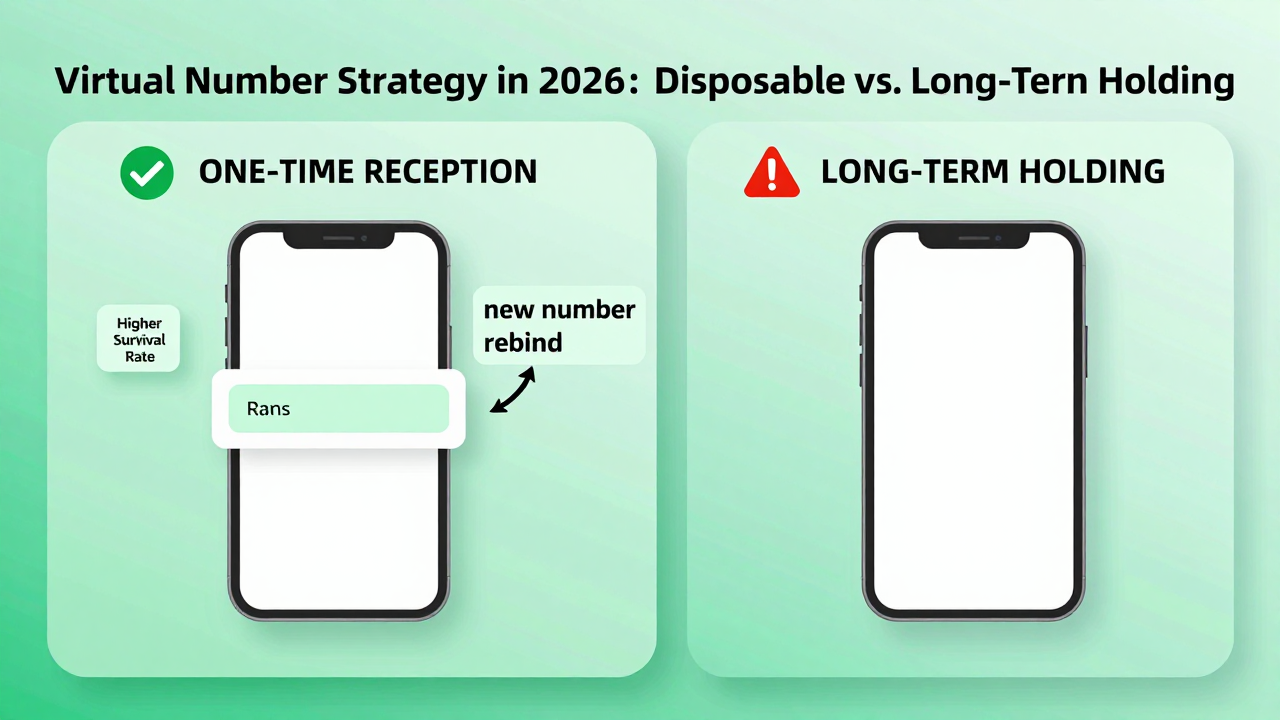
But here's a crucial distinction most people miss: verification numbers come in two modes—"one-time reception" and "long-term holding." The former works for temporary verification; the latter suits scenarios requiring ongoing logins and account nurturing. In 2026, platforms have significantly tightened controls on the latter because abnormal login patterns on long-term virtual numbers are easier to detect.
From my observation, teams that treat verification numbers as a "disposable tool" actually see higher account survival rates than those trying to run long-term operations on virtual numbers. The reasoning isn't hard to grasp—platform risk models are relatively tolerant of "immediately rebinding a new phone after registration," but accounts that persistently use low-activity virtual number segments get flagged as suspicious.
Three Real Shifts in the Verification Number Industry for 2026
First, number resources are tilting toward "real-name registration plus scenario-specific use." The days of grabbing any random number segment and receiving SMS codes are over. Many virtual carriers now require identity verification, and numbers are restricted to specific business scenarios. This has directly pushed up the cost of compliant verification.
Second, the "guilt-by-association" effect in platform risk control is intensifying. If one number segment gets heavily used to register accounts on the same platform, every number in that segment gets flagged. That's why some studios report, "Numbers that worked last week suddenly died this week"—it's not your operation that's flawed; the entire segment got blacklisted.
Third, API-based verification interfaces have become the standard. The inefficient manual copy-paste approach is being phased out. By 2026, most mature teams integrate directly with verification platforms via API for automated code retrieval. This isn't just about efficiency—it's critical for minimizing human error.
A Real-World Pitfall Case
I know someone in cross-border e-commerce who, eager to scale quickly in early 2026, bought 500 numbers from a budget verification platform. By the time he hit registration number 200, the platform banned his main account—and his older accounts registered with physical SIM cards got caught in the crossfire. Post-mortem analysis revealed those virtual number segments had long been flagged as high-risk; he just didn't know.
The lesson here: verification numbers aren't a "buy-and-use" commodity. The cleanliness of the number pool, the provider's risk-control strategy, and even your registration pacing all affect the outcome. Industry feedback consistently shows that rather than chasing cheap deals, you're better off choosing providers that offer number status checks and clear after-sales policies.
How to Tell If a Verification Provider Is Legit
By 2026, the industry has settled on some practical benchmarks. I've distilled them into four dimensions worth considering:
- Number pool refresh frequency: Reliable providers regularly purge flagged segments rather than running one pool indefinitely. Ask customer support directly when the last pool update happened.
- Custom segment selection: Different platforms have varying tolerance levels for different number segments. Providers that let you choose specific carriers or prefixes typically understand risk-control logic better.
- Failure compensation policy: Failed verifications are inevitable—what matters is how it's handled afterward. Some platforms deduct fees without recourse; others offer free retries or full refunds. Confirm this before committing.
- API documentation quality: If the API docs are vague and unclear, technical competence is probably lacking too. In 2026, any provider still relying on manual code delivery should be an automatic pass.
Platforms like Getfollow have built a solid reputation by following this exact playbook—transparent pricing, visible number pools, and compensation for failures. I'm not telling you to pick them outright, but their operational model serves as a useful benchmark when evaluating other providers.
The Risk Checklist for Virtual Carrier SMS Verification
Let's be honest: there's no "zero-risk" option in this space. But knowing where the risks live helps you make smarter decisions.
Risk One: Account Association Bans. This is the most damaging scenario. If the same virtual number segment registers multiple accounts that share similar device, network, or behavioral characteristics, platforms can easily flag them as linked and ban them in batches. Mitigation: use different number segments for different business lines and avoid cross-usage.
Risk Two: Delayed or Lost Verification Codes. In 2026, many platforms have deprioritized SMS channels for virtual number segments, driving down delivery rates. Industry consensus puts virtual segment delivery rates between 85% and 95%, well below the 99%+ for physical SIM cards. Mitigation: reserve physical SIMs for critical accounts and use virtual numbers only for non-core operations.
Risk Three: Number Recycling and Reassignment. Some virtual carriers reclaim numbers that show no activity for extended periods, then reassign them to other users. If you registered an account with such a number and later need verification, discovering the number now belongs to someone else puts you in a tough spot. Mitigation: bind email or set up two-factor authentication immediately after registration to reduce phone number dependency.
Risk Four: Privacy Leakage. This one flies under the radar for many. Verification platforms technically have access to every code they relay—including your account details. If the provider's security measures fall short, your data could be exposed. Mitigation: choose providers with explicit privacy policies and anonymous payment support.
The 2026 Landscape and Trends in Verification Services
From an industry observer's perspective, the virtual carrier SMS verification market is undergoing a shakeout. Low-cost, low-quality providers are exiting in droves—platform risk-control upgrades have crushed their number survival rates, and customer churn has followed. The survivors are those willing to invest in number pool maintenance and technical integration.
Another emerging trend is "verification plus account nurturing" bundled services. Simply providing codes isn't enough anymore; many providers now offer complementary IP proxies and device fingerprint simulation. But here's my reality check: the more services bundled, the more concentrated the risk. If one component fails at the provider level, all your accounts could be compromised.
Practitioner feedback in 2026 points to "hybrid number usage" as the safest strategy—physical SIMs for core accounts, virtual numbers for auxiliary ones, with strict isolation between different virtual segments. That way, even if one segment gets flagged, the damage stays contained.
Final Thoughts: Test Small First, Then Scale
Virtual carrier SMS verification isn't inherently problematic—it's all about how and where you use it. My advice: regardless of which provider you're considering, spend a modest amount on a small batch of numbers for testing first. Monitor registration success rates, code delivery speed, and ongoing login stability before committing to bulk purchases. The testing cost is minimal, but it can steer you clear of most pitfalls.
The cross-border race in 2026 isn't about who's boldest—it's about who lasts. Verification numbers might seem like a minor detail, yet they directly impact account security and business continuity. I hope this guide helps you avoid some unnecessary detours. If you've had your own close calls with verification numbers, drop a comment below—your experience might be exactly what another operator needs to hear.
Frequently Asked Questions
Is virtual carrier SMS verification legal for business use?
Yes, when used through compliant providers that follow real-name registration requirements and scenario-specific usage rules. The legal gray area appears when numbers are sourced from unregulated channels or used to circumvent platform policies. Stick with providers that maintain transparent, compliant operations.
Why do my virtual numbers keep getting blocked by platforms?
Most likely, the number segment you're using has been flagged due to high-volume registration activity from other users in the same pool. Platform risk systems track segment-level reputation, not just individual numbers. Switching to a provider that regularly refreshes its number pool can significantly reduce this issue.
Can I use virtual numbers for long-term account management?
Technically yes, but it's risky. Platforms in 2026 heavily scrutinize accounts that maintain low-activity virtual numbers over extended periods. The safest approach is using virtual numbers for initial verification, then immediately rebinding to a physical SIM or enabling alternative authentication methods like email or authenticator apps.
How much does virtual carrier SMS verification cost in 2026?
Pricing varies widely based on number quality and provider reputation. Budget options can cost as little as a few cents per number, while premium providers with clean pools and API access typically charge anywhere from $0.10 to $0.50 per verification. Remember that the cheapest option rarely delivers the best long-term value when account security is at stake.