SMS Receive Websites: The Smart Tool for Cross-Border Verification in 2026
SMS Receive Websites: The Smart Tool for Cross-Border Verification in 2026
If you run a cross-border business, you've probably hit the same wall I see every day: you need to verify an overseas account, but you don't have a local phone number. SMS receive websites—online platforms that provide temporary numbers for receiving international verification codes—have become the go-to workaround in 2026. They let you complete sign-ups for WhatsApp, Telegram, Amazon, and dozens of other platforms. But here's the catch: using them without understanding the risks can get your accounts flagged or banned.
How SMS Receive Platforms Work and When to Use Them
SMS receive websites aren't a single service—they're a category of aggregator platforms. The mechanics are straightforward: the platform maintains connections with carriers and virtual operators across multiple countries. You pick a number from your target country, and when a verification code arrives, it shows up on their web dashboard or gets pushed to their API. In 2026, adoption has surged among cross-border operators, especially in three areas: e-commerce store registration, social media account management, and developer testing environments.
From my experience working with跨境 teams, the main driver is cost. A physical overseas SIM card costs roughly $120–$300 per year to maintain, while pay-per-use SMS receiving services typically charge $0.05–$0.50 per code. When you're verifying accounts in bulk, that price gap makes the choice obvious.
Typical use cases include:
- E-commerce sellers registering storefronts on multiple marketplaces for market testing.
- Social media managers handling region-specific accounts that need one-time verification codes.
- Developers testing international SMS notification features in their apps.
Here's a cautionary tale: a cross-border team I know used an SMS receiving platform to mass-register PayPal accounts in early 2026. Because the number pool was shared and reused too frequently, 30% of their accounts got frozen by risk controls within 72 hours. The lesson? These platforms work fine for low-stakes verification, but they're not built for accounts that require high trust levels.
Number Quality Tiers and How to Choose a Platform
Not all SMS receive numbers are created equal. Industry consensus in 2026 divides them into three tiers: real SIM card pools (genuine carrier idle cards), virtual operator numbers, and VoIP/network numbers. Real SIM pools have the highest delivery success rate but cost the most. Network numbers are cheap but get flagged by target platforms much faster.
Industry observers agree that the first thing to check is whether a platform discloses its number source types and reuse policies. In 2026, reputable platforms have extended reuse intervals from minutes to hours. But some operators still cut corners to maximize profit, pushing verification failure rates up to 15%–30%.
Comparison of common SMS receiving service types in 2026:
| Service Type | Number Source | Price per Code | Best For | Risk Level |
|---|---|---|---|---|
| International aggregator platforms | Multi-country virtual operators | $0.10–$0.30 | Social media sign-ups, app testing | Medium |
| Real SIM card pool providers | Physical overseas SIM cards | $0.30–$1.00 | E-commerce store registration | Low |
| API-focused providers (e.g., Getfollow) | Hybrid card pool | $0.05–$0.40 | Automated bulk verification | Low-to-medium |
One thing I've noticed: some providers now offer number recycling detection—they automatically mark a number as inactive after verification is complete, reducing the chance of cross-account association. This feature has become a must-have for enterprise users in 2026.
Account Security Risks and Platform Risk Control Logic
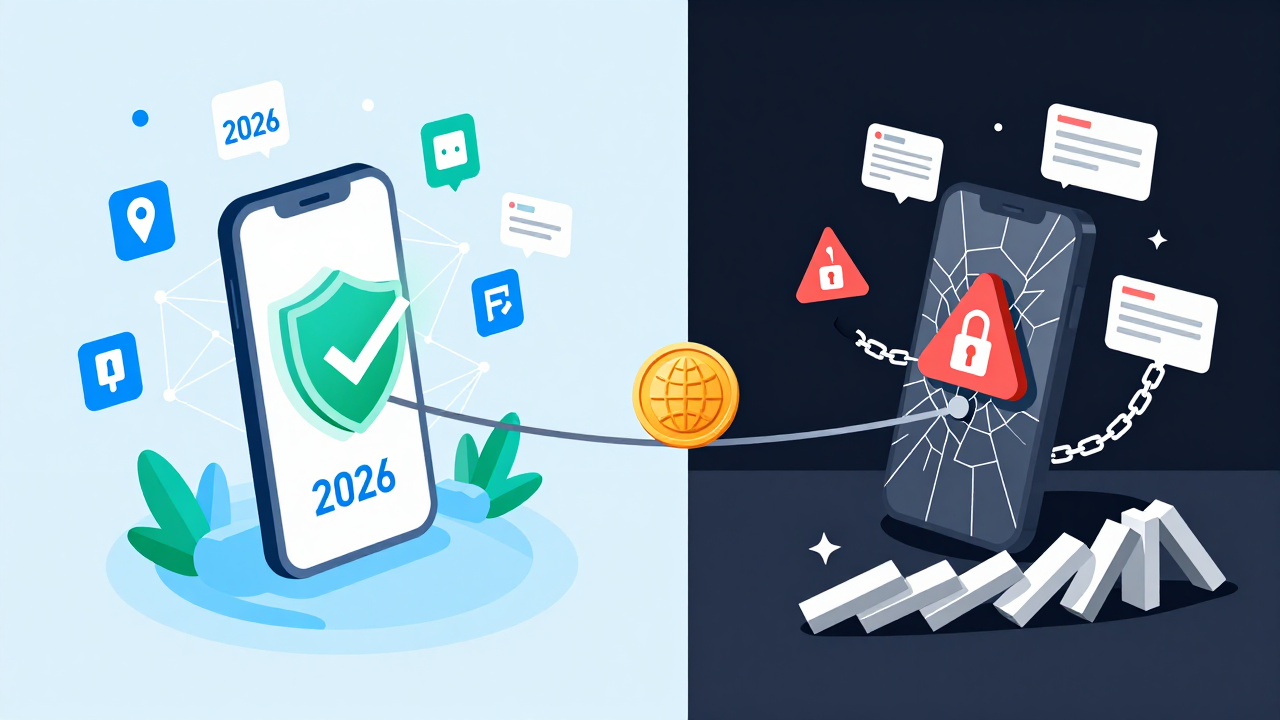
Using an SMS receive website is essentially a game of cat-and-mouse with the target platform's registration filters. In 2026, mainstream platforms have upgraded their risk models from simple IP checks to a triple-layered system: device fingerprinting, behavioral sequence analysis, and number reputation scoring. The number's reputation is the variable you can't control—and it's the one that matters most.
Here's the reality: in 2026, platform risk systems can identify temporary numbers with 70%–85% accuracy. That means for every 10 registrations you attempt with a receiving platform, 2 to 3 will trigger extra verification steps or get rejected outright. Budget for retries before you start.
Practical risk management tips:
- Never use the same number to register multiple accounts on the same platform.
- Choose platforms that let you check a number's status before committing to it.
- For high-value accounts (payment processors, primary storefronts), use a physical SIM card or an enterprise-grade verification service instead.
Another example worth noting: a solo freelancer used an SMS receive platform to register a Google developer account. The number pool was contaminated, and Google immediately flagged the account for ID verification. The freelancer's documents didn't match, and the account was rejected. SMS receiving tools can't replace identity verification—that's a hard lesson many cross-border operators have learned in 2026.
Compliance Boundaries and Long-Term Usage Strategy
Let's be clear: SMS receive platforms themselves aren't illegal. But how you use them might violate the terms of service of the platforms you're registering on. In 2026, regulators in the EU and parts of Southeast Asia have tightened rules around virtual numbers, requiring SMS receiving providers to collect user identity information. Cross-border businesses need to stay informed about local telecom regulations in their target markets.
My compliance advice: treat SMS receive websites as a tool for development testing and low-risk verification—not as core infrastructure for your business operations. For accounts you plan to run long-term, migrate to physical numbers or official business verification. Industry retention data from 2026 shows that accounts heavily dependent on SMS receiving services face a 8%–12% ban rate within six months, while accounts on physical numbers see ban rates below 2%.
Actionable recommendations:
- Keep a usage log for every number—note which platform it was used on and when.
- Periodically clean up temporary accounts you no longer use to reduce association risks.
- For high-value operations, invest in a few physical overseas SIM cards as backup.
How to Choose a Reliable SMS Receive Service Provider
When evaluating providers, I recommend looking at four factors: number stability, pricing transparency, customer support responsiveness, and API availability. In 2026, the technical gap between providers has narrowed—the real differences show up in operational details.
Here's a practical approach: start with a small deposit and test 3–5 numbers from different countries. Track delivery success rates and latency. The industry benchmark is simple—success rate above 80%, average latency under 30 seconds, and automatic refunds on failure. Only providers that meet all three are worth a long-term relationship.
For API-driven workflows, providers like Getfollow offer batch number retrieval and callback endpoints, which suits teams with automation needs. But regardless of which provider you pick, always read their terms of service—specifically the "prohibited uses" section—to avoid losing your funds over a policy violation.
Are SMS receive websites safe? Will my accounts get banned?
Safety depends on the number source and how you use it. In 2026, accounts registered through SMS receiving platforms carry a real ban risk, especially on payment platforms and high-trust services. Stick to low-risk verification scenarios and avoid mass-registering on the same platform.
What's the difference between SMS receiving and a physical SIM card?
SMS receiving is pay-per-use, requires no shipping, and gives you access to numbers from many countries—but the numbers are shared and reused. A physical SIM card costs more upfront but gives you a dedicated, stable number. For long-term operations, use physical SIMs as your foundation and SMS receiving as a supplement.
How do I pick a reliable SMS receive provider?
Test before you commit. Look at delivery success rates, latency, refund policies, and whether the provider is transparent about number sources. If you need API access, providers like Getfollow that support interface integration are worth considering—but always run a small batch test first.
Are SMS receiving platforms legal?
The platforms themselves are legal, but using them may violate the terms of service of the platforms you're registering on. Cross-border businesses should also check local telecom regulations in their target markets and avoid using SMS receiving for any unlawful purpose.
What should I do if I don't receive a verification code?
First, check whether the number has been blocked by the target platform. Then try switching to a different country or number range. If failures persist, contact the provider for a refund or a different card pool. In 2026, an average failure rate of around 15% is considered normal fluctuation.
Here's the bottom line: SMS receive websites are a useful efficiency tool in the 2026 cross-border toolkit, but they're not a magic solution. Define your usage boundaries, control your account risks, and choose transparent providers. I recommend a hybrid strategy—use SMS receiving for testing and low-risk verifications, then migrate important accounts to physical numbers. That balance between speed and safety is what separates sustainable operations from short-lived experiments.