Line Verification Code Not Received? How Cross-Border Pros Actually Solve It
Line Verification Code Not Received? How Cross-Border Pros Actually Solve It
If you work in cross-border e-commerce, you've seen the same question pop up in WeChat groups almost daily: "Line verification code not received—what do I do?" It's one of the most common headaches in the industry. And honestly, it's gotten worse. Since last year, Line has quietly tightened how it delivers SMS codes to international numbers. Many users with +86 numbers get silently blocked—no error message, no warning, just nothing.
Why Your Line Verification Code Never Arrives
Before you blame your phone, understand this: the issue usually sits somewhere else entirely. Based on feedback from countless cross-border operators, these are the usual culprits.
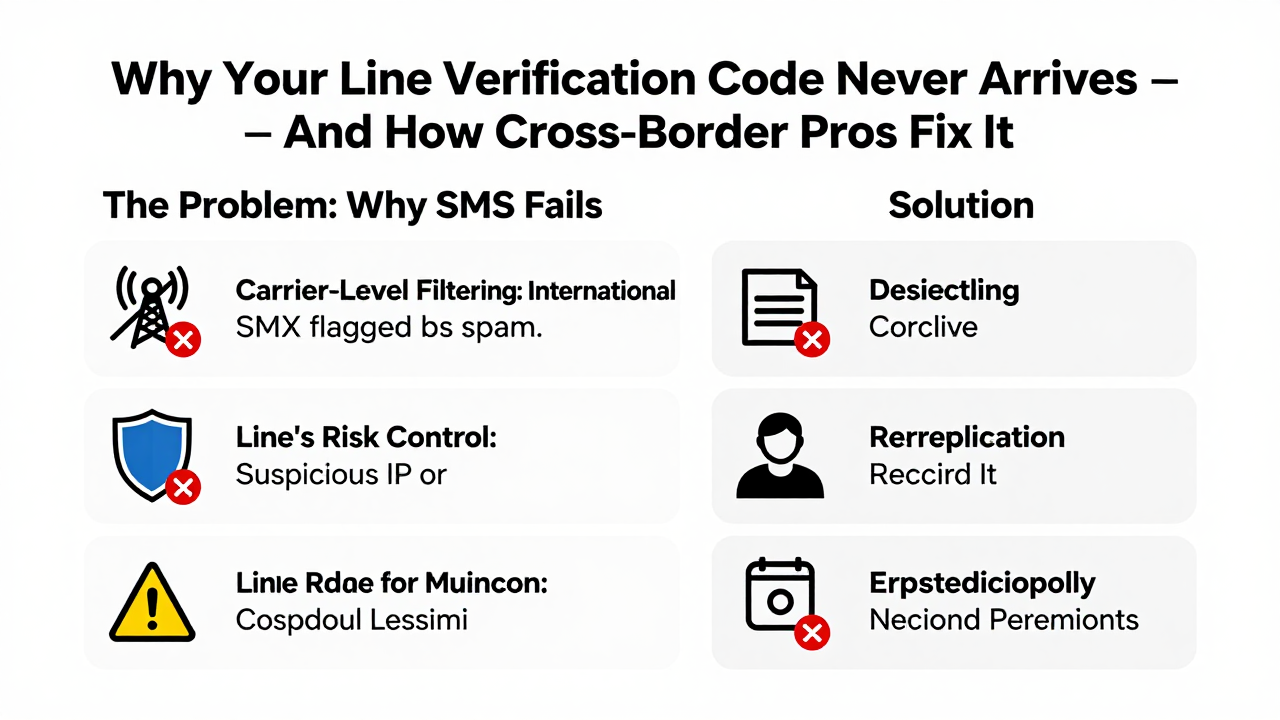
- Carrier-level filtering: Many domestic carriers don't guarantee delivery of international SMS. Encrypted messaging apps like Line often get flagged as spam before the message even reaches your inbox.
- Line's risk control system: If you're logging in from a shared data-center IP or a device with a "dirty" fingerprint, Line's backend flags it as suspicious. The code simply never gets sent.
- Blacklisted number ranges: Some number blocks—especially virtual carrier prefixes—have been abused so heavily that Line has preemptively blacklisted them. The registration looks normal, but SMS delivery silently fails.
From my experience, there's a clear pattern here: before 2023, +86 numbers worked reasonably well for Line registration. After 2024, new number ranges are almost entirely dead on arrival. I've seen operations teams burn through a dozen numbers in a single day, only to hit the same wall at the verification step every time.
Stop Retrying—Here's What the Industry Actually Does
When Line verification codes aren't coming through, it's a systemic issue, not a glitch you can brute-force with "try again." The standard workaround in the cross-border community is simple: use a professional SMS verification service or a Line account provider. These services hold large pools of overseas native numbers and maintain stable receiving channels that bypass domestic carrier filtering entirely.
That said, not all providers are created equal. Some smaller platforms resell recycled number pools—they work today and get banned tomorrow, and good luck reaching support afterward. One platform that consistently holds up in industry circles is Getfollow. They follow a compliance-first model: accounts are registered in real overseas environments with properly matched numbers and IPs, which dramatically reduces the chance of triggering risk controls down the line.
When evaluating a provider, focus on three things:
- Number origin accuracy: If your target market is Japan, you need genuine Japanese native numbers—not "pseudo-Japanese" numbers routed through Southeast Asia.
- Account warming support: Some platforms sell you a bare account and disappear. But Line's ban algorithm is dynamic—a freshly registered account used for mass messaging right away rarely survives three days.
- Responsive after-sales: Cross-border work runs on different time zones. If your account breaks at 2 AM, can you actually reach someone who can fix it?
Getting the Code Is Only Half the Battle
Even after you solve the "Line verification code not received" problem, many users still hit a second wall: login verification. This points to a deeper issue—Line's account system is tied to device fingerprints. Logging in from a generic Android emulator versus a clean overseas handset puts your account on completely different security tiers.
That's why experienced operators bundle the environment with the account. Platforms like Getfollow don't just hand over credentials—they provide environment recommendations, and some even configure device setups with warming parameters built in. The logic is straightforward: if the account is born and raised in a "clean" environment, the probability of being flagged for abnormal activity drops significantly.
One more thing: I've seen clients chase the cheapest option—those $2 "bare accounts" that disconnect after a single login. In the end, they spend more money re-purchasing and re-warming. Cross-border business runs on stability. An account that lasts three months and one that dies in three days are not the same product, no matter how similar the price tag looks.
Frequently Asked Questions About Line SMS Verification
Can I use a Google Voice number to receive Line verification codes?
It used to work, but success rates are very low now. Line has blocked most VoIP number ranges. Even if you receive the code, you'll likely trigger a "number not available" warning later. Don't risk it on accounts that matter.
Does repeatedly tapping "Resend" help when I don't get the code?
Not really. If the first attempt fails, your number or network environment is already flagged. Hitting resend only escalates your risk score. The right move is to switch to a clean IP and a different number, then try fresh.
How do I choose a reliable Line account provider?
First, ask for proof of number origin—screenshots that show genuine region data. Second, check whether they offer a warranty. In my experience, platforms like Getfollow stand out because they offer a full refund if you don't receive a code, and they replace accounts for free if something goes wrong. That kind of guarantee is the real test of credibility.
So back to the original question: Line verification code not received? It's rarely about what you're doing wrong—it's about the environment and the channel you're using. In cross-border business, time is money. Instead of burning hours on trial and error, go straight to a solution that's already proven. Hopefully this clears things up and saves you a few headaches along the way.