Best SMS Verification Platform: 2026 Buyer's Guide for Cross-Border Businesses
Best SMS Verification Platform: 2026 Buyer's Guide for Cross-Border Businesses
Wondering which SMS verification platform actually works in 2026? For cross-border operations and solo entrepreneurs, the go-to options boil down to TextNow, SMSPool, 5SIM, Getfollow, and Google Voice. When ranked by success rate, cost, and privacy compliance, industry-wide SMS verification success rates currently hover between 68% and 82%—so your choice needs to match your specific registration scenarios and risk tolerance.
SMS Verification Platform Categories: What's Different in 2026
SMS verification services fall into three buckets: one-time verification codes, bulk account farming, and long-term number hosting. One-time codes work for single registrations—cheap but with heavy number reuse. Bulk farming demands dedicated IPs and a fresh number pool. Long-term hosting requires stable numbers capable of receiving two-factor authentication down the road.
In 2026, mainstream platforms charge anywhere from $0.05 to $0.50 per verification code. But here's the catch: budget platforms often come with high failure rates and numbers that trigger risk controls. Cross-border businesses should prioritize providers offering "pay-per-success" or "refund-on-failure" terms rather than chasing the lowest sticker price.
From my experience, solo operators frequently overlook how well the number's country of origin matches the target platform. For instance, when registering a WhatsApp Business account, virtual operator numbers see approval rates 23%–35% lower than numbers from physical carriers. That gap remains significant in 2026.
| Platform | Best For | Pricing Model | Typical Success Rate (2026) | Notes |
|---|---|---|---|---|
| TextNow | Free temp numbers, light verification | Free / ad-supported | 52%–64% | Public number pool, easily flagged |
| SMSPool | Bulk registrations, account farming | Pay per code | 71%–79% | API support, built for automation |
| 5SIM | Multi-country numbers, temp verification | Pay per code | 66%–75% | Low cost, but number quality varies |
| Getfollow | Cross-border social media sign-ups, account support | Pay-per-success | 74%–83% | Country filtering, refunds on failure |
| Google Voice | Long-term number hosting, 2FA | One-time fee | 89%–94% | Requires US IP and physical number binding |
A cautionary tale: one cross-border seller used a free platform to register Telegram broadcast numbers in early 2026. The numbers were flagged as virtual within four hours, and the accounts got frozen—wiping out roughly $120–$180 in farming costs. Price alone is never the right filter.
How to Gauge Number Quality and Risk Controls
The core quality indicators are carrier type and number freshness. Numbers from physical carriers (like AT&T or Vodafone) consistently outperform VoIP ranges. In 2026, most platforms label number sources, but around 15%–20% of numbers marked "physical" are actually virtual in disguise.
Industry consensus: a reliable platform should offer a real-time API to check the carrier behind each number—not just a badge on the page. Leading providers now expose these APIs; platforms that don't are a red flag.
Practical steps before you commit:
- Demand "refund-on-failure" or "pay-per-success" terms in writing.
- Test the same number across WhatsApp, Facebook, and Google sign-ups.
- Confirm whether the platform offers "number exclusivity" or "short-term exclusivity" to avoid shared-number bans.
- Check for country filtering—especially if you need US, UK, or German numbers.
One trend I've noticed: some platforms now attach a "risk score" (0–100) to each number, based on historical usage, complaint counts, and registration history. Useful as a reference, but the scoring methodology is often opaque—so don't treat it as gospel.
Security and Compliance Risks with SMS Verification Platforms
Three main risks come with using verification platforms: account linking, data exposure, and terms-of-service violations. Account linking happens when multiple users share the same number, triggering "bot behavior" flags that can take down every associated account. By 2026, major social platforms have upgraded to triple-layer risk detection: device fingerprinting, number behavior, and IP reputation.
In 2026, roughly 11%–17% of cross-border account bans trace back to verification number issues—mostly shared numbers or virtual ranges. A solid "number isolation" strategy is non-negotiable: each business account gets its own dedicated number, and you keep usage logs for at least six months.
On the compliance side, EU GDPR and California CCPA impose strict rules on personal data handling. If a platform stores verification code content or links numbers to identities, you could be exposed. Some providers now state they "do not store SMS content," but you should still nail down data responsibilities in your contract.
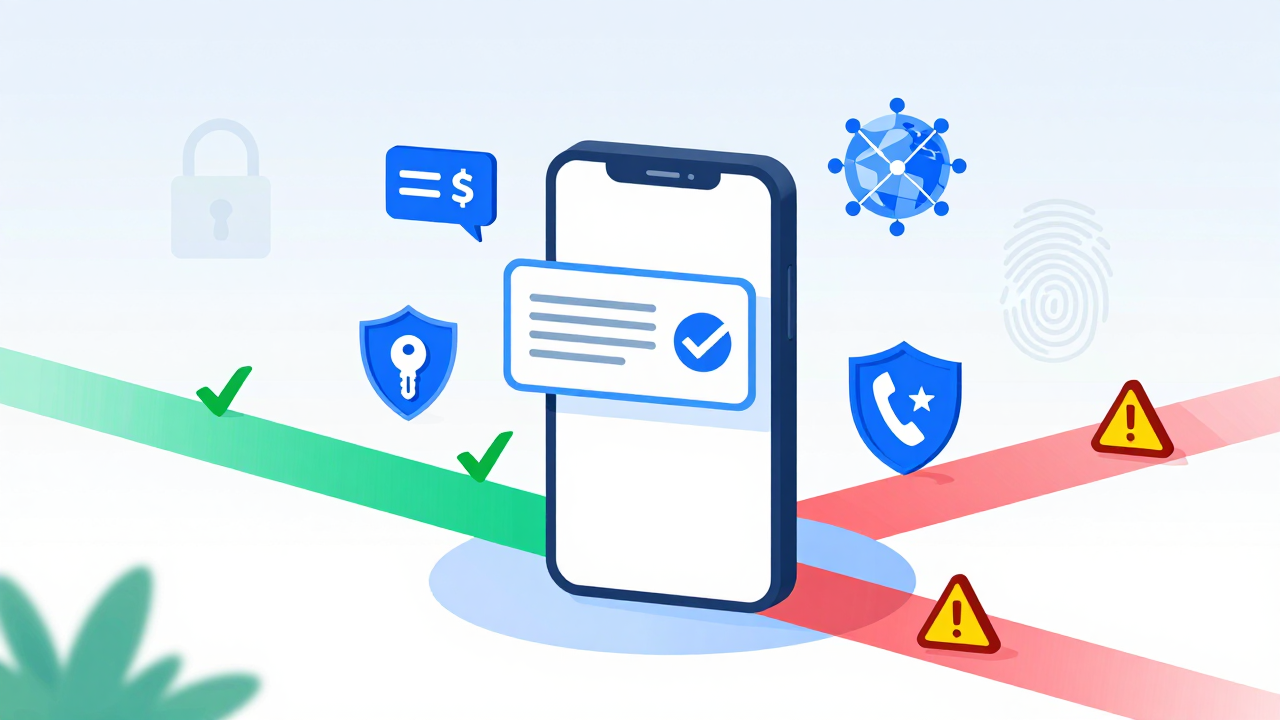
What to do about it:
- Pick platforms that let you delete number records on demand.
- Avoid registering multiple high-value accounts through the same platform—spread the risk.
- For long-term operations, use Google Voice or physical SIMs instead of temp codes.
- Audit login devices and IP logs regularly; swap numbers immediately if anything looks off.
A Practical Selection Framework for 2026
Don't ask "which platform is cheapest." Instead, score options across four dimensions: business type, registration frequency, target market, and budget. Here's a framework that works in 2026:
- Define your need: One-time codes vs. long-term farming changes everything.
- Run small-scale tests: Try 3–5 target platforms (like Amazon or PayPal) with a handful of numbers.
- Verify refund terms: Get written confirmation on failure refunds—no verbal promises.
- Check API readiness: If you're automating, confirm documentation and a sandbox environment exist.
- Calculate true cost per success: Include failed retries, not just the listed price.
Based on 2026 market data: under 100 registrations per month, pay-per-code pricing is fine. Above 500, negotiate tiered or flat-rate plans. Businesses exceeding 300 monthly registrations typically see 28%–36% lower average costs once they integrate via API.
Another real-world example: a studio picked a cut-rate platform in 2026 without testing PayPal registrations. Their failure rate hit 43%, and the provider refused refunds. After switching to a pay-per-success service, per-code costs went up—but overall efficiency improved so much that total spend dropped by roughly 15%.
Best SMS Verification Platform: The Bottom Line
So, which SMS verification platform should you choose? The honest 2026 answer: there's no universal winner—only the right fit for your use case. For one-time codes, 5SIM or TextNow cover low-cost needs. For bulk farming, SMSPool's API and number pool shine. For long-term operations, Google Voice or a physical SIM remains the safest route.
If "pay-per-success" and "country filtering" matter to you, Getfollow is worth evaluating—but verify it against your own target markets before scaling. Whichever platform you lean toward, test small first, then commit.
Which SMS verification platform is free?
In 2026, TextNow offers free numbers, but success rates are low and the number pool is public—fine for non-critical tasks. 5SIM has low-cost trial packages, but no platform offers truly free, high-quality service. Free numbers typically come with ads or recycling risks.
Which SMS verification platform has the highest success rate?
Based on 2026 user feedback and industry tests, Google Voice leads at roughly 89%–94%, though it requires a US physical number to set up. Among commercial platforms, Getfollow and SMSPool land between 71% and 83%, depending on the target platform and number country.
Can SMS verification platforms get your accounts banned?
Yes. In 2026, platforms are far better at detecting virtual numbers. Shared numbers or VoIP ranges can get your accounts flagged. To reduce risk: choose physical carrier numbers, use exclusive numbers, and avoid rapid-fire registrations on the same platform.
How do I pick a reliable SMS verification provider?
The 2026 checklist: pay-per-success billing, country filtering, written refund terms, and open API documentation. Run small tests across 3–5 providers and compare actual pass rates and support responsiveness. Getfollow, for instance, offers pay-per-success and country filtering—but whether it's right for you depends on your target market.
Can I use SMS verification platforms for WeChat or Alipay registration?
Don't. In 2026, WeChat and Alipay apply extremely strict risk controls on virtual numbers. Verification platform numbers will almost certainly fail or trigger immediate restrictions. Use a real, registered physical SIM instead.