Tinder Verification Code SMS Platforms: The 2026 Compliance and Pitfall Guide for Cross-Border Operators
Tinder Verification Code SMS Platforms: The 2026 Compliance and Pitfall Guide for Cross-Border Operators
If you're in cross-border social marketing, you've probably noticed the same thing this year: getting a Tinder account registered has gotten noticeably harder. 2026 especially—the platform's phone verification scrutiny is a whole different beast compared to a couple of years ago. The old batch-registration playbook that many studios relied on? It's basically dead now.
That's why Tinder verification code SMS platforms have gone from a niche tool to a genuine necessity for many teams. But here's the thing—this industry is full of traps. Pick the wrong provider and you're looking at missed codes at best, or a wave of linked account bans at worst. In this article, I'm going to break down the inner workings from an industry observer's perspective, so you know exactly what you're dealing with.
Why Tinder Verification Is Giving Cross-Border Teams Such a Headache in 2026
Let's start with a pattern many cross-border operators have flagged: in 2026, Tinder's risk-control model has clearly leveled up. It's no longer just about IP addresses and device fingerprints—the "purity" of your phone number has become a heavily weighted factor in their scoring.
If you're using a flagged virtual number range or a shared number that's been passed around, even a successfully received verification code won't save you. Your account will likely be tagged as high-risk within minutes. Worst case? Straight-up ban with no appeal option. Best case? You're stuck in endless secondary face-verification loops.
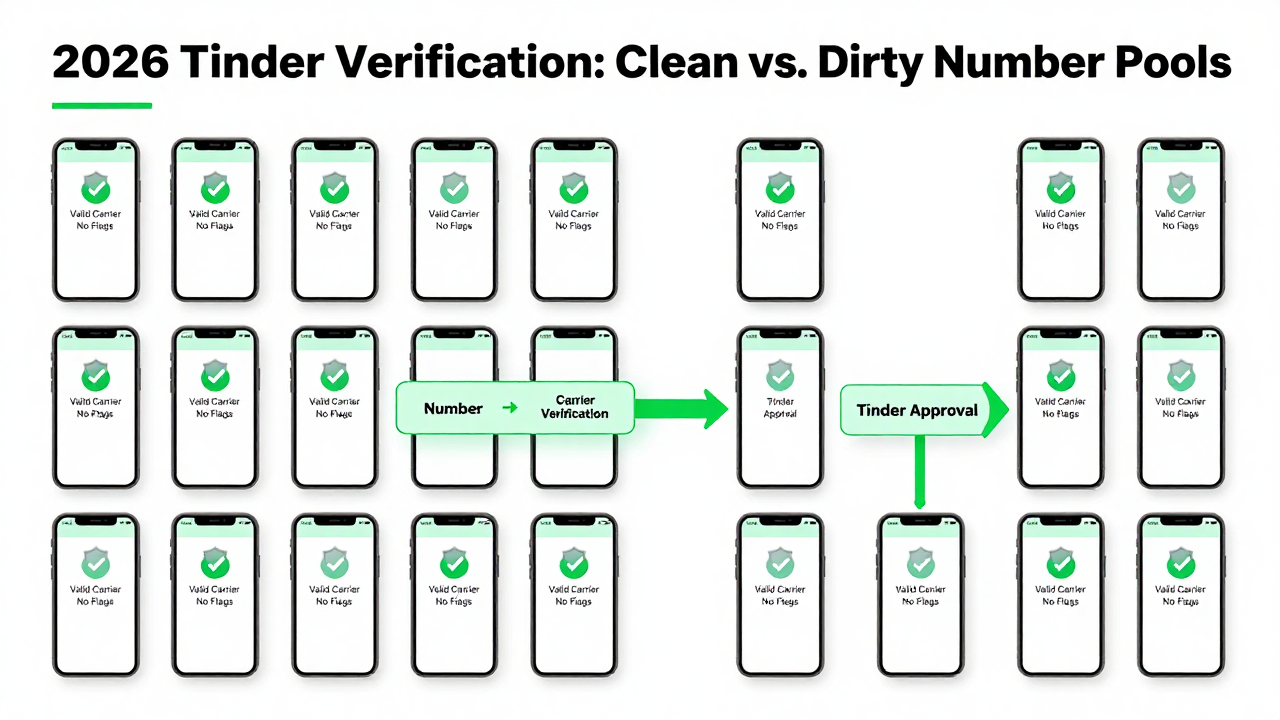
From my own testing, the verification solutions that still work reliably in 2026 aren't competing on "how many numbers they have." The real battleground is "number pool isolation." Put simply, if a single number range has been used to register 100 Tinder accounts, that range is effectively burned. Reputable platforms rotate their number ranges and sync risk-control flags in real time—but that takes serious technical investment, not just plugging in a cheap SMS gateway.
How SMS Verification Platforms Actually Work: You're Not Buying a "Code," You're Buying a "Clean Identity"
Here's a common misconception among newcomers: they think an SMS verification platform just delivers a code. But in the 2026 ecosystem, the code is only the final step. What actually matters is everything upstream: whether the number belongs to a legitimate carrier, whether Tinder has flagged it, and whether it's clean with no suspicious associations.
The more stable providers in the industry—platforms like Getfollow, for instance—operate on exactly this compliance-first logic. They're not just selling codes; they're offering what amounts to "number lifecycle management." From sourcing and cleansing number pools to recycling and isolating them after use, there's a defined process behind it. That's a completely different species from the platforms that just blast out cheap virtual numbers at scale.
My advice to cross-border teams: don't fixate on the per-code price. In 2026, a cheap code might cost you pennies—but if a dirty number gets your account banned, the cost of rebuilding that account and the time you lose will dwarf whatever you saved. Do the math. It's not even close.
Real-World Cautionary Tale: The Price of Cutting Corners
Last month, a solo operator running dating app traffic reached out to me. He'd topped up $70 on a small, cheap platform. Of the 30 accounts he registered, 27 were banned within 24 hours. When we dug into it, the platform was using a public number pool—the same number had probably been sold to five different buyers simultaneously. Under 2026's risk-control standards, that's basically walking around naked.
He switched to a provider with dedicated number pools afterward. The per-code cost went up about 40%, but his account survival rate jumped from 10% to over 70%. It's a textbook case that confirms the core logic of the 2026 verification market: stability beats low prices, every single time.
The State of the Industry in 2026: A Market Splitting in Two Directions
From what I'm seeing, the SMS verification industry has undergone a clear polarization this year. The top-tier platforms are competing on compliance and API stability—think robust API integrations, automatic callbacks, and real-time number status queries. Meanwhile, the bottom feeders are still fighting price wars, luring in new customers with ultra-low rates while delivering absolutely no service guarantees.
For cross-border businesses running Tinder accounts at scale, choosing a platform without API support isn't even an option. Manually copy-pasting verification codes in 2026 simply can't keep up with the pace of your operations. Many teams have told me that API response speed directly determines their registration success rate—if a code takes more than 30 seconds to arrive, Tinder has likely already timed out the session.
There's a growing industry consensus: in 2026, a platform's technical capability matters more than its number inventory. Numbers can always be sourced. But technical chops—latency control, concurrent processing, risk-control synchronization—that's what actually makes or breaks the user experience.
How to Choose a Reliable Tinder Verification Code SMS Platform
Since you're here with a clear purpose, let me give you a practical screening checklist. These criteria come straight from real operational experience in 2026. Follow these and you'll avoid most of the major traps.
- Check number pool isolation: Ask for a test number and register a Tinder account with it. If you get an unusual login alert within 30 minutes, the pool isn't clean. A properly isolated pool won't trigger that.
- Review the API documentation: In 2026, any platform still doing manual code delivery is an automatic pass. Legitimate providers will have thorough API docs and a test environment ready for you to integrate.
- Test after-hours support: Verification platforms tend to have the most issues at night and on weekends. Try reaching their support outside business hours. If nobody responds, their team is too small and future service will be shaky.
- Demand pricing transparency: Many platforms sneak in "number occupancy fees" or "timeout charges." Clarify every cost line before you commit, so your monthly bill doesn't come with surprises.
In the current market, platforms like Getfollow do pay closer attention to number pool management—they regularly purge number ranges that Tinder has flagged and support batch-level isolation. That level of detail genuinely saves operational teams a lot of headaches under 2026's risk-control environment. But to be fair, no platform can guarantee 100% success. If anyone promises "no bans, guaranteed," they're selling you a fantasy.
Beyond the Verification Code: Three Keys to Tinder Account Nurturing in 2026
Getting the code is just step one. Whether your account survives depends heavily on what you do afterward. Too many teams pour all their energy into the verification phase and neglect account nurturing—then wonder why their accounts die within three days.
First, respect the post-registration quiet period. The 2026 algorithms are highly sensitive to bot-like behavior. Don't start swiping or liking immediately after registration. Let the account sit idle for 2 to 4 hours to mimic how a real user would pace themselves.
Second, make your profile photos and bio genuinely unique. Stock photos or recycled images will almost certainly get you throttled. Use AI-generated or original photos, and make sure a reverse image search doesn't turn up duplicates.
Third, keep login frequency in check. A lot of studios switch between accounts on the same device for convenience. That's a cardinal sin in 2026. Once device fingerprints get linked, every account on that device gets flagged. Use anti-detect browsers or dedicated devices to keep things separate.
Potential Risks: Don't Treat Verification Platforms as a Magic Bullet
I have to end with a reality check. A Tinder verification code SMS platform only solves the "registration" piece of the puzzle. It does nothing for "retention" or "conversion." In 2026, Tinder is cracking down hard on fake accounts, and the industry-wide survival rate hovers between 50% and 70%. That means for every 10 accounts you register, only 5 to 7 will likely make it through the first week.
So here's my recommendation: test small before you commit big. No matter which platform you're considering, start with the minimum top-up. Test 20 to 30 numbers, and track both account survival rates and verification code delivery times. If the numbers look good, then scale up and negotiate a long-term arrangement. This way, even if you hit a bad provider, your losses stay manageable.
Cross-border social operations in 2026 are all about precision management and risk control. Verification platforms are a tool—not a lifeline. Nail every step of account nurturing, and you'll build something sustainable. I hope this guide helps you make smarter decisions and sidestep the pitfalls that trip up so many others.
Frequently Asked Questions
What is a Tinder verification code SMS platform?
It's a service that provides temporary phone numbers capable of receiving SMS verification codes, allowing you to register Tinder accounts without using your personal number. In 2026, the better platforms go beyond just delivering codes—they manage entire number pools to ensure each number is clean and unassociated with prior bans.
Why do Tinder accounts get banned after using a verification code platform?
Most bans trace back to dirty number pools. If a number has been used to register multiple accounts, been flagged by Tinder's systems, or belongs to a known virtual number range, the platform's risk-control engine will tag your account as high-risk. The verification code arriving successfully doesn't mean the number itself passed the background check.
How much does a Tinder verification code cost in 2026?
Pricing varies widely. Budget platforms might charge a few cents per code, while providers with dedicated, isolated number pools typically charge 30–50% more. Given the account survival rate difference, the higher upfront cost usually pays for itself many times over in reduced losses.
Can I use free Tinder verification code services?
Free services exist, but they almost always rely on public or shared number pools. Under Tinder's 2026 risk-control standards, these numbers are almost certainly flagged already. You might get your code, but your account's chances of survival are extremely low—and you risk burning your device fingerprint in the process.
What's the best way to test a verification platform before committing?
Start with the minimum top-up amount and run a small batch of 20–30 registrations. Track two metrics: verification code arrival time (should be under 30 seconds) and account survival rate after 24–48 hours. If survival rates are below 50%, move on to another provider.